NASA Maps Magnetic Fields of Distant Spinning Pulsar
Scientists have measured the magnetic field of a pulsar 16,000 light-years away, confirming theories about how the fastest particles in the universe escape into space. The breakthrough helps us understand some of the most extreme physics in the cosmos.
Scientists just unlocked secrets about one of the universe's most extreme objects: a pulsar spinning 16 times per second that's creating a cosmic lighthouse in deep space.
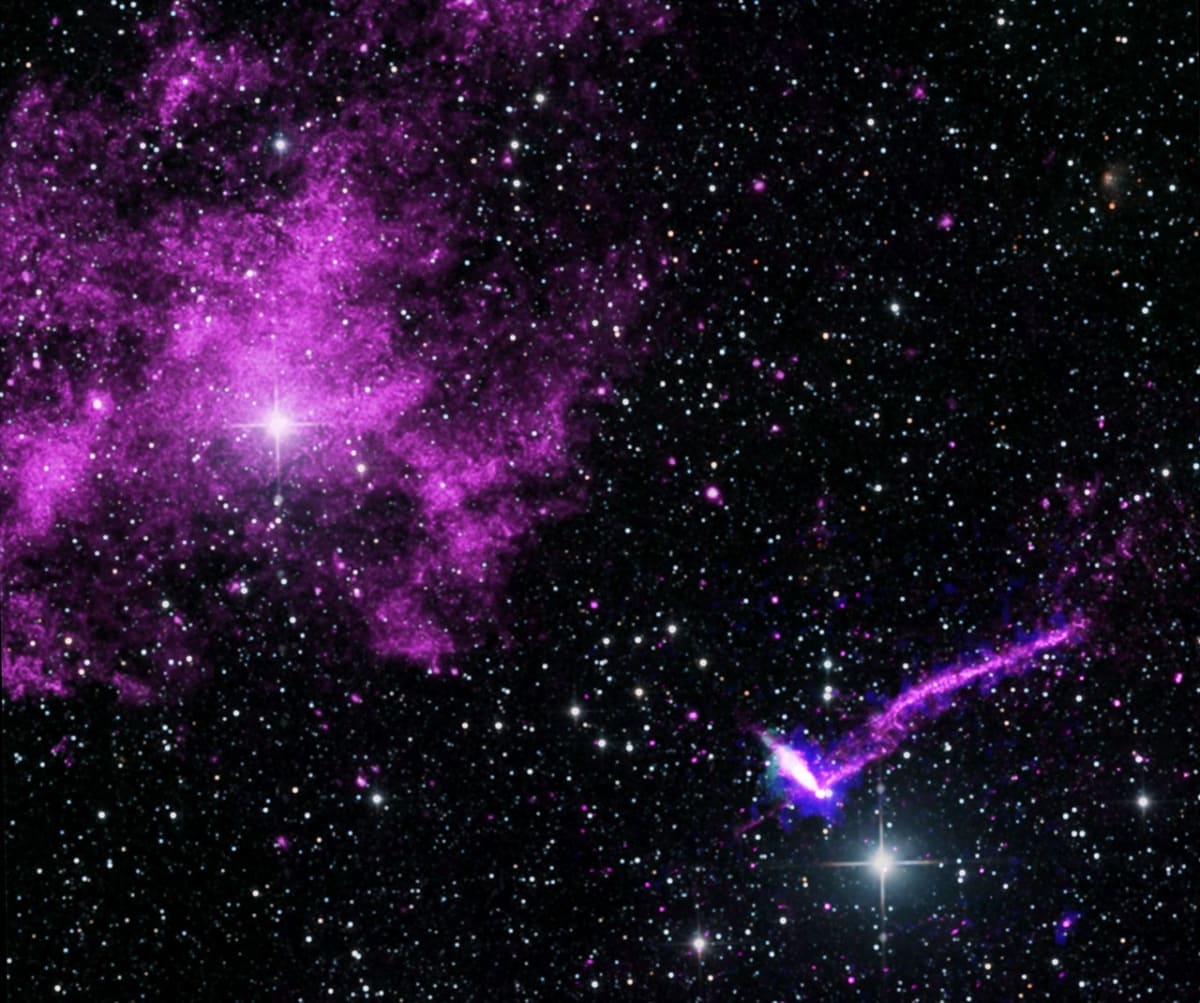
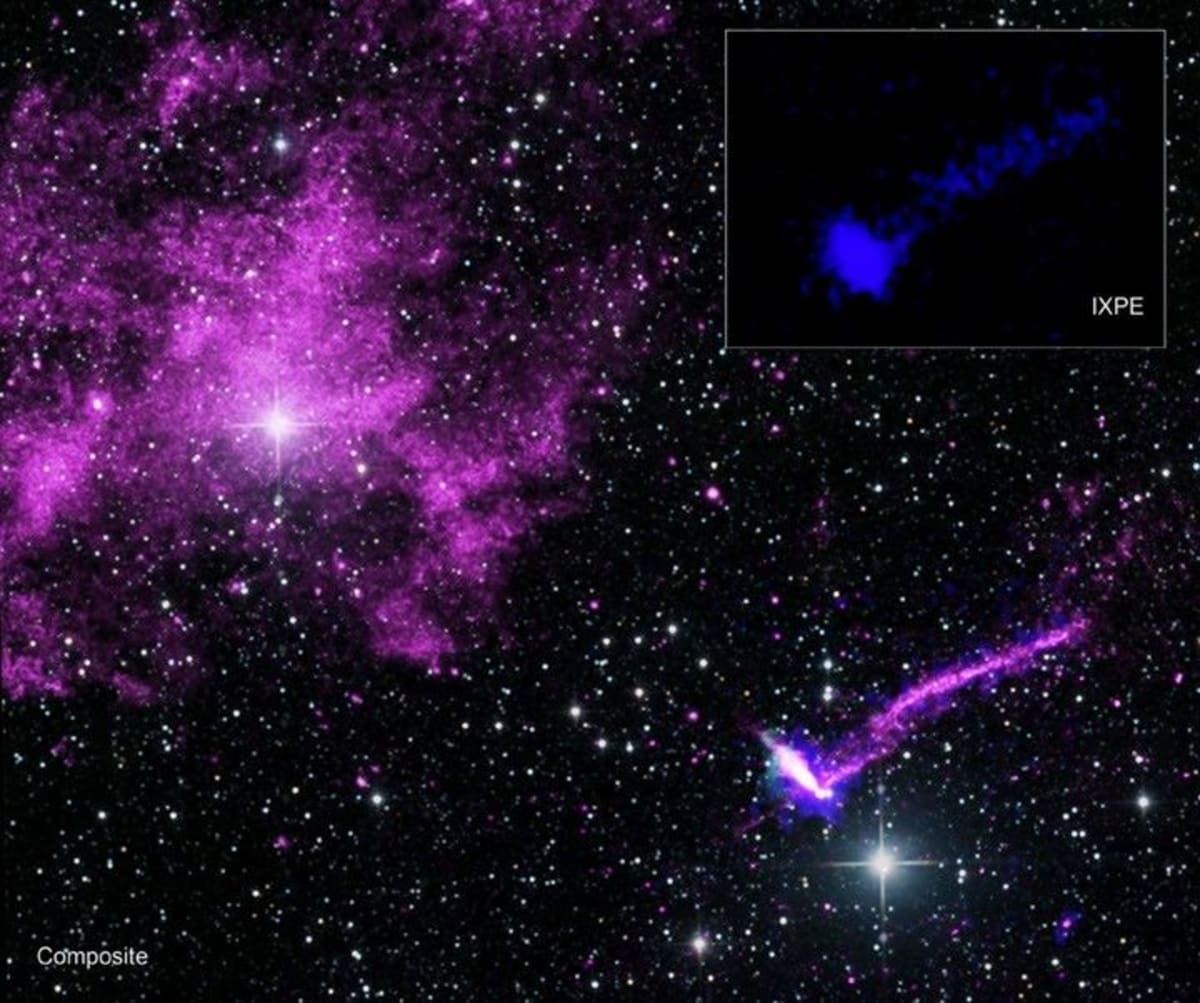
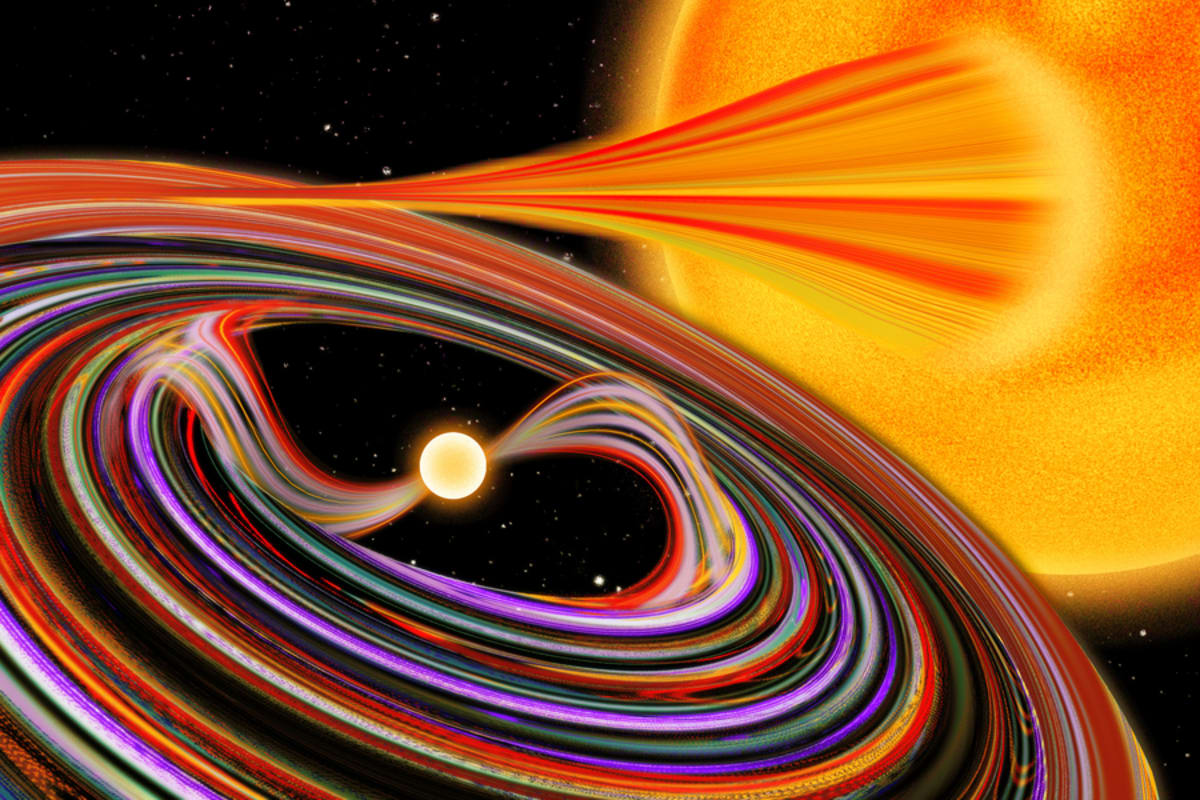
Using NASA's IXPE telescope, researchers spent 18 days studying PSR J1101−6101, a collapsed star packed with more mass than our Sun but compressed to the size of a city. For the first time ever, they directly measured the magnetic fields surrounding this spinning powerhouse located in what's called the Lighthouse Nebula.
The discovery solves a 18-year-old mystery. Scientists suspected since 2008 that the pulsar's highest-energy particles escape into space along magnetic field lines, creating a long, thin stream called a filament. But they needed proof.
"We wanted to test that theory," said Jack Dinsmore, an undergraduate student at Stanford University who led the study. "The smoking gun would come by measuring the polarization of the light, which indicates the magnetic field direction."
The challenge was tough because the Lighthouse Nebula is incredibly faint. The team developed new analysis methods that squeezed every bit of information from the data without cutting corners. Their patience paid off with measurements showing more than 99% confidence that magnetic fields align exactly with the particle flow.
The results also revealed a surprise. The polarization was stronger than expected, suggesting less magnetic turbulence than current models predict. When high-energy particles from the pulsar slam into interstellar gas, they create a bow shock like water in front of a speeding boat. Most particles get trapped behind this shock, but the most energetic ones break free.
Even more striking: the magnetic field at different wavelengths pointed in completely different directions. Radio observations showed fields running perpendicular to X-ray fields, proving that particles of different energies occupy separate regions with distinct acceleration mechanisms.
Why This Inspires
These spinning cosmic lighthouses aren't just beautiful space phenomena. They're natural laboratories where we can study physics so extreme it can't be replicated on Earth. Each measurement brings us closer to understanding the fundamental forces that shape our universe.
The IXPE mission continues pushing boundaries, providing unprecedented data about celestial objects across the cosmos. What started as a theoretical hunch in 2008 is now confirmed science, thanks to innovative analysis and patient observation.
One spinning star, smaller than most cities but heavier than our Sun, just taught us something new about how the universe works.
More Images
Based on reporting by NASA
This story was written by BrightWire based on verified news reports.
Spread the positivity!
Share this good news with someone who needs it