Ancient Corn Gene Could Feed Billions More People
Scientists discovered wild corn genes that boost protein by 30% without reducing crop yields. This breakthrough could help feed a growing global population facing protein shortages.
Scientists just unlocked a way to grow more nutritious corn by looking backward to its ancient ancestor.
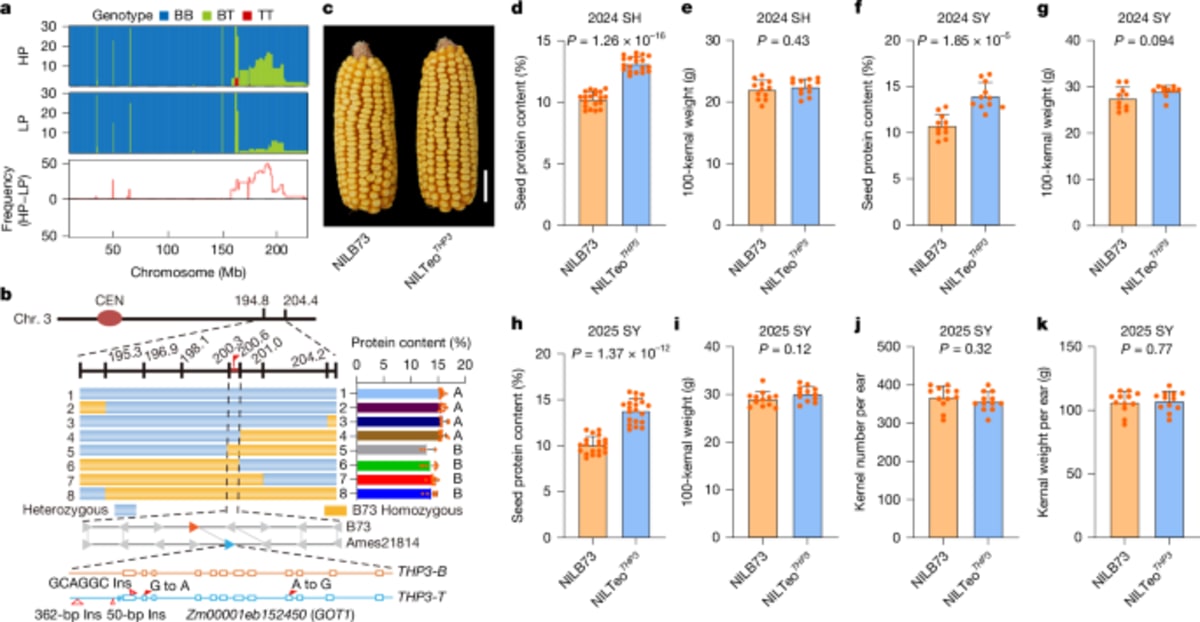
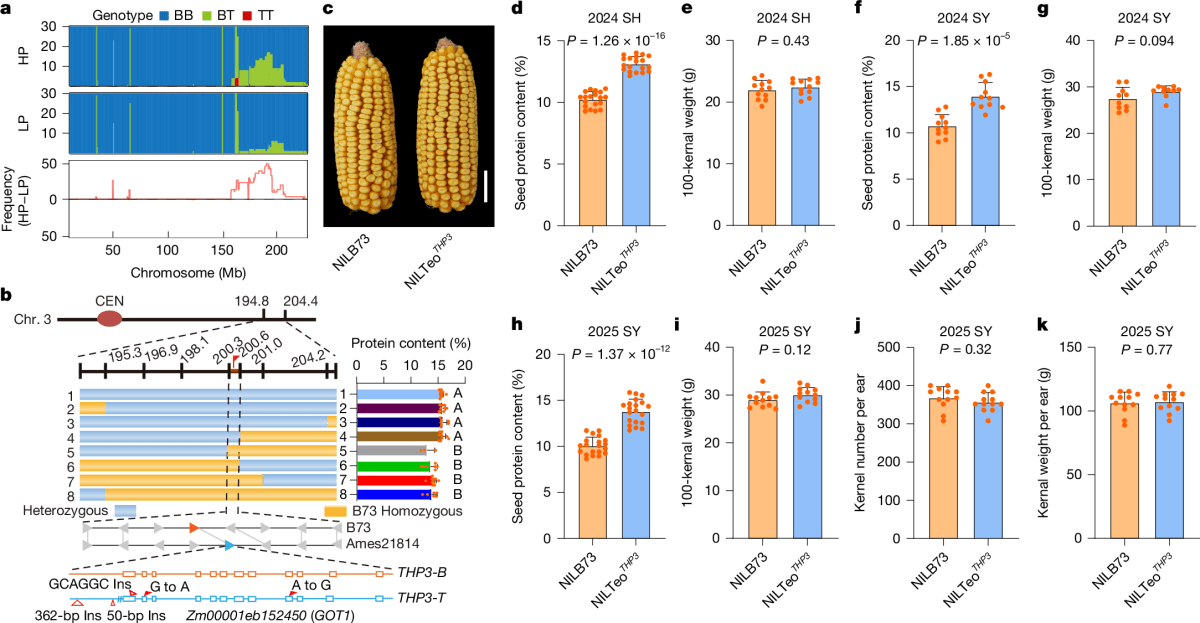
Researchers identified two genes from teosinte, the wild plant that became modern corn 10,000 years ago, that dramatically increase protein content in today's crops. When combined, these genes boosted protein levels by up to 30% in elite corn varieties without sacrificing yield.
Here's why that matters: The world needs to feed 10 billion people by 2050, and protein demand is skyrocketing. Corn feeds not just humans but also livestock that provide meat, eggs, and dairy. Yet during domestication, corn lost much of its nutritional punch as farmers selected for bigger, sweeter kernels.
The research team discovered that ancient corn varieties naturally produced more protein through two key enzymes. Modern corn breeding accidentally eliminated these beneficial traits over thousands of years of cultivation.
By reintroducing the THP3 and THP9 genes from teosinte, scientists enhanced nitrogen absorption and amino acid production in corn plants. The result: seeds packed with significantly more protein while maintaining the high yields farmers depend on.
The team tested these genes in elite hybrid corn varieties, the kind actually grown in fields today. The protein boost remained consistent across different growing conditions, proving this isn't just a lab curiosity but a practical farming solution.
The Ripple Effect
This discovery extends far beyond corn fields. Higher protein corn means better nutrition for the 1.2 billion people who rely on it as a staple food, particularly in Latin America and Africa.
It also addresses a global livestock feed crisis. Animal protein demand is surging in Asia, but feed crops struggle to keep pace. More nutritious corn could reduce the land needed for feed production while improving animal nutrition.
The research demonstrates a powerful new strategy for crop improvement: mining wild ancestor plants for beneficial genes that farming accidentally bred out. Scientists are now exploring whether this approach could work for wheat, rice, and other staples.
Other research teams have already begun incorporating these genes into breeding programs. Within a few growing seasons, farmers could plant varieties that deliver both abundance and nutrition.
The breakthrough also reduces environmental pressure. Growing more nutritious crops on existing farmland means less forest clearing for agriculture and more efficient use of fertilizers.
Sometimes the seeds of tomorrow's solutions are hiding in yesterday's fields.
More Images
Based on reporting by Nature News
This story was written by BrightWire based on verified news reports.
Spread the positivity!
Share this good news with someone who needs it