Ancient Roman Villa With Stunning Mosaic Found in Devon
Archaeologists in England just uncovered a 1,600-year-old Roman villa complete with an ornate mosaic floor that's been hiding under farmland for centuries. The discovery reveals how even Britain's most remote corners thrived during the Roman Empire.
A breathtaking piece of ancient art has emerged from beneath English farmland after sleeping underground for over 16 centuries.
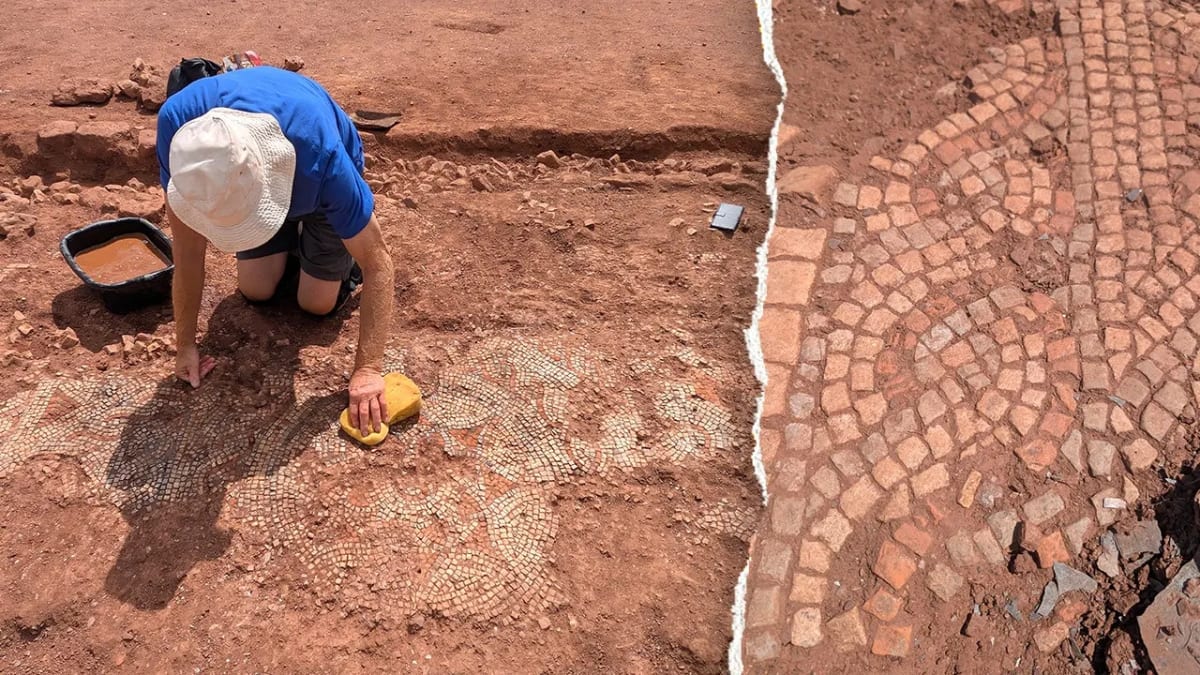
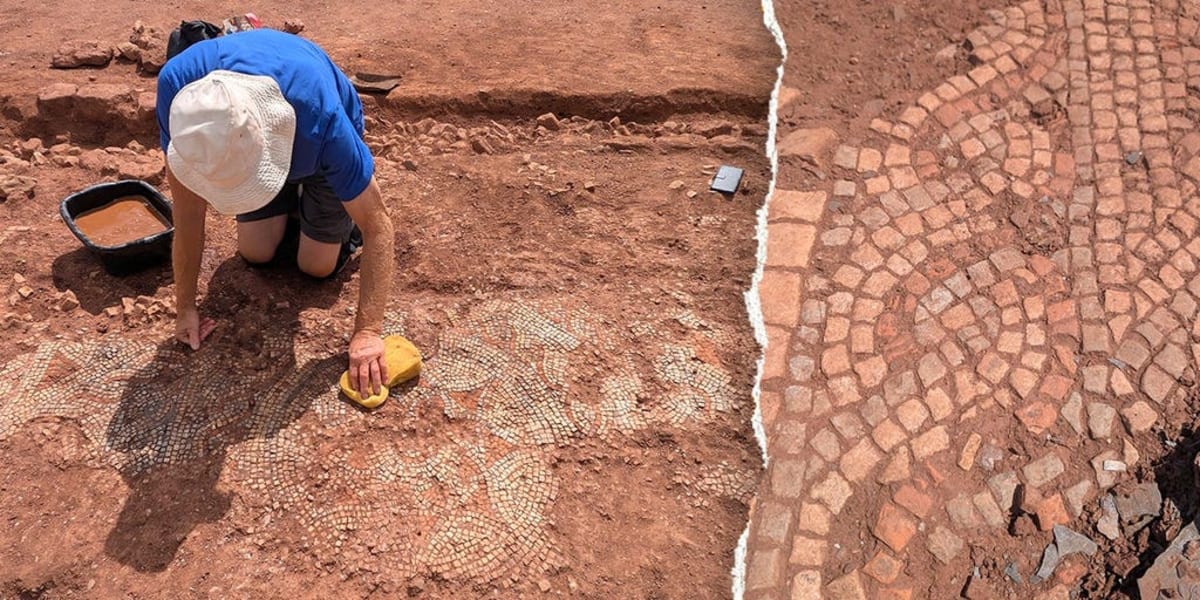
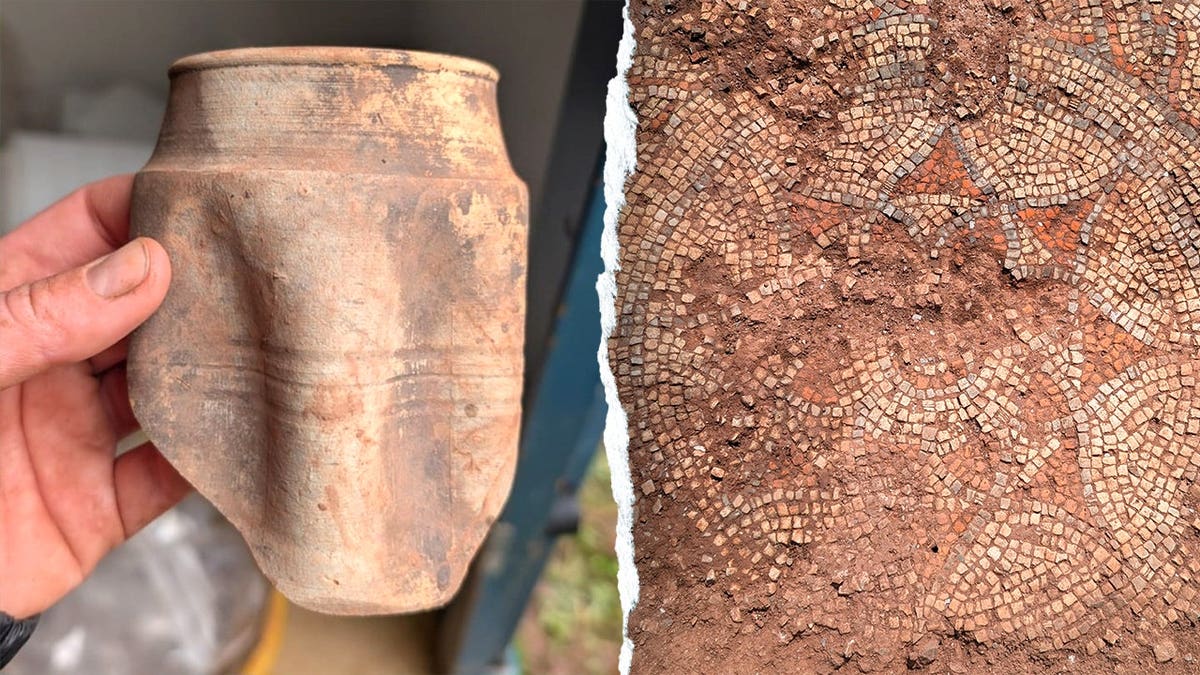
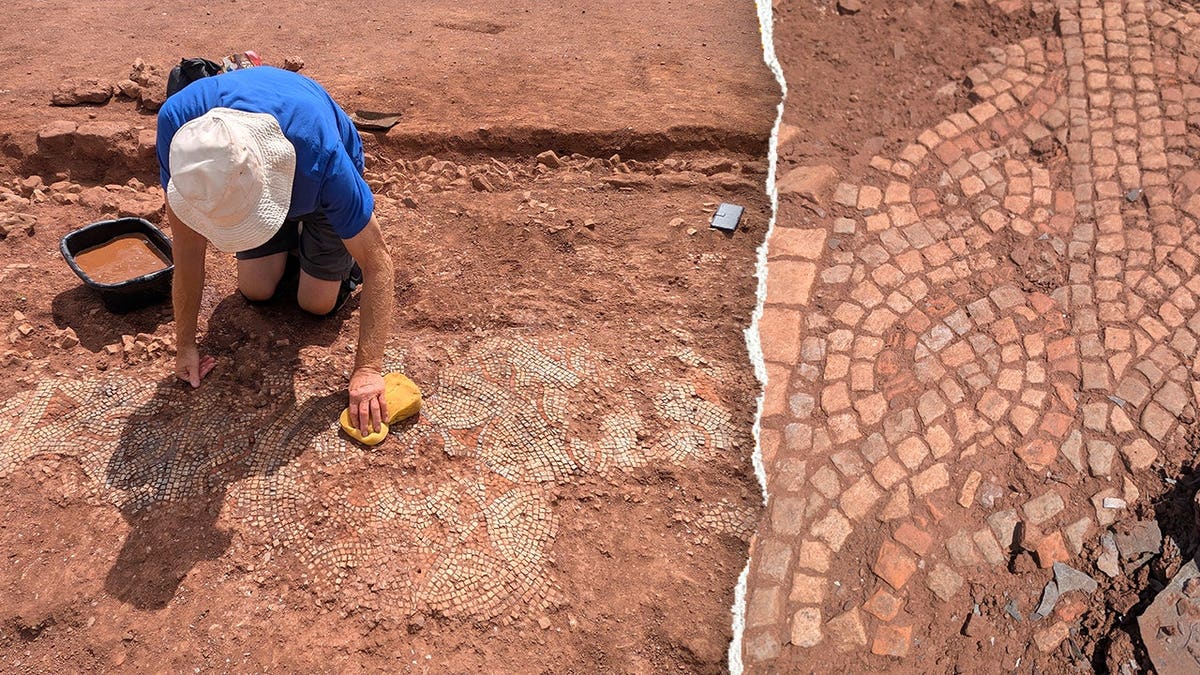
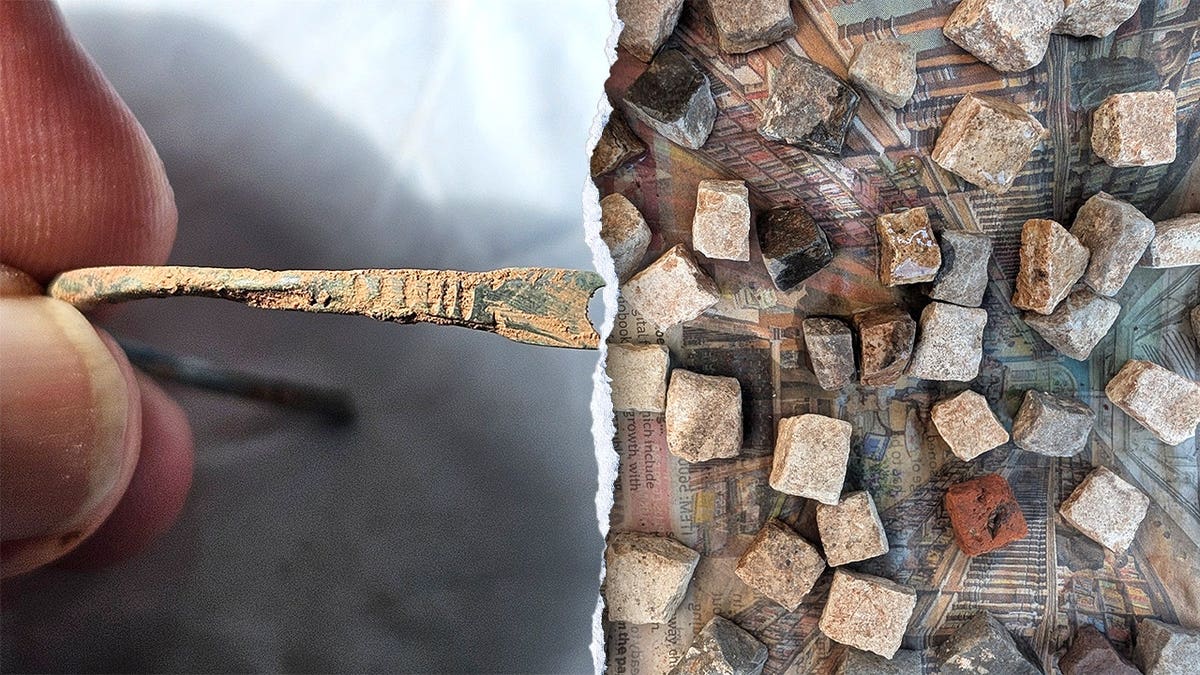
Archaeologists recently discovered a sprawling fourth-century Roman villa between the villages of Halberton and Sampford Peverell in Devon. The star of the dig? A gorgeous mosaic made from thousands of tiny red, white, and dark blue stone cubes arranged in a delicate eight-petaled flower pattern.
The excavation was led by the SHARE project, a partnership between the University of Exeter and Cotswold Archaeology. What makes this mosaic special is its location: it's the westernmost example ever found at a Roman villa in Britain.
"This, and the other trappings of Roman civilization and evidence of affluence that have been found, show how much even this far-flung part of the province had been integrated into the Roman Empire," said Bill Horner, Devon County Council's county archaeologist.
The villa wasn't just beautiful. Archaeologists also uncovered two additional stone buildings, including an elaborate bathhouse and an agricultural structure, plus treasures like a delicate copper bracelet, a silver-plated spoon, pottery fragments, and an engraved gemstone depicting the goddess Victory.
"At the outset, we knew this villa, and its surrounding working areas, was an important site for understanding the Romanization of Devon," said project leader Susan Greaney, an archaeology professor at the University of Exeter. "But from day one, it has offered us a wealth of interesting and sometimes surprising finds."
The site first came to light in 2004 when local metal detectorist John Hill discovered Roman remains in the area. Nearly two decades later, his curiosity sparked a discovery that rewrites our understanding of Roman Britain.
The Ripple Effect
This discovery is part of a wave of Roman finds transforming England's historical landscape. Last summer, archaeologists uncovered a 2,000-year-old settlement in the Cotswolds after another amateur metal detectorist's chance discovery, and railway construction crews recently unearthed rare Roman coins and artifacts.
The mosaic is now being carefully transported to the Tiverton Museum of Mid-Devon Life, where visitors will soon be able to see this masterpiece up close. Officials are working to preserve not just the artwork, but the story it tells about a wealthy Roman family who called this remote corner of the empire home.
The finds prove that passion and patience can unlock secrets that connect us to our shared human past.
More Images
Based on reporting by Fox News Travel
This story was written by BrightWire based on verified news reports.
Spread the positivity!
Share this good news with someone who needs it
%2Fhttps%3A%2F%2Ftf-cmsv2-smithsonianmag-media.s3.amazonaws.com%2Ffiler_public%2Fad%2F81%2Fad8126f1-580e-4051-ad91-8654b6a9c1b4%2Ftequinho_geoglyph_acre_brazil.jpeg)