%3Amax_bytes(150000)%3Astrip_icc()%3Afocal(749x0%3A751x2)%2Fstonehenge-1-081524-32f30cb66165461aaa2ad9c54cfedc33.jpg)
Ancient Site Predates Stonehenge by 500 Years
Archaeologists just discovered a 5,000-year-old ceremonial site three miles from Stonehenge that may have inspired the famous monument. The simpler structure reveals how ancient people celebrated the seasons centuries before the iconic stones were raised.
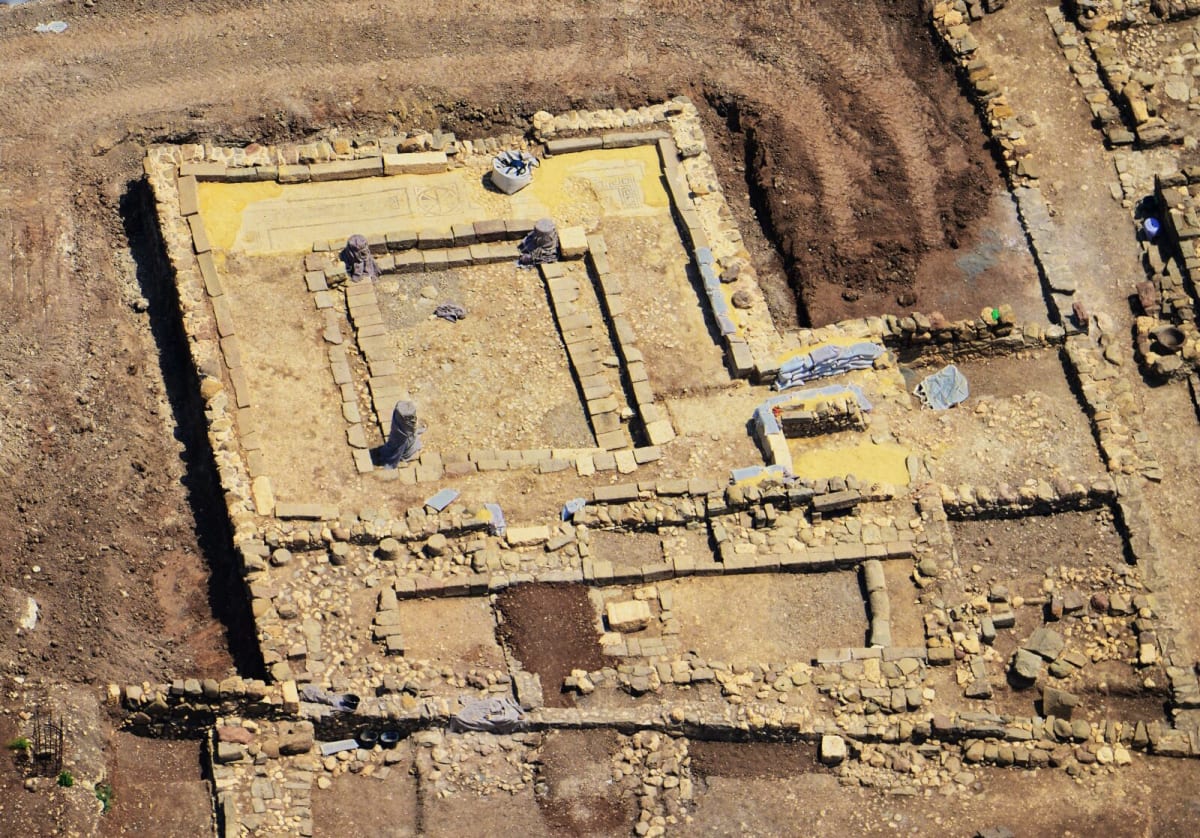
Scientists have uncovered a 5,000-year-old structure near Stonehenge that could be the blueprint for one of Britain's most mysterious monuments.
The discovery happened in Bulford, a village just three miles from the famous stone circle in Wiltshire, England. Dr. Phil Harding of Wessex Archaeology led the team that found the ancient site, calling it "one of the greatest finds" of his career.
Radiocarbon dating shows the Bulford structure is 500 years older than Stonehenge itself. While Stonehenge's massive stones were aligned around 4,500 years ago, this simpler monument was already marking the seasons half a millennium earlier.
The original structure consisted of two wooden poles positioned about 400 feet apart. These poles lined up perfectly with the rising sun during summer solstice and the setting sun during winter solstice, creating a natural calendar for ancient communities.
Though only the pits that held the poles survive today, researchers could confirm their purpose using high-tech reconstructions. Skyscape archaeologist Fabio Silva recreated the ancient sky, landscape, and horizon exactly as they would have appeared 5,000 years ago.
Evidence at the site shows people gathered there for feasts and celebrations during the solstices. These gatherings likely happened around the same time the very first earthworks were being dug at nearby Stonehenge, suggesting the two sites were connected.
Why This Inspires
This discovery rewrites our understanding of how ancient communities came together. The Bulford site shows that centuries before moving massive stones, people were already gathering to mark the changing seasons and celebrate together.
A similar simple structure may have existed at Stonehenge early on, but any traces would have vanished as the monument grew more complex. The Bulford site gives us a rare glimpse at that lost beginning, preserved perfectly in time.
The find reminds us that humanity's desire to gather, celebrate, and mark important moments stretches back thousands of years.
More Images
%3Amax_bytes(150000)%3Astrip_icc()%3Aformat(webp)%2FAdam_England-ab3d9f70d1c1456bbb5bfc5a65f355ae.jpg)
%3Amax_bytes(150000)%3Astrip_icc()%3Afocal(749x0%3A751x2)%3Aformat(webp)%2Fstonehenge-1-081524-32f30cb66165461aaa2ad9c54cfedc33.jpg)
%3Amax_bytes(150000)%3Astrip_icc()%3Afocal(1086x758%3A1088x760)%3Aformat(webp)%2Fphil-harding-stonehenge-61826-d20798bd59be4d9a8b0346913cf993b0.jpg)
%3Amax_bytes(150000)%3Astrip_icc()%3Aformat(webp)%2FPeople_Onsite_ATF_Overlay_DesktopVersion_070125_qr_code11-6a9808bc1dfa4c2a9603155d7a5343d3.png)
Based on reporting by Google: archaeological discovery
This story was written by BrightWire based on verified news reports.
Spread the positivity!
Share this good news with someone who needs it