Ancient 'Worm Trails' Were Actually Giant Bacteria Colonies
What scientists thought were 540-million-year-old traces of tiny worms turned out to be fossilized bacteria and algae, some visible to the naked eye. The discovery rewrites our understanding of when small animals first appeared on Earth.
Scientists just rewrote a major chapter in the story of early life on Earth, and it all started with taking a closer look at some very old fossils.
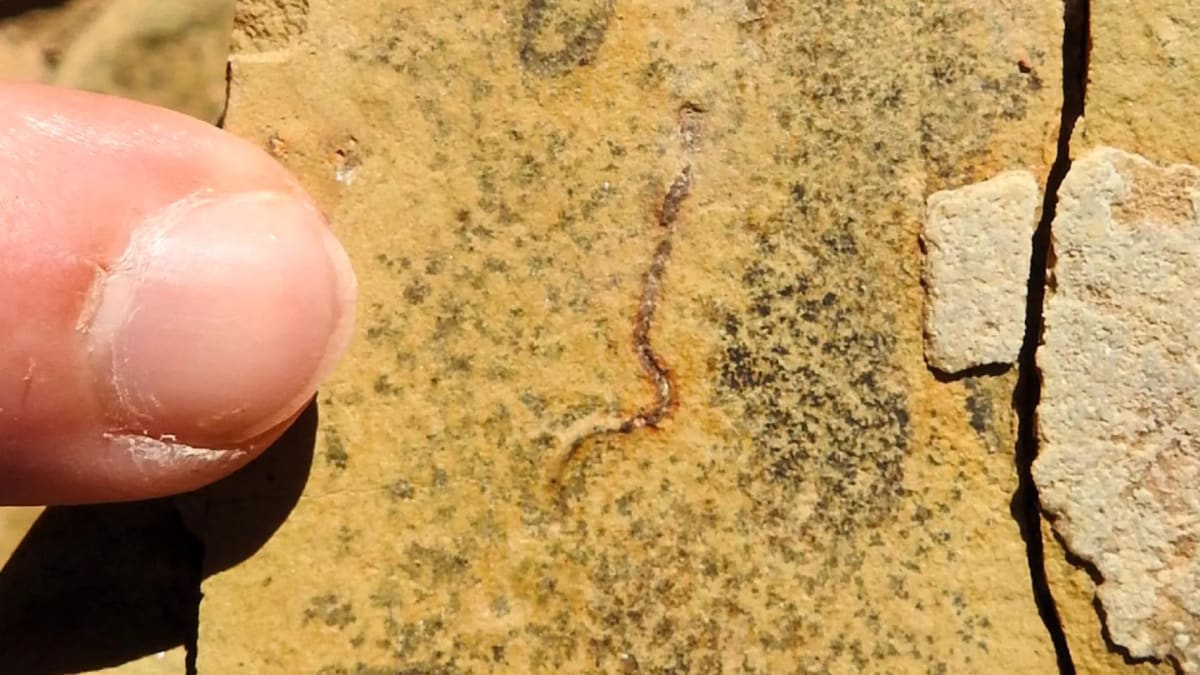
Researchers studying 540-million-year-old rocks in Brazil discovered that mysterious marks once believed to be trails left by tiny worm-like creatures were actually fossilized communities of bacteria and algae. Some of these ancient microbes were so large you could see them without a microscope.
Bruno Becker-Kerber, who led the study at the University of São Paulo and is now at Harvard University, used cutting-edge imaging technology to peer inside the fossils at the tiniest scales. What his team found surprised everyone: preserved cell structures and organic material that could only have come from bacteria and algae, not animals.
The fossils came from Mato Grosso do Sul in Brazil, from rocks that formed on an ancient seafloor during the Ediacaran period. This was right before the famous Cambrian explosion, when complex life suddenly diversified across Earth's oceans as oxygen levels rose.
If the marks had truly been left by animals called meiofauna, they would have pushed back the fossil record for these tiny invertebrates by millions of years. Instead, the findings suggest oxygen levels in ancient oceans were still too low to support such animal life 540 million years ago.
The research team used a special particle accelerator facility in Brazil called Sirius to examine fossils ranging from a few micrometers to a few millimeters in size. The technology, called zoom tomography, let them focus on structures inside the samples without destroying them, something earlier studies couldn't do.
Some of the fossils contained pyrite, a mineral made of iron and sulfur. Based on their shapes and chemistry, researchers believe some specimens represent sulfur-oxidizing bacteria, a group that includes the largest bacteria ever recorded.
Why This Inspires
This discovery shows how new technology can flip our understanding of history on its head. What seemed like settled science turned out to be microscopic life forms so remarkably preserved they still contain organic material after half a billion years.
The findings remind us that life found creative ways to thrive long before animals dominated Earth's oceans. These ancient bacteria weren't just surviving, some grew large enough to see with the naked eye, thriving in conditions that would later support the explosion of animal diversity.
Science keeps revealing that Earth's story is far richer and more surprising than we imagined.
Based on reporting by Science Daily
This story was written by BrightWire based on verified news reports.
Spread the positivity!
Share this good news with someone who needs it