Antarctica's 'Ring of Fire' Eclipse Coming in Just 30 Days
On February 17, 2026, a rare annular solar eclipse will create a stunning "ring of fire" effect over Antarctica, mostly visible to the continent's penguin populations. While few humans will witness it in person, the cosmic spectacle will be livestreamed so people worldwide can share in the wonder.
In exactly one month, the moon will slide in front of the sun to create a dazzling "ring of fire" over one of Earth's most remote locations.
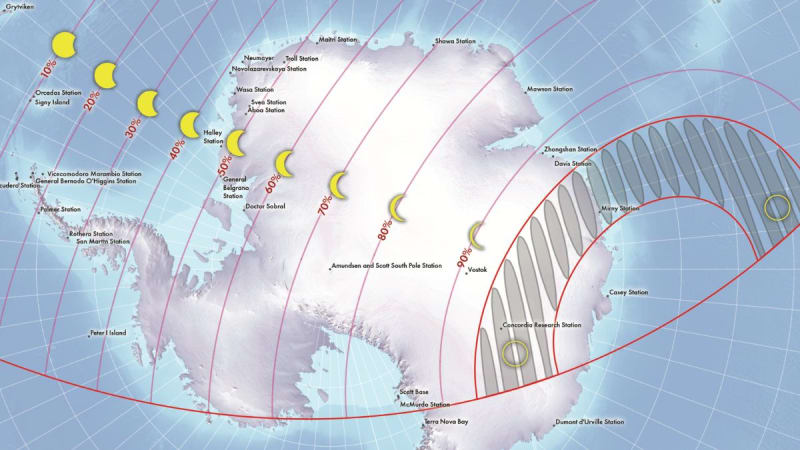
The annular solar eclipse on February 17, 2026, will be visible primarily from Antarctica, where research station crews and millions of penguins will have front-row seats to the cosmic show. Maximum eclipse occurs at 7:12 a.m. EST when the moon will cover 96% of the sun's disk, leaving a brilliant ring of light around its edges.
Unlike a total solar eclipse where the moon completely blocks the sun, an annular eclipse happens when the moon is slightly farther from Earth in its orbit. This makes the moon appear just a bit smaller than the sun, creating that signature fiery ring effect that skywatchers treasure.
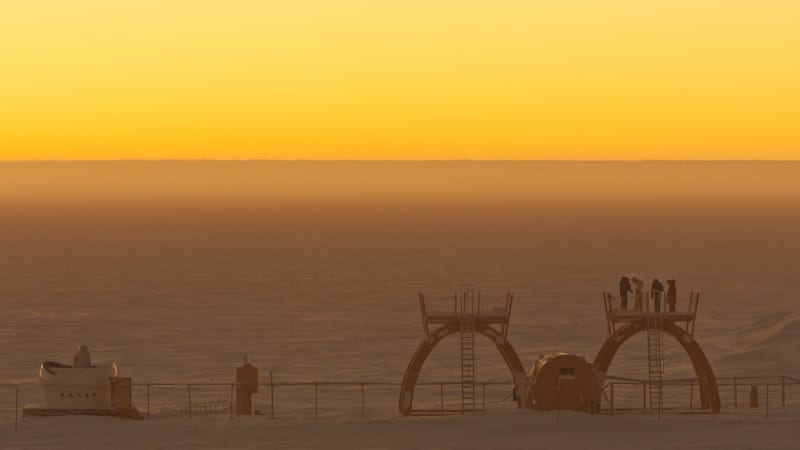
The path of annularity stretches 2,661 miles long and 383 miles wide across Antarctica. Researchers at Concordia Station will enjoy over two minutes of the ring of fire, while scientists at Russia's Mirny Station get nearly two minutes of the spectacle hovering just above the western horizon.
Parts of southern Africa and South America will see a partial eclipse, where the moon takes a bite out of the sun but doesn't create the full ring. For everyone else around the world, livestreams will bring the event directly to screens everywhere, though official broadcast details are still being finalized.
The Bright Side
Antarctica might seem like an odd place for such a spectacular show, but it actually makes this eclipse more accessible than ever. Thanks to modern technology, millions of people who could never travel to the bottom of the world can now experience the wonder of a solar eclipse from their homes. Research stations positioned in the path are already preparing to capture stunning footage that will inspire viewers across every continent.
These celestial alignments remind us that we're all passengers on a planet moving through space, witnessing the same cosmic dance that has amazed humans for thousands of years. The next annular eclipse won't cross Antarctica again for decades, making this February's event especially precious for scientists stationed there and nature enthusiasts everywhere.
Mark your calendars for February 17 and get ready to witness the universe putting on a show that proves the best things in life are still free.
More Images


Based on reporting by Google News - Science
This story was written by BrightWire based on verified news reports.
Spread the positivity!
Share this good news with someone who needs it