Apollo 15 Astronauts First to Drive on the Moon in 1971
On July 31, 1971, astronauts drove a vehicle on another world for the first time, covering over 17 miles of lunar terrain. The moon buggy revolutionized space exploration by letting astronauts venture farther than ever before.
Imagine being the first person to drive on another world, bouncing along at 8.6 miles per hour in a vehicle designed to fold up like a piece of origami.
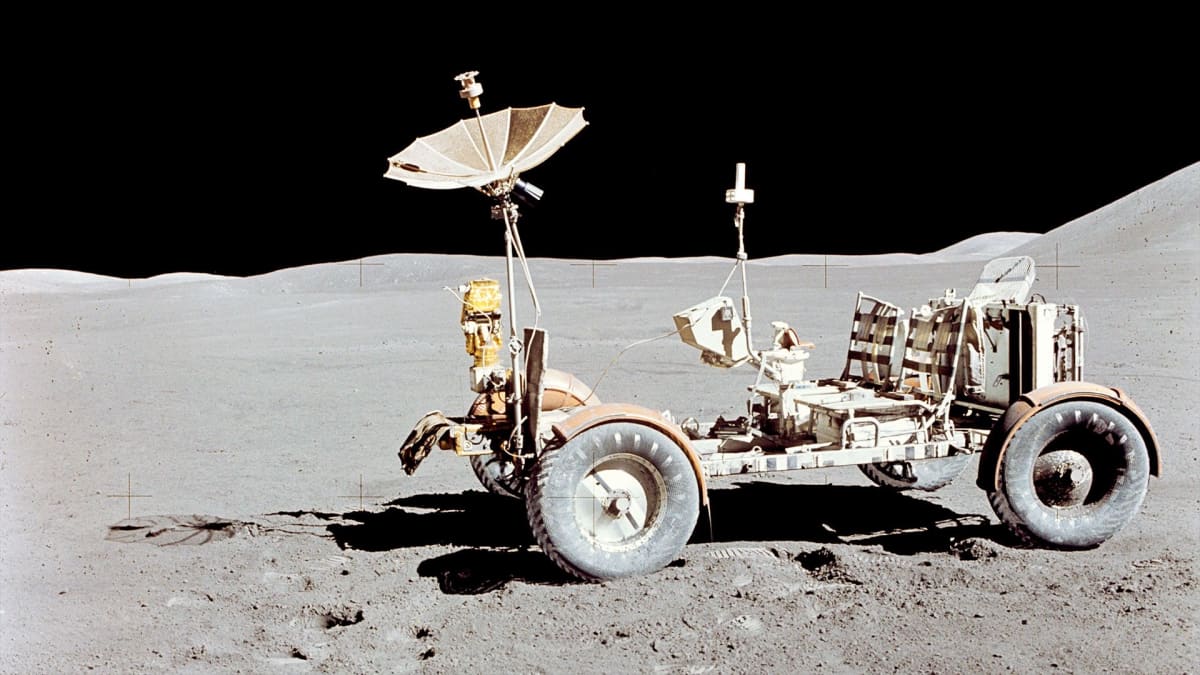
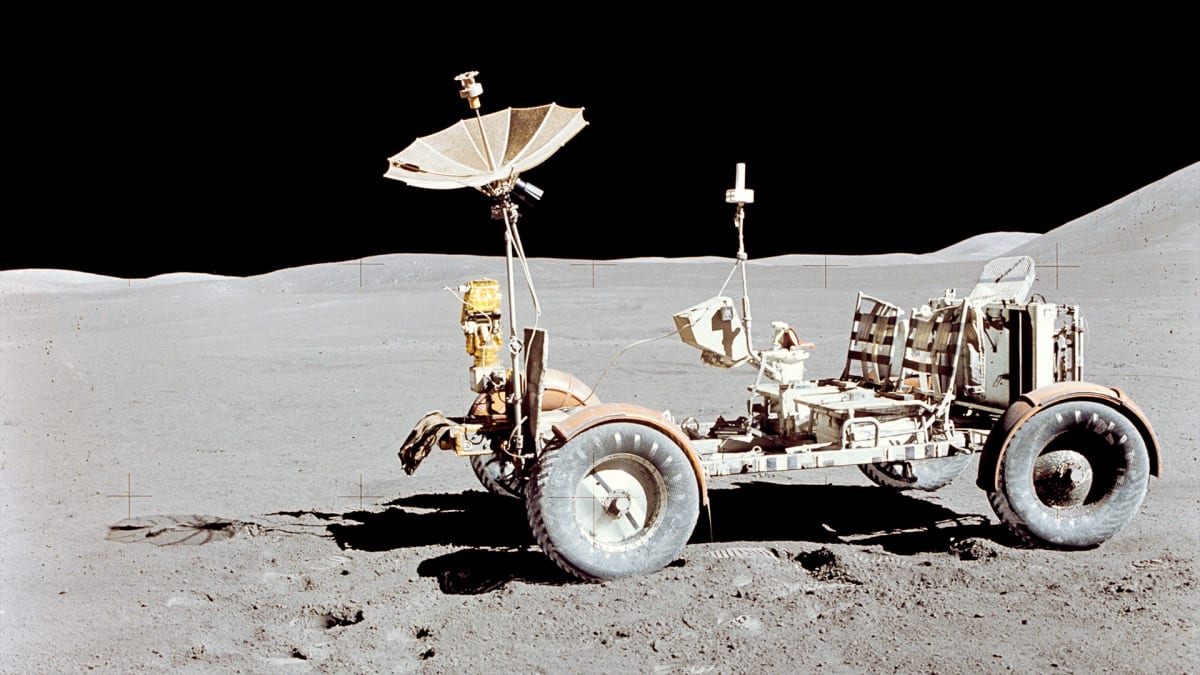
On July 31, 1971, Apollo 15 astronauts David Scott and James Irwin made history as the first humans to drive on the moon. Their ride was the Lunar Roving Vehicle, a specially designed moon buggy that opened up entirely new possibilities for space exploration.
The vehicle itself was an engineering marvel. Folded up inside the lunar module during landing, it unpacked to measure about 10 feet long and 7 feet wide. NASA engineers had solved a puzzle that seemed impossible: how do you build a car light enough to land on the moon but sturdy enough to carry astronauts across rough terrain?
For their first drive, Scott and Irwin headed to Elbow Crater to collect samples and take photographs. Over three days of exploration, they covered more than 17 miles of lunar surface. Previous Apollo missions had been limited to how far astronauts could walk in their bulky spacesuits, but the rover changed everything.
The Apollo 15 mission launched on July 26, 1971, and landed on July 30. While Scott and Irwin explored the surface, pilot Al Worden orbited above in the command module. The crew performed three moonwalks before leaving the lunar surface on August 2 and splashing down in the Pacific Ocean on August 7.
Why This Inspires
The lunar rover proved that human ingenuity could solve seemingly impossible challenges. NASA's engineers had to balance weight restrictions, compact storage, lunar terrain challenges, and astronaut safety all at once. Their success meant astronauts could explore areas of the moon that would have been completely unreachable on foot.
The technology developed for the moon buggy influenced rover designs for decades to come. Today's Mars rovers owe a debt to that first lunar drive, when two astronauts proved we could take our wheels anywhere.
That first drive on another world showed us what becomes possible when we refuse to accept limitations.
More Images

Based on reporting by Space.com
This story was written by BrightWire based on verified news reports.
Spread the positivity!
Share this good news with someone who needs it