Armadillo-Inspired Robot Shell Protects Itself From Damage
Scientists at North Carolina State University created a protective shell that lets robots curl into a ball when danger strikes, just like an armadillo. The breakthrough could make rescue robots and space explorers tougher and smarter.
Robots just got their own suit of armor, and it works exactly like nature intended.
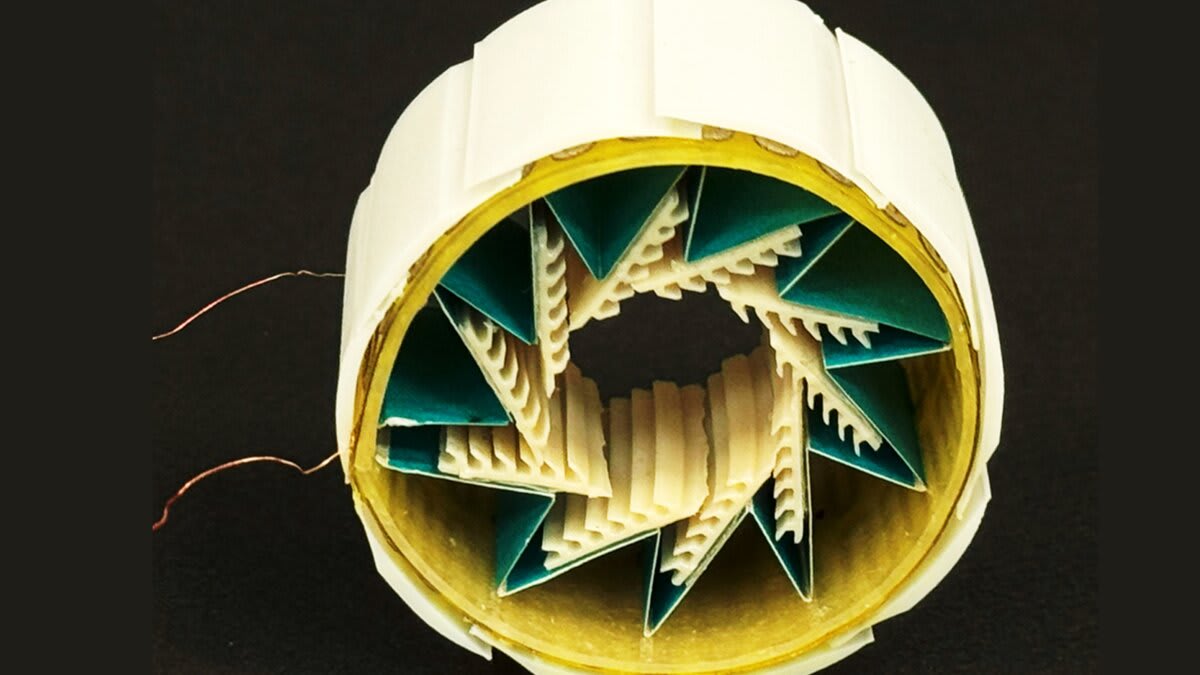
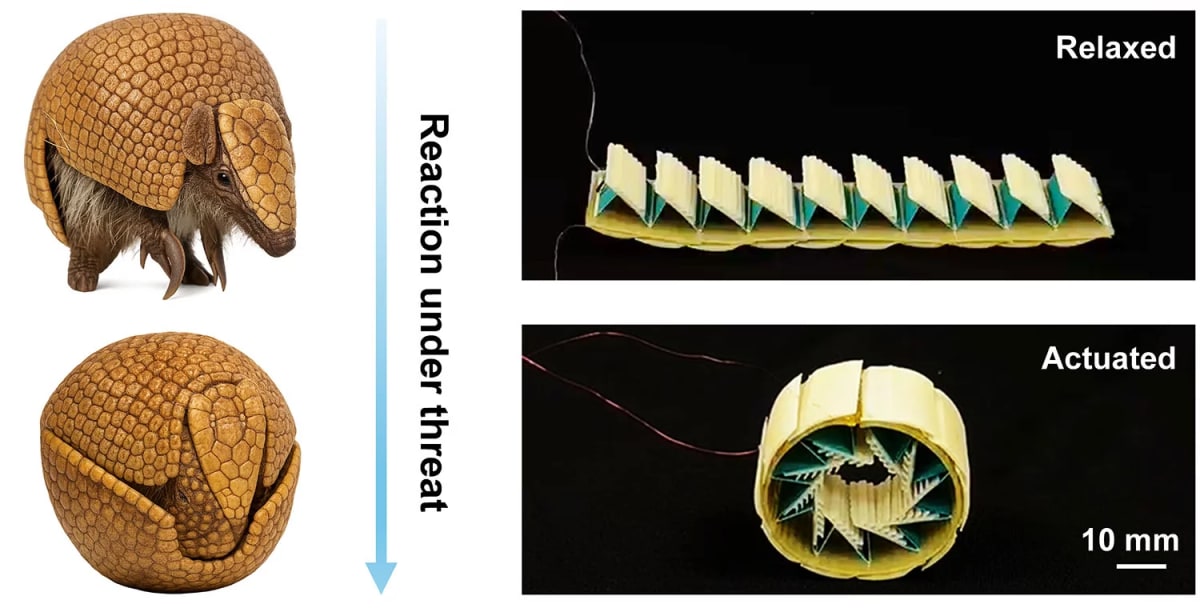
Researchers at North Carolina State University built a protective shell inspired by armadillos that automatically activates when a robot senses danger. The shell curls the device into a safe sphere within seconds, shielding delicate electronics from damage.
The technology solves a major problem in robotics. Search-and-rescue robots, space explorers, and wearable tech need to be lightweight and flexible, but they also need to survive tough conditions. Until now, most protective systems couldn't sense threats and respond on their own.
The team calls their invention the morpho-interlocking protective module, or MIPM. It uses three clever layers working together. The outer shell is made of 3D-printed segments that can handle serious force. The middle layer acts as both the brain and muscle, detecting danger through sensors and triggering the protective curl. The inner skeleton, made from heavy-duty folded paper, provides structure while allowing movement.
Here's how it works in action. When strain sensors detect incoming force, they alert a control unit. The system activates a heater that causes special materials to expand and contract in precise ways. This forces the entire structure to bend and curl into a protective ball, mimicking an armadillo's defensive posture perfectly.
The innovation goes beyond simple protection. Unlike previous designs, this system thinks for itself through integrated sensors and automatic responses. That means robots could navigate dangerous environments without constant human oversight.
Why This Inspires
This breakthrough shows how much we still have to learn from nature's 3.5 billion years of problem-solving. Armadillos perfected their defensive curl long before humans invented the first machine, and now that ancient wisdom is protecting our most advanced technology.
The research team isn't stopping here. They're working to make the sensors stable in extreme heat, cold, humidity, and dust. They're also adding wireless connectivity so the protective systems can communicate better with control units. Each improvement brings the technology closer to real-world deployment.
The applications stretch across industries where durability matters most. Space agencies could send tougher robots to explore distant planets. Emergency responders could deploy rescue robots that survive collapsed buildings. Even personal devices and wearables could gain self-protecting capabilities.
Testing under controlled conditions showed the system works beautifully, proving that nature-inspired engineering can solve modern challenges in unexpected ways.
More Images


Based on reporting by New Atlas
This story was written by BrightWire based on verified news reports.
Spread the positivity!
Share this good news with someone who needs it