Artemis II Astronauts Bring Moon Back Into Focus for New Era
Four astronauts just returned from orbiting the Moon with stunning photos that give an entire generation their own lunar memories to share. The Artemis II crew used modern cameras and iPhones to capture images more crisp and accessible than ever before.
For everyone born after 1972, the Moon has been mostly a distant memory captured in grainy Apollo photographs and history books. Now, four astronauts have given millions of people their first real-time lunar moment.
NASA's Artemis II crew just completed humanity's first Moon flyby in over 50 years. Astronauts Reid Wiseman, Victor Glover, Christina Koch and Jeremy Hansen returned with thousands of digital photos that look exactly like how space travel should look: grand, adventurous and sublime.
The crew trained for weeks with Nikon digital cameras and iPhones to document their journey. Yes, the same iPhone many people carry in their pockets just traveled around the Moon and captured a solar eclipse from space.
The Orion spacecraft gave them major advantages over Apollo missions. With six windows instead of three and live-streaming cameras at five of them, people back on Earth could watch the lunar flyby happen in real time.
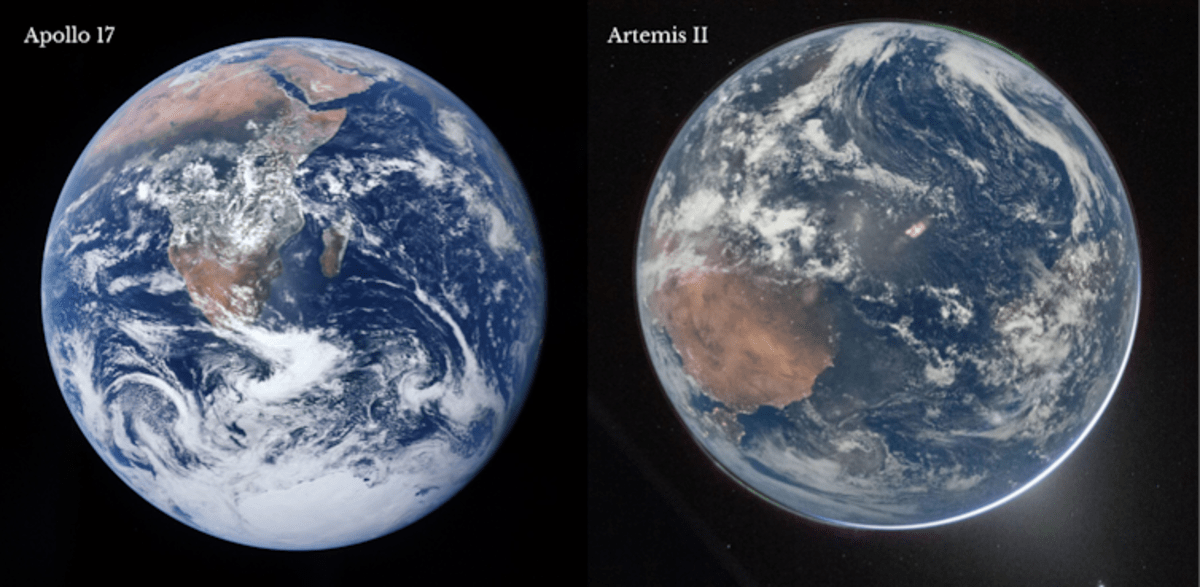
One photo already rivals Apollo's most famous shot. In 1972, Apollo 17's Harrison Schmitt captured the "Blue Marble" image of Earth fully lit by the Sun. Artemis II brought back a 2026 version showing Earth lit by moonlight, with polar auroras glowing and our thin atmosphere protecting all life below.
The crew also photographed a total solar eclipse from space on April 6, 2026. The Moon completely shadowed the Sun, leaving only the corona visible in a ring of light.
Why This Inspires
These aren't just pretty pictures. They're proof that space exploration is happening now, not just in history books or science fiction.
The astronauts worked directly with geologists and scientists during the flight, identifying potential landing sites for future missions while broadcasting their conversations. Anyone with internet access could listen in and see what they saw, almost instantly.
For people who grew up watching space shuttles and Mars rovers instead of Moon landings, this mission creates a personal connection to lunar exploration. The photos spread across social media within hours, becoming shared memories for millions who never thought they'd witness humans near the Moon.
The crew will eventually release thousands more images stored on their memory cards. Each one documents a moment in history and reminds us that the impossible becomes possible when we keep reaching higher.
Space travel just got its closeup for a new generation, and it looks better than we imagined.
More Images


Based on reporting by Google News - Technology
This story was written by BrightWire based on verified news reports.
Spread the positivity!
Share this good news with someone who needs it