Artemis II Crew Returns After Breaking Apollo's Distance Record
Four astronauts received a thunderous welcome home after traveling farther from Earth than any humans in over 50 years. Their historic 10-day moon mission set the stage for humanity's return to the lunar surface in 2028.
After traveling more than 400,000 kilometers into space, four astronauts stepped onto a Houston stage Saturday to cheers from hundreds who helped make history. Commander Reid Wiseman, pilot Victor Glover, Christina Koch, and Canada's Jeremy Hansen had just returned from the first crewed moon mission in 53 years.
The Artemis II crew splashed down off the California coast Friday evening, ending a journey that pushed the boundaries of human space exploration. Their capsule reached a record-breaking distance of 406,771 kilometers from Earth, surpassing the Apollo 13 distance record set in 1970.
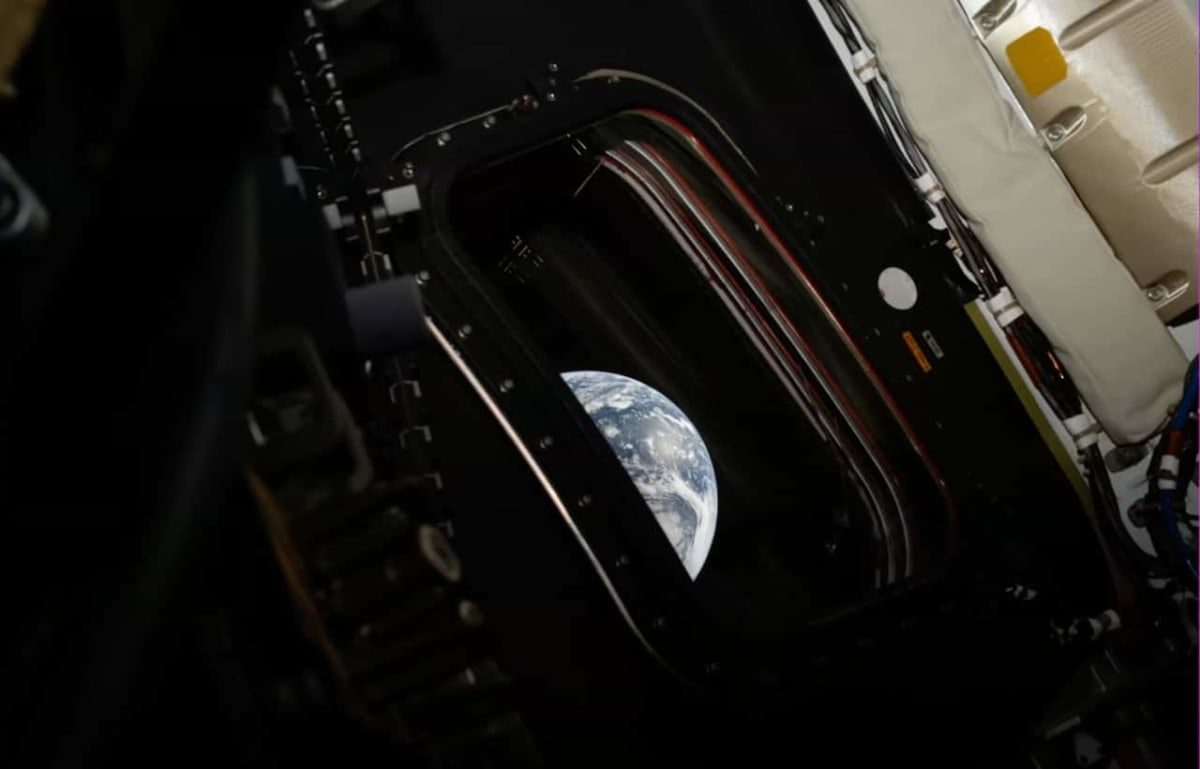
During their nearly 10-day voyage, the astronauts witnessed sights no human had ever seen. They captured stunning views of the moon's far side and experienced a total solar eclipse from deep space. An "Earthset" photo showing our planet setting behind the moon echoed the famous Earthrise image from Apollo 8 in 1968.
"It's a special thing to be a human, and it's a special thing to be on planet Earth," an emotional Wiseman told the jubilant crowd at Ellington Field. After quick reunions with their families, the crew addressed space center workers, flight directors, members of Congress, and NASA's entire astronaut corps.
Koch described the profound perspective shift of seeing Earth from such a distance. "What struck me wasn't necessarily just Earth, it was all the blackness around it," she said. "Earth was just this lifeboat hanging undisturbedly in the universe."
Hansen reminded the crowd that the crew's achievement belonged to everyone. "When you look up here, you're not looking at us. We are a mirror reflecting you," he said as the four astronauts embraced on stage.
Why This Inspires
Twenty-four astronauts flew to the moon during the Apollo program between 1968 and 1972, including 12 who walked on its surface. After more than five decades, NASA has successfully proven it can return humans safely to deep space.
The mission wasn't without challenges. The crew had to deal with a malfunctioning space toilet, prompting NASA to promise design fixes before longer missions. But these practical problems only highlight how real and tangible the return to the moon has become.
Artemis III will launch next year, with astronauts practicing docking maneuvers in Earth orbit. Then in 2028, Artemis IV will attempt the first moon landing in over half a century, targeting the unexplored lunar south pole.
The long wait for humanity's next giant leap is finally over.
More Images

Based on reporting by SBS Australia
This story was written by BrightWire based on verified news reports.
Spread the positivity!
Share this good news with someone who needs it