Australian Backyard Astronomers Discover Planetary Ring
Three amateur astronomers in Queensland made history by becoming the first citizen scientists to discover a planetary ring, proving that world-changing discoveries can happen in your own backyard. Their finding helped solve a cosmic mystery that professional telescopes had missed.
Three friends sitting in their backyards across Southeast Queensland just rewrote the astronomy textbooks.
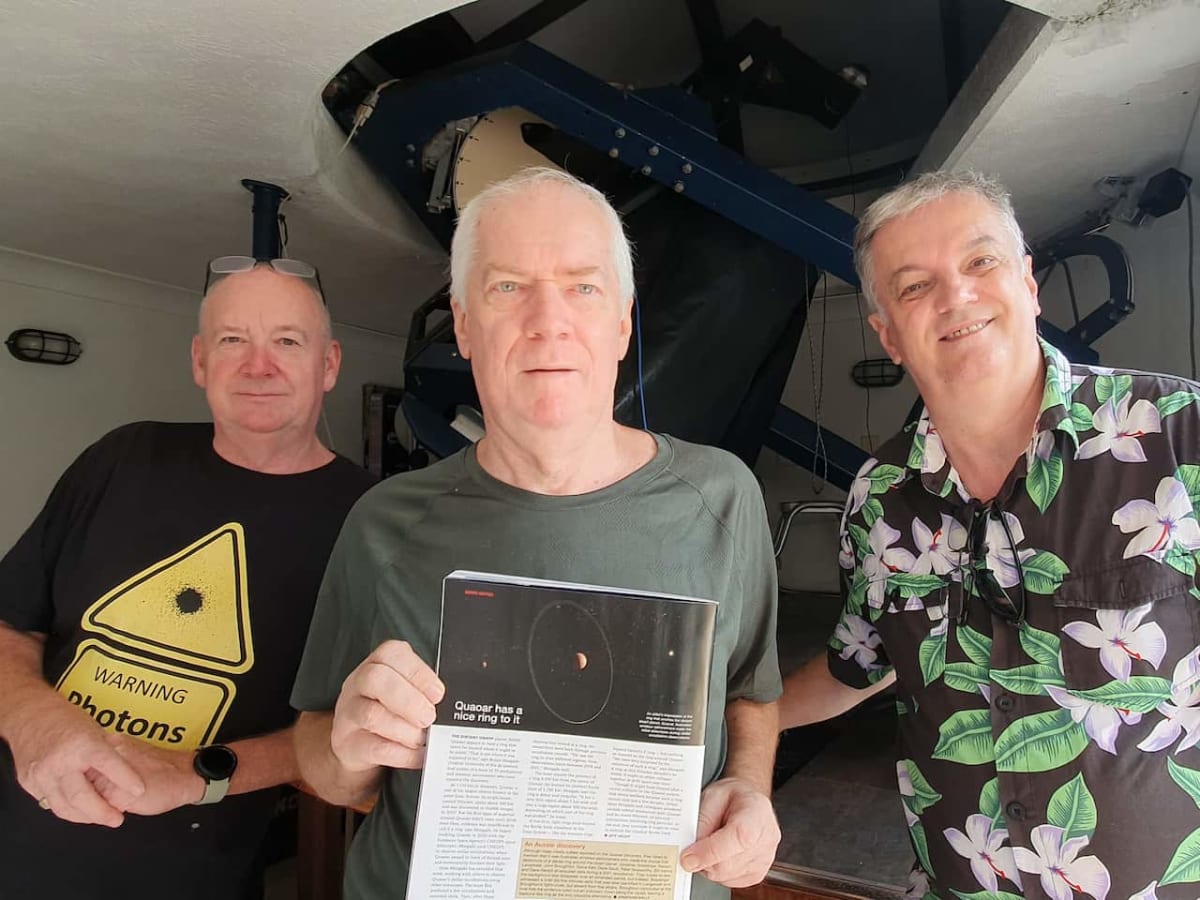
In 2021, Jonathan Bradshaw, Renato Langersek, and John Broughton were watching a distant dwarf planet called Quaoar pass in front of a star. They weren't expecting to find anything extraordinary that night, just another routine observation session with their personal telescopes.
Then all three noticed something strange. Small "blips" appeared in their data at exactly the same time, forming a perfect straight line when they compared notes.
They had just become the first amateur astronomers in history to discover a planetary ring. Even more remarkable, the ring was orbiting Quaoar in a place where it shouldn't exist according to current scientific theory.
"We instantly knew that we discovered a ring, and we instantly knew it was in the wrong place, and that's what made the whole thing really, really valuable scientifically," Jonathan explained. Professional astronomers had the data all along but hadn't been looking because the ring defied expectations.
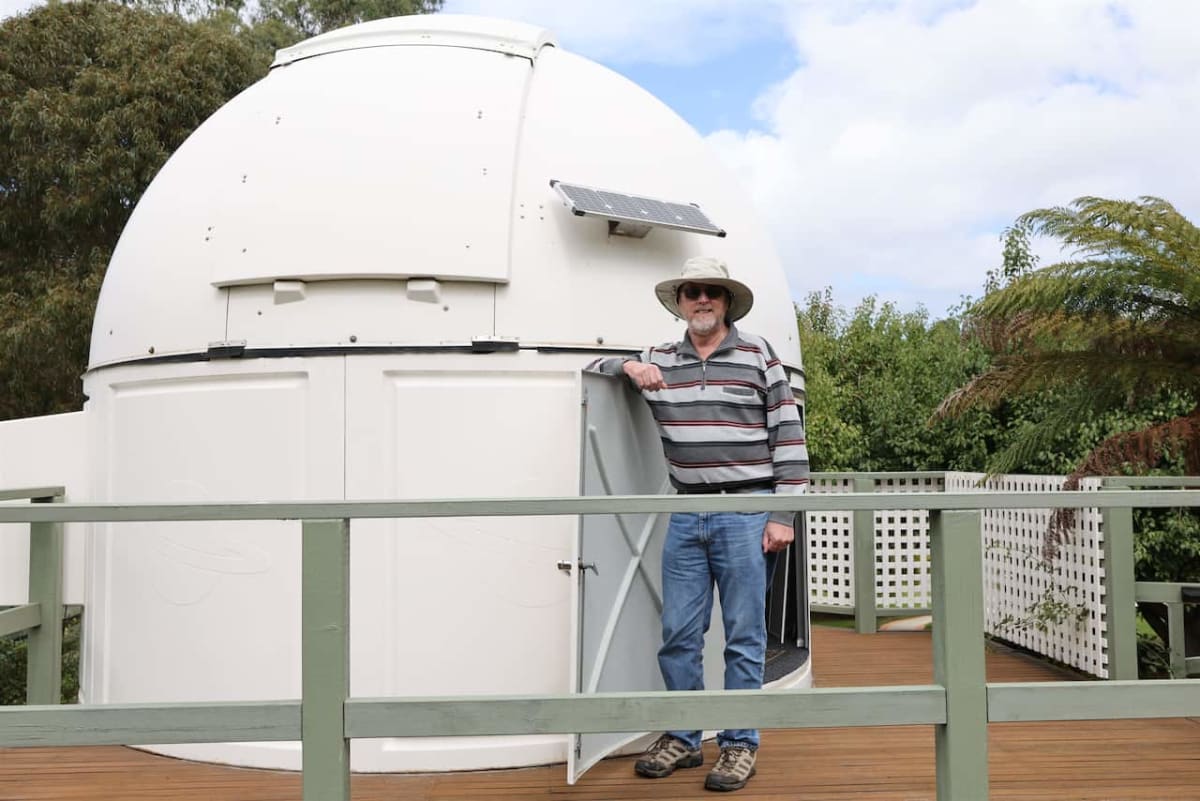
This year, all three received the Berenice and Arthur Page Medal, Australia's top honor for amateur astronomy. They joined fellow backyard scientist Chris Stockdale, who was also recognized for discovering an ultra-hot Neptune, several potential Earth-like planets, and four super-Jupiters using his telescope from Victoria.
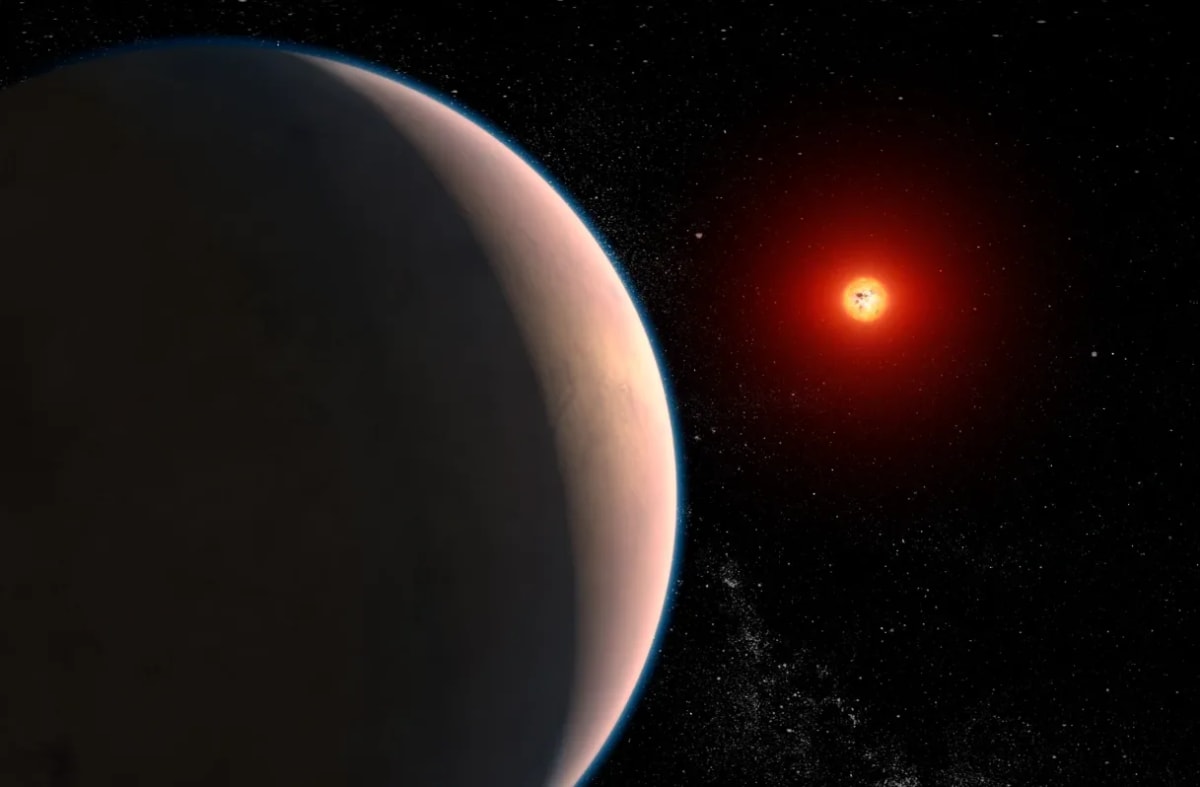
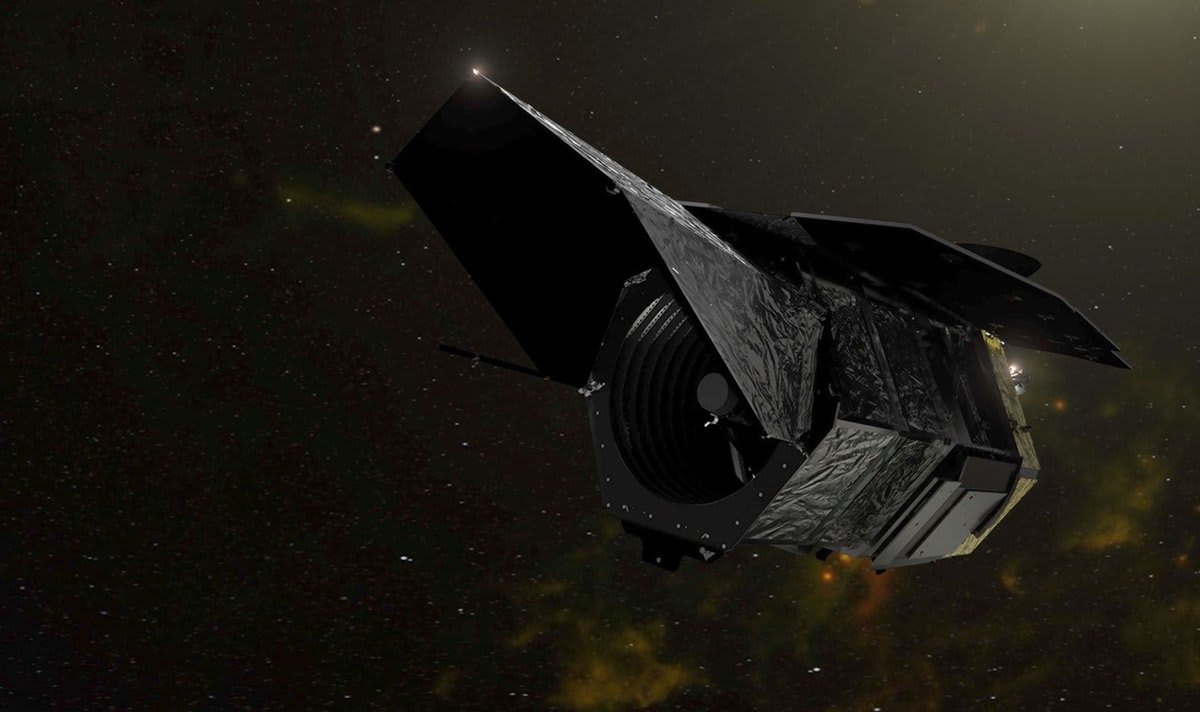
Chris validates findings from NASA's planet-hunting satellite by checking for dips in starlight from his own backyard. He analyzes brightness changes as small as one percent in stars hundreds of light years away, helping guide where the James Webb Space Telescope should look next.
The Ripple Effect
These citizen scientists prove that world-changing discoveries don't require billion-dollar budgets. Jonathan believes amateur astronomers fill crucial gaps where research-funded projects can't reach, adding extra eyes to monitor our vast universe.
Chris monitors exoplanets to help understand how asteroids interact with other bodies and the risks they might pose to Earth. His work searching for evidence of Earth-like atmospheres on distant worlds contributes to humanity's biggest question: are we alone?
For Jonathan, astronomy began at age seven at the Port Macquarie Observatory in 1975. For Chris, it started with his father waking him up to watch Apollo 11 in 1969 and later witnessing the moon landing replay at his principal's house.
Now they're guiding humanity's biggest telescopes toward discoveries that reshape our understanding of the cosmos. Their message is simple: you don't need a PhD or a space agency to contribute to human knowledge, just curiosity, patience, and a telescope pointed at the right patch of sky.
The universe is waiting for anyone willing to look up.
More Images


Based on reporting by SBS Australia
This story was written by BrightWire based on verified news reports.
Spread the positivity!
Share this good news with someone who needs it