NASA Spots Supernova Powered by Universe's Strongest Magnet
Scientists have finally captured definitive gamma-ray evidence of a supercharged supernova, revealing how the most magnetic objects in the universe are born. After nearly 20 years of searching, NASA's Fermi spacecraft witnessed a stellar explosion powered by a newborn magnetar spinning 700 times per second.
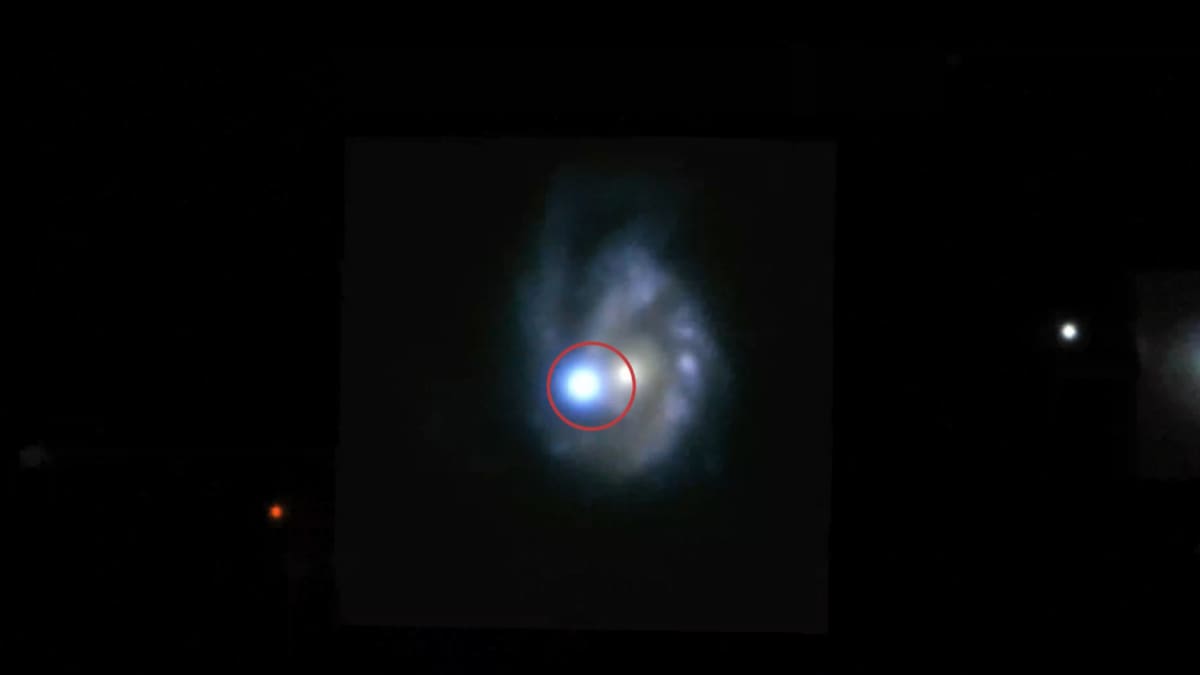
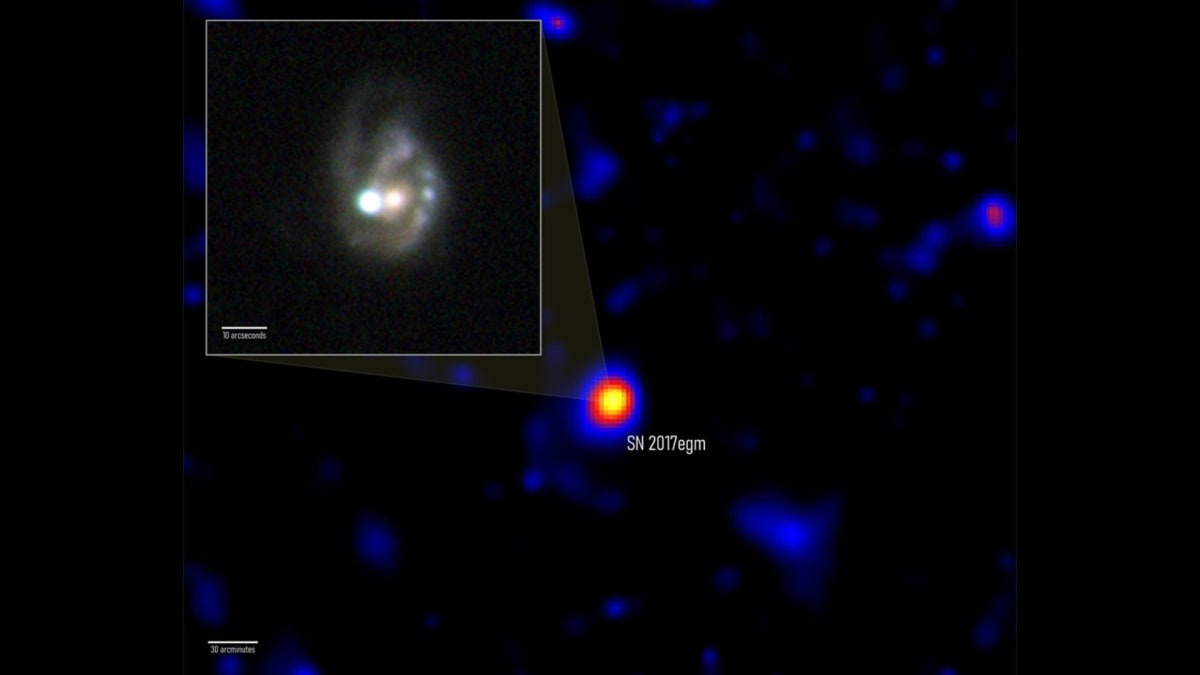
For the first time ever, scientists have caught definitive proof of what powers the brightest supernovas in the universe. NASA's Fermi spacecraft detected gamma-rays streaming from a stellar explosion supercharged by a magnetar, the most powerfully magnetic object known to exist.
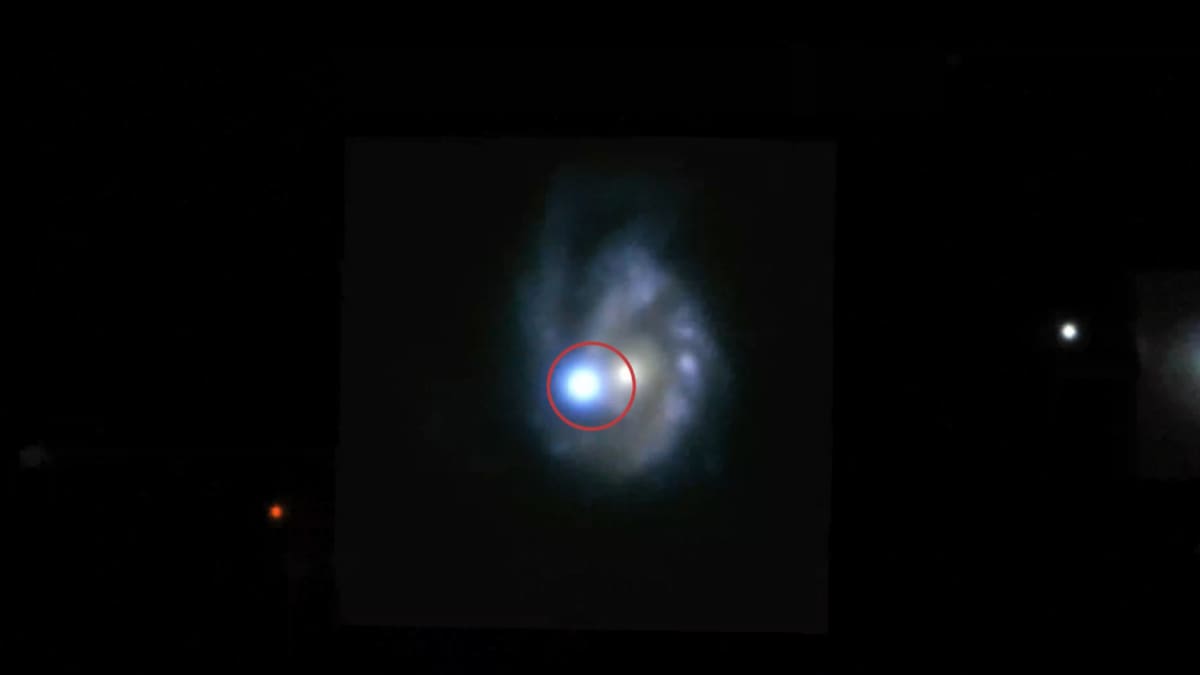
The supernova, called SN 2017egm, erupted 440 million light-years away when a massive star collapsed. As its core compressed down to just 12 miles across, it created something extraordinary: a neutron star so dense that a single teaspoon of its material would weigh 10 million tons on Earth.
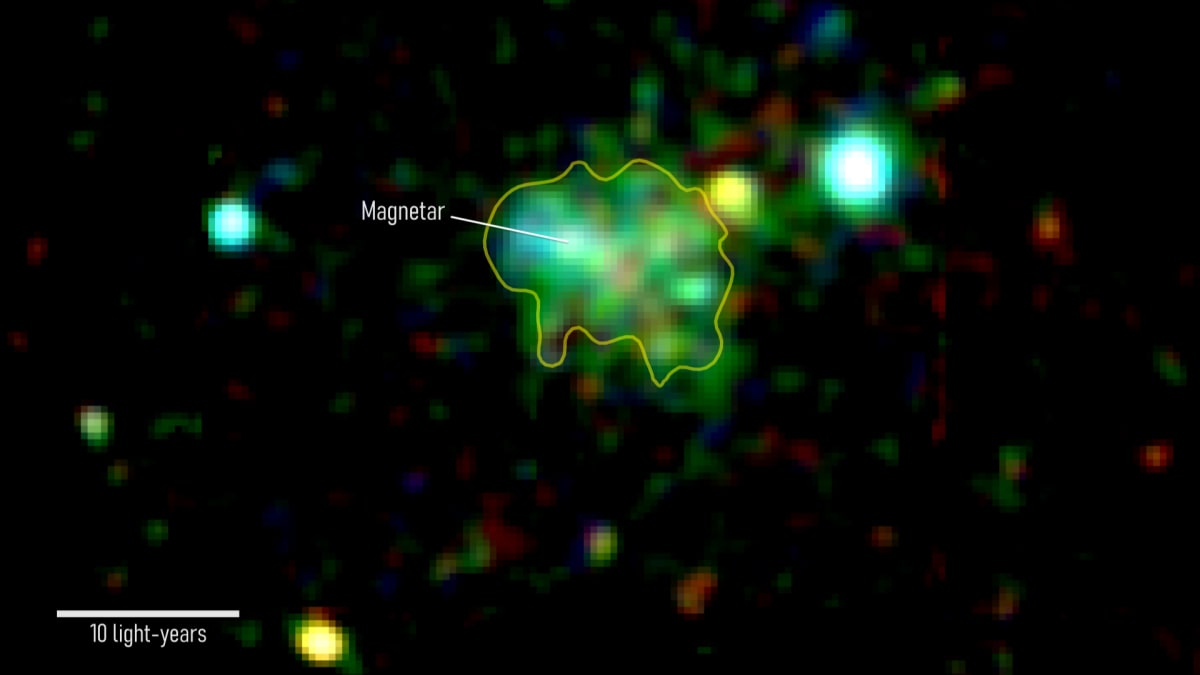
That compression did more than create density. It forced the newborn star to spin at incredible speeds, up to 700 rotations every second, while squeezing its magnetic field lines together to create magnetar-level power.
Scientists have observed around 400 of these core collapse supernovas over recent decades, but some shine 10 times brighter than others in visible light. The mystery of what gives these "superluminous" events their extra punch has puzzled astronomers for years.
Team leader Fabio Acero from the University of Paris-Saclay and his colleagues searched through 16 years of Fermi data, examining the six nearest superluminous supernovas. Only SN 2017egm showed the telltale gamma-ray signature they were looking for.
The breakthrough came from understanding what happens in those first chaotic months after collapse. The spinning magnetar throws out a cloud of electrons and antimatter positrons, creating what scientists call a magnetar wind nebula. When matter meets antimatter, they annihilate each other and release pure energy as gamma-rays.
Those gamma-rays then slam into the expanding shell of debris from the exploded star, converting into visible light. That's why these supernovas shine so incredibly bright to our telescopes, even across hundreds of millions of light-years of space.
About three months after the initial collapse, as the supernova debris expands and cools, the gamma-rays begin leaking through the outer layers. The timing and brightness patterns matched the team's theoretical models almost perfectly.
Why This Inspires
This discovery opens a brand new window for studying stellar death and rebirth. After two decades of searching through thousands of supernovas without definitive results, scientists finally have concrete evidence of how nature creates its strongest magnets.
The breakthrough also points toward an exciting future for astronomy. New ground-based telescopes like the Cerenkov Telescope Array should be able to spot similar events up to 500 million light-years away, potentially revealing dozens more of these cosmic powerhouses.
Understanding magnetars helps us grasp the full cycle of stellar life, from the nuclear fires of massive stars to the exotic physics of their compressed corpses. Each discovery reminds us that even in death, stars create some of the universe's most remarkable phenomena.
The cosmos keeps proving it has more secrets to reveal, and our tools for discovering them grow better every year.
More Images

Based on reporting by Google News - Science
This story was written by BrightWire based on verified news reports.
Spread the positivity!
Share this good news with someone who needs it