Australian Farm Hides 16-Million-Year-Old Rainforest Fossils
Scientists discovered impossibly detailed fossils beneath an Australian farm, with spider hairs and fish eyes perfectly preserved in iron-rich rock that shouldn't preserve anything. The find rewrites the rules on where to hunt for ancient life.
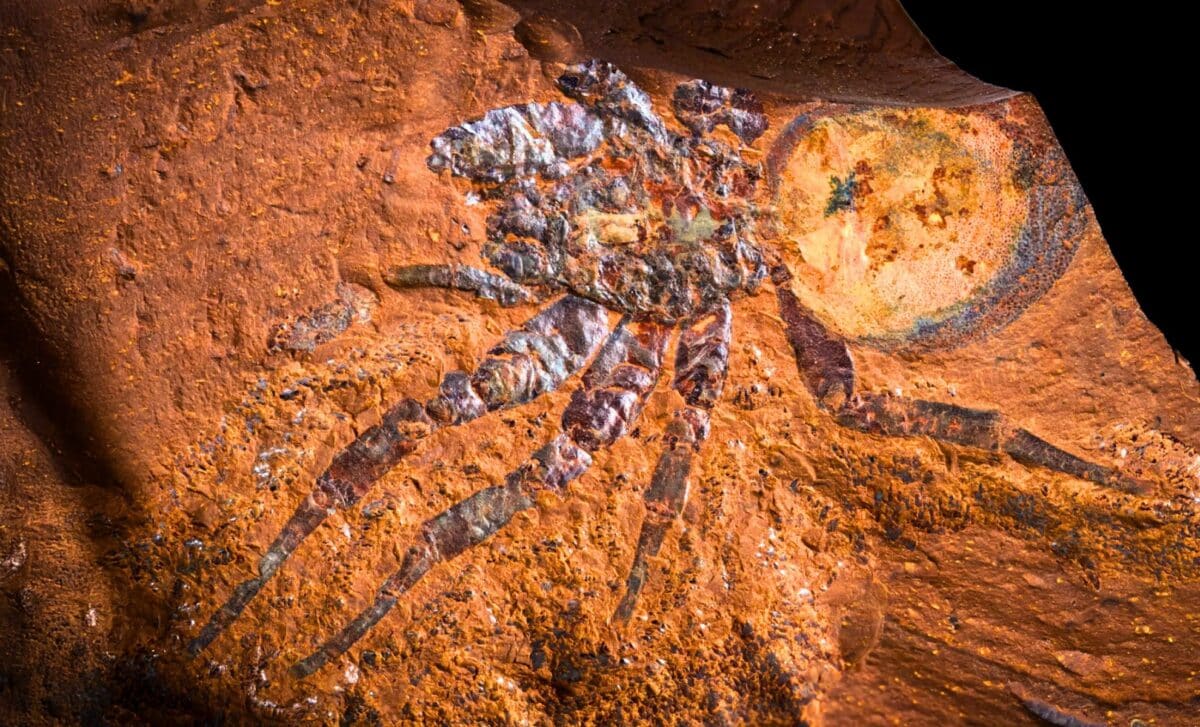
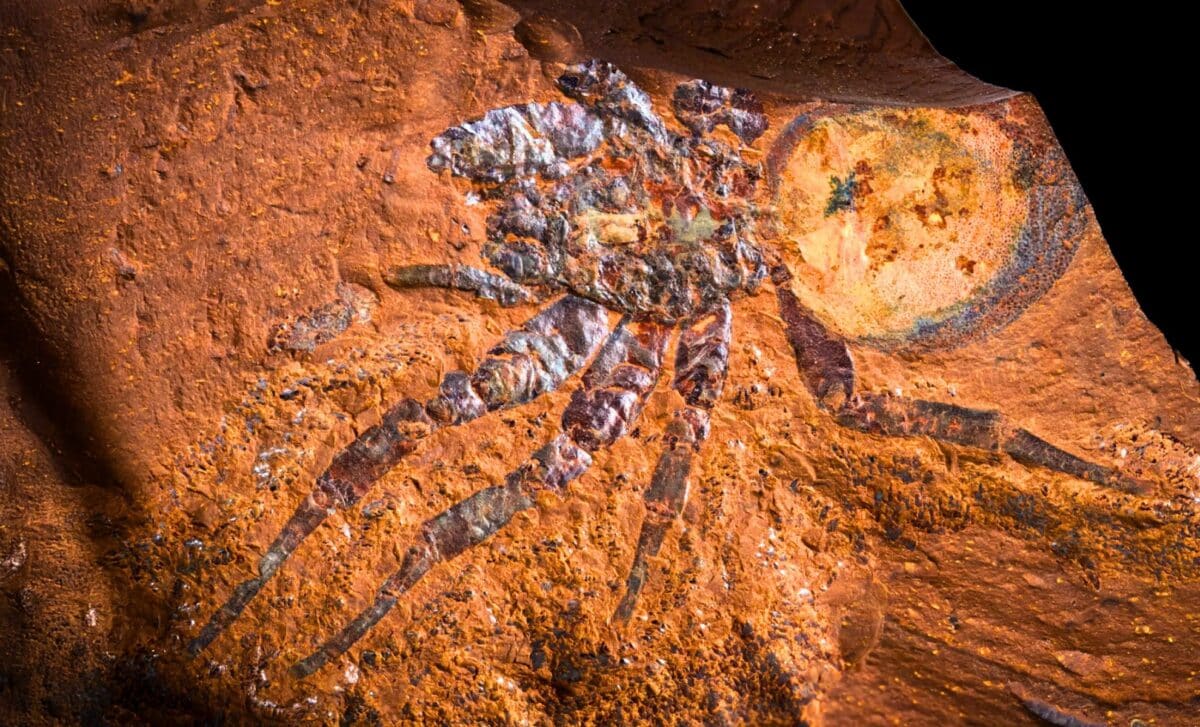
A fossil spider with every hair visible. A fish eye frozen mid-gaze, its color cells intact. These aren't from famous fossil sites in Germany or Canada but from rust beneath a farm in New South Wales, Australia.
The discovery at McGraths Flat challenges everything geologists thought they knew about fossil preservation. For decades, scientists dismissed iron-rich rocks as hopeless for finding delicate fossils, focusing instead on oil shale and mudstone.
They were looking in the wrong place.
Between 11 and 16 million years ago, this dry grazing land was a lush rainforest teeming with insects, spiders, fish, and birds. When these creatures died, they sank into a quiet oxbow lake where something remarkable happened.
Acidic groundwater had leached iron from volcanic basalt bedrock underground. When this iron-rich water seeped into the still lake, it settled as ultra-fine rust particles that coated every organism on the lake floor.
The iron coating hardened around dead creatures faster than bacteria could decompose them. It slipped inside individual cells and mineralized them, turning soft tissue into stone before decay could erase the details.
Paleontologist Tara Djokic and her team from the Australian Museum Research Institute found nerve cells, plant reproductive structures, and even the microscopic melanosomes that gave fish eyes their color. The preservation rivals the planet's most celebrated fossil beds, but the chemistry is completely different.
Each iron grain measures roughly 0.005 millimeters across, small enough that a hundred particles could span a human hair. That tiny scale allowed the iron to preserve details that should have vanished millions of years ago.
The team identified stomach contents showing what fish ate, parasites attached to fins, pollen stuck on insect heads, and nematodes clinging to beetle bodies. The fossils captured not just individual creatures but an entire ecosystem frozen in a single moment.
Why This Inspires
This discovery hands scientists a new treasure map. They now have a checklist of conditions that produce exceptional fossils in iron-rich rock: ancient river channels cutting through volcanic landscapes, warm humid climates, acidic groundwater, and the absence of limestone or sulfur minerals.
Similar geological conditions exist on every continent. Researchers who once walked past rust-colored rocks as worthless may now crack them open to find perfectly preserved ancient worlds waiting inside.
The finding proves that major scientific breakthroughs can hide in plain sight. Sometimes progress means questioning assumptions that shaped an entire field for generations.
A 16-million-year-old rainforest survived beneath a farm because one team decided to look where everyone said nothing could be found.
More Images


Based on reporting by Google: fossil discovery
This story was written by BrightWire based on verified news reports.
Spread the positivity!
Share this good news with someone who needs it