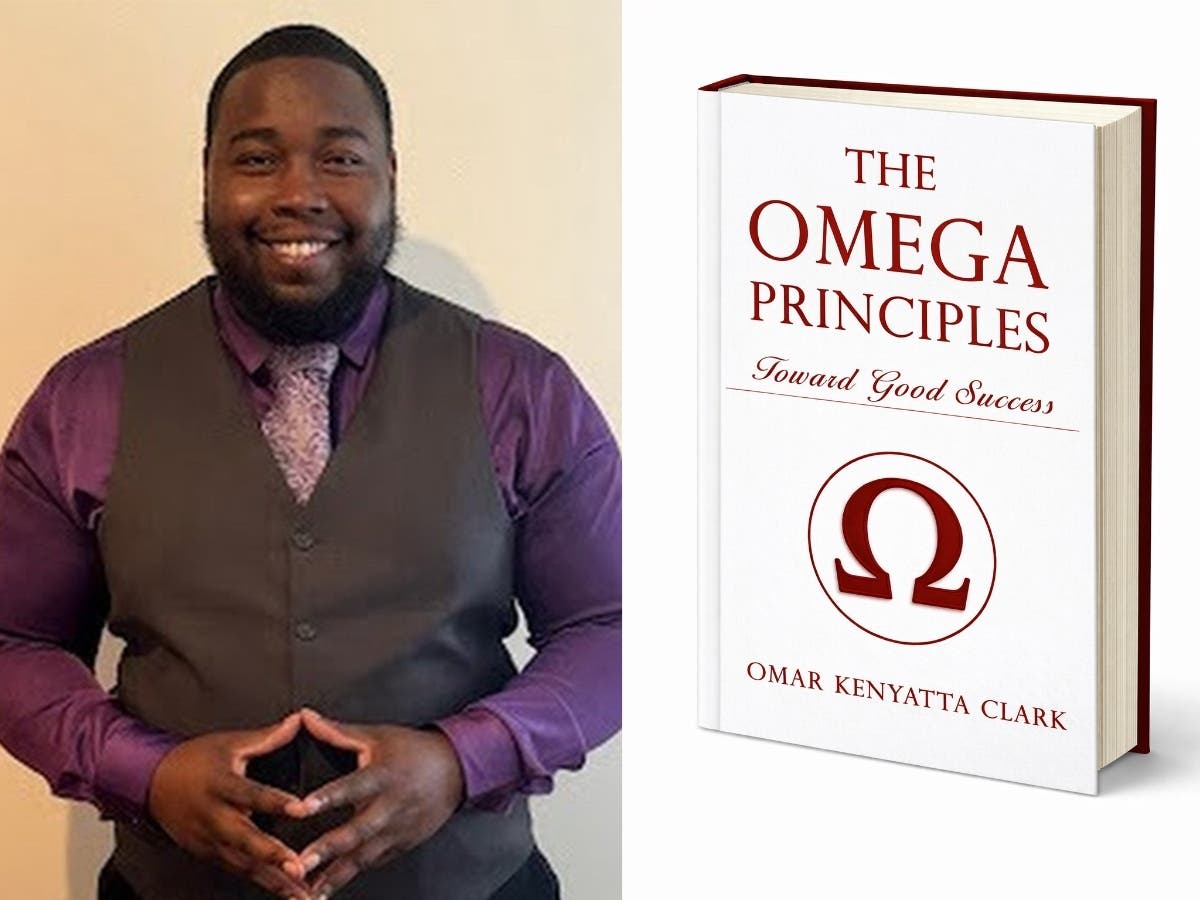
Author Redefines Success After Mental Health Crisis
Omar Kenyatta Clark turned his mental health journey into a book that challenges what success really means. The peer specialist now helps others navigate recovery while sharing lessons from his own hospitalizations.
Omar Kenyatta Clark was pursuing his dream of becoming a clinical psychologist when a manic episode changed everything.
The Wheatley Heights native was 25, had just landed seven doctoral program interviews, and seemed unstoppable. Then he diagnosed his own manic episode in an emergency room, was tased by police during the crisis, and woke up in intensive care with an uncertain future.
"At that point, what I saw as success and all my hopes of success became unclear and unstable," Clark said.
But his story didn't end there. His mother arranged a phone interview with Rutgers University while he was still hospitalized. He got in. That acceptance became proof his life wasn't over.
Clark spent five years cycling through psychotic breaks at semester's end, hospitalizations, recoveries, and returns to school. He kept pushing forward, chasing the traditional markers of achievement.
"Even though I was having success, it was at the cost of my mental health," he said. Eventually, he made a different choice. He left the doctoral program.
Now 32, Clark works as a peer specialist in psychiatric units and support groups. He uses his lived experience to help others through mental health recovery. The psychology degree he earned at Misericordia University still serves people struggling with mental health challenges, just not the way he originally planned.
In April, he published "The Omega Principles: Toward Good Success" through Breath of Hope Publishing. The book explores what he calls a deeper form of success, one rooted in faith, will, purpose, and help.
"It's about success that doesn't cost you your soul," Clark said. "Sometimes when we're pursuing success, we can do that at the cost of our peace or the cost of our mental health or the cost of relationships."
Why This Inspires
Clark's transformation from patient to peer specialist shows how lived experience can become powerful expertise. His work demonstrates that recovery isn't about erasing what happened but integrating it into a meaningful life.
His diagnosis of bipolar I disorder came with no prior history of mental health challenges through childhood or early adulthood. That sudden shift forced him to rebuild his understanding of what a successful life could look like.
Faith became central during his recovery, especially during hospitalizations when family couldn't be present. His four principles emerged from those experiences: faith to ground him, will to keep moving forward, purpose to guide his direction, and help to remind him he didn't have to do it alone.
The final principle came directly from watching his family support him through crisis. "I realized I had to take a stand for my mental health," he said.
Clark's redefinition of success now centers people instead of achievements, wholeness instead of advancement, and sustainability instead of pushing through at any cost.
More Images

Based on reporting by Google News - Mental Health Success
This story was written by BrightWire based on verified news reports.
Spread the positivity!
Share this good news with someone who needs it