Bee Brains Inspire Chip 100x More Efficient Than Current Tech
Scientists are creating computer chips modeled after bee navigation systems that use 100 times less power than today's technology. The breakthrough could lead to tiny robots that clean pollution or sensors that protect the environment.
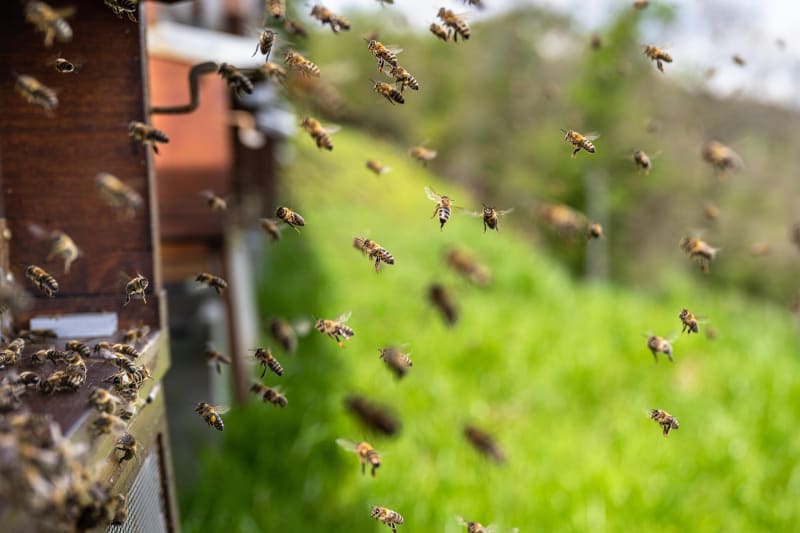
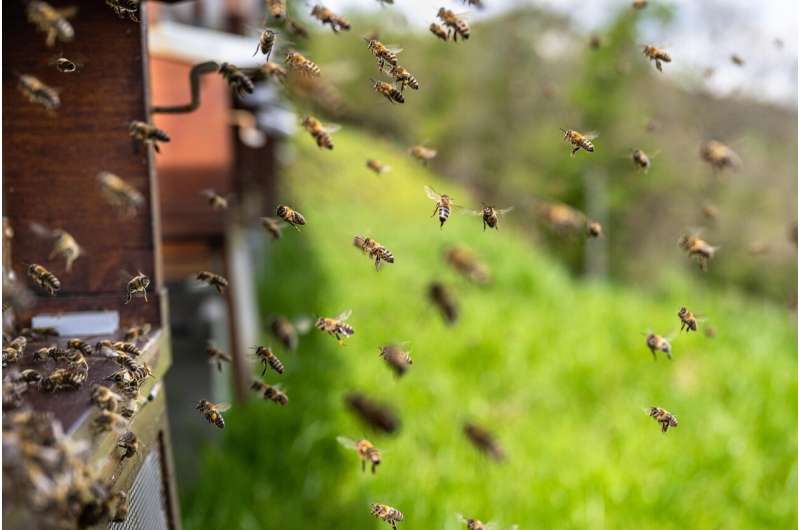
A bee weighs less than a gram and navigates home perfectly using less power than it takes to light a birthday candle, and now scientists want to copy that trick for the next generation of computers.
Researchers across five European countries are building chips inspired by how bees find their way back to the hive. These insects track their position by reading patterns in the sky and monitoring their speed, all while their brains consume just one hundredth of a watt of power.
"A bee finds its way back without a smartphone or satellite navigation," says Anders Mikkelsen, a professor at Lund University in Sweden who coordinates the InsectNeuroNano initiative. Today's lightweight navigation chips weigh over 80 grams and gulp down more than 7 watts of power.
The secret lies in specialization. Modern computer chips are built to multitask, handling everything from emails to video games. Bee brains evolved to do one thing exceptionally well: navigate efficiently.
The research team is creating chips that work the same way. Instead of versatile processors that can handle any task, these specialized chips focus solely on determining position using light sensors and speed data.
Professor Elisabetta Chicca from the University of Groningen explains the advantage: "For some problems, nature has already found a solution that is compact, low-power and efficient. Insect brains offer one such solution."
The technology uses nanophotonic circuits that guide light through structures billions of times smaller than a meter. This photonic computing approach sends more data while using less energy than traditional electrical signals through wires.
The Ripple Effect
The applications extend far beyond navigation. Mikkelsen envisions swarms of insect-sized robots working together like a programmable bee colony. These tiny machines could clean up pollution in hard-to-reach places, build structures, or even pollinate fields where natural bee populations have declined.
Environmental sensors powered by these efficient chips could monitor ecosystems continuously without frequent battery changes. The low power requirements mean they could run for years on tiny solar cells or ambient energy.
The team has already built their first prototype chip in lab conditions that successfully mimics insect brain function. While Mikkelsen estimates it will take about 10 years before the technology reaches the real world, the progress is already pushing computing forward in new directions.
The collaboration benefits biologists too. As engineers build virtual models of the chips, they make hypotheses about how insect brains actually work. These models suggest how neural circuits might be wired, giving scientists new insights into the tiny brains that inspired the breakthrough.
The project runs until September 2026, but its impact on sustainable computing has already begun buzzing through the research community.
More Images
Based on reporting by Phys.org - Technology
This story was written by BrightWire based on verified news reports.
Spread the positivity!
Share this good news with someone who needs it