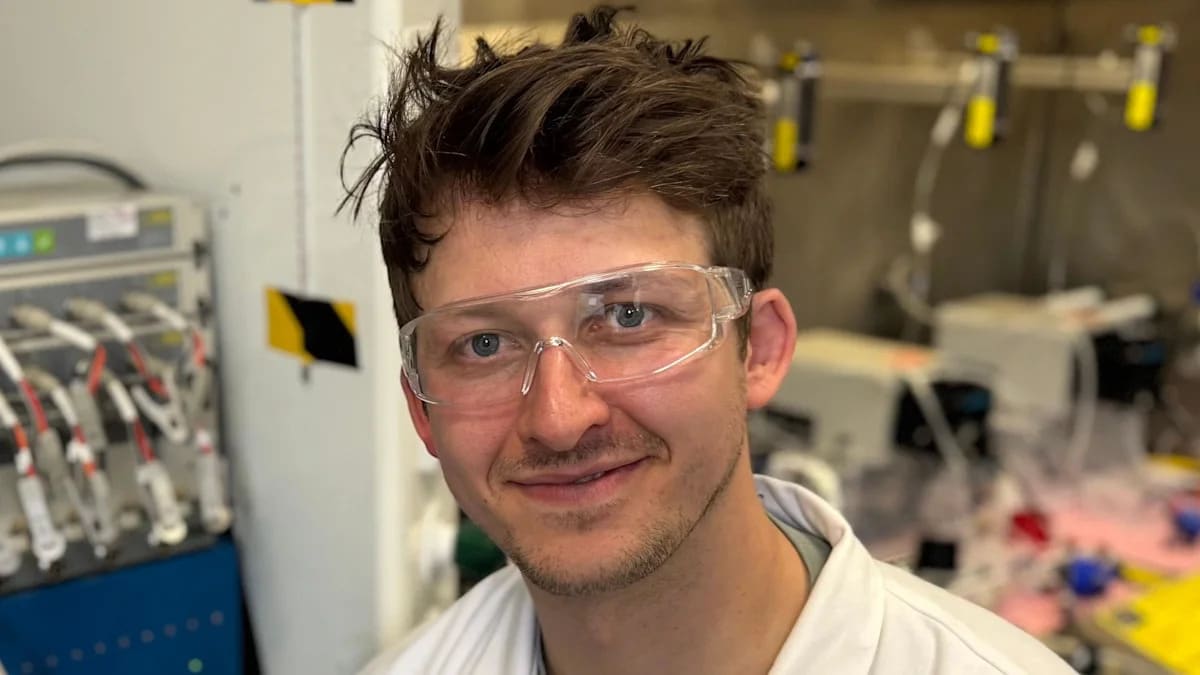
Belfast Scientists Give Away £74 Battery Blueprint for Free
Researchers at Queen's University Belfast developed a revolutionary 3D-printed flow battery that costs just £74 instead of £3,000, and they're giving the design away free to accelerate the global shift to renewable energy.
A PhD student who couldn't afford a £3,000 battery just solved one of renewable energy's biggest challenges by accident.
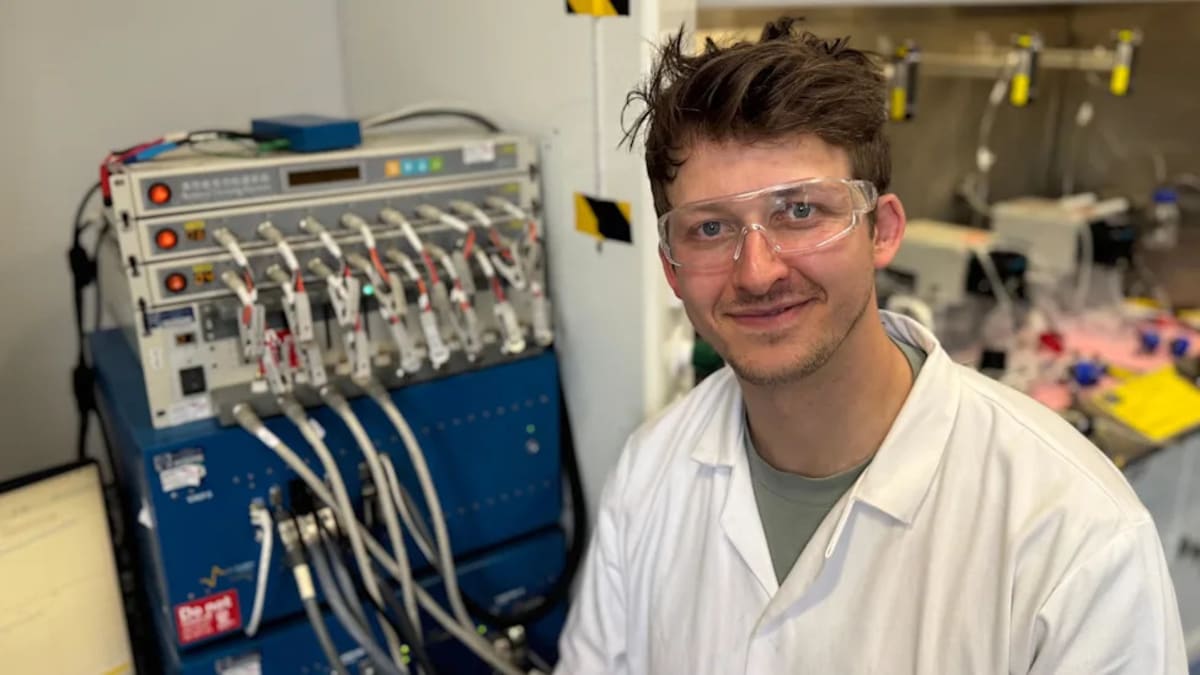
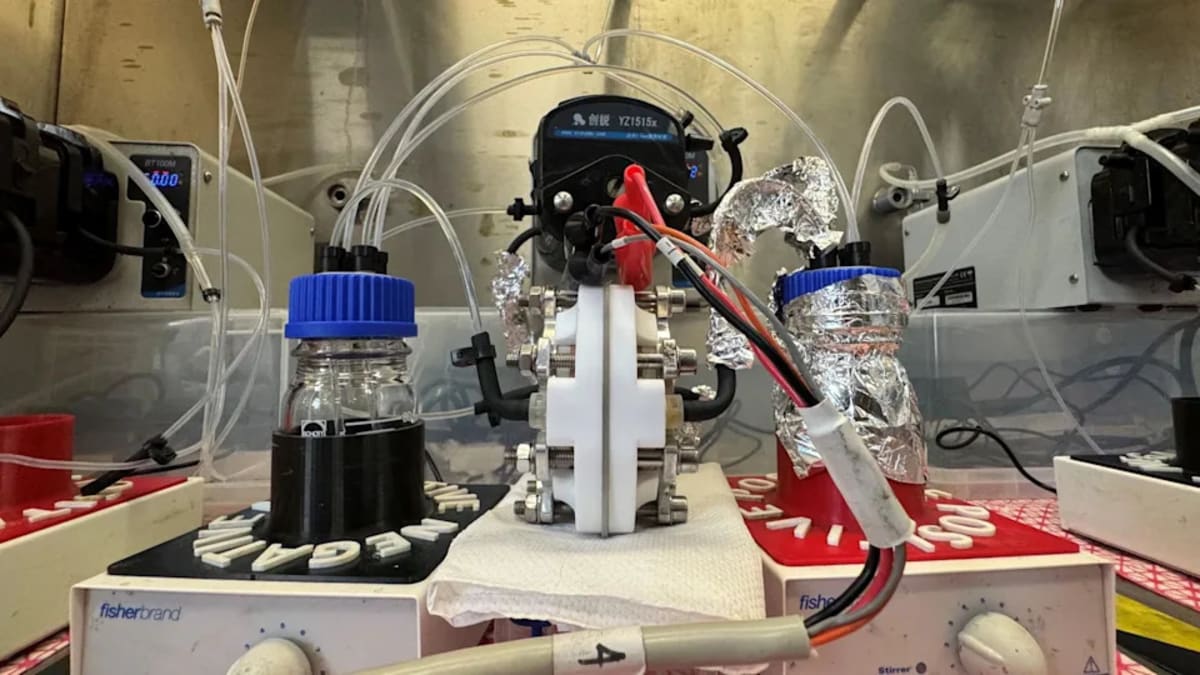
Dr. Hugh O'Connor at Queen's University Belfast needed a flow battery for his research but balked at the price tag. So he started tinkering with 3D printers instead. After lots of trial and error, his homemade version worked beautifully and cost just £74 to build.
Flow batteries are crucial for storing wind and solar energy when nature isn't cooperating. They keep renewable power available even when the sun sets and the wind stops blowing. But traditional versions rely on vanadium, a rare metallic element only produced in a few countries, making them expensive and difficult to scale.
O'Connor's design uses iron instead, which is far easier to source worldwide. When he compared his results to other research, he noticed something interesting. Scientists everywhere were struggling with the same problem: expensive equipment and inconsistent results that made progress painfully slow.
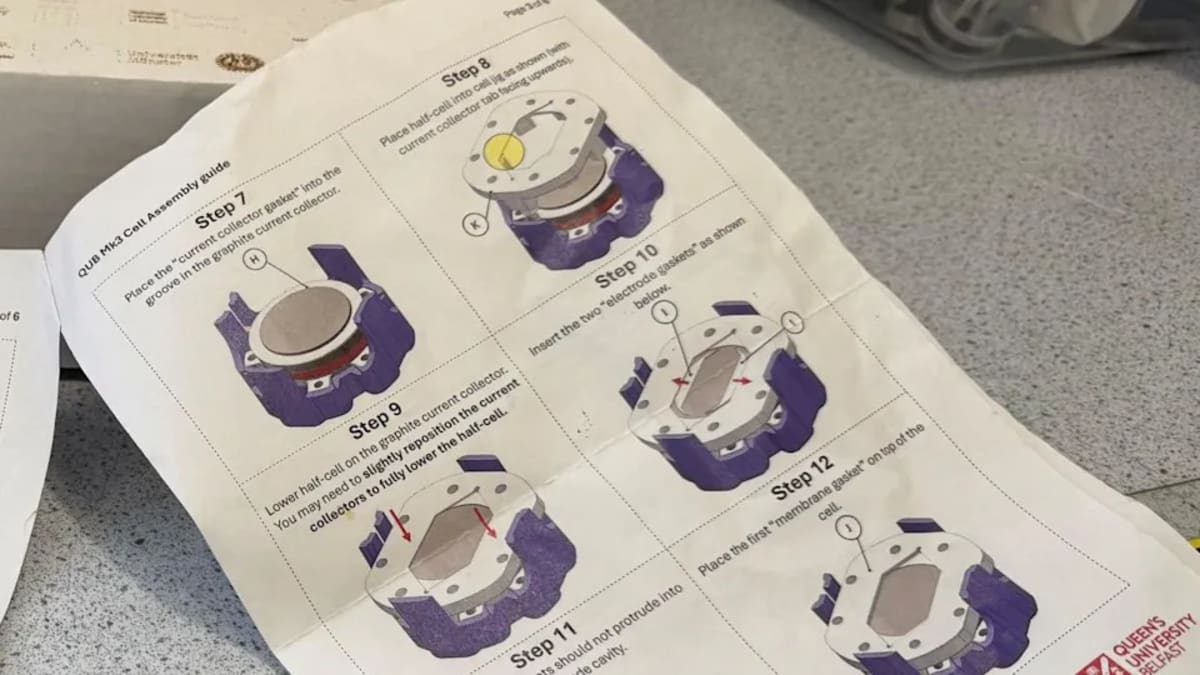
Here's where the story gets really good. Instead of selling his invention for profit, O'Connor and his team decided to give it away completely free to researchers worldwide. They even created an Ikea-style instruction manual so anyone can build one.
"We kind of saw it as an opportunity to grow our network rather than make a small amount of money, and we feel like it can really benefit this technology," O'Connor explained. The battery kit includes about ten components and arrives with step-by-step assembly instructions.
The Ripple Effect spreads far beyond one university lab. Scientists at institutions around the world are now using identical equipment, which means their results can be compared reliably for the first time. Dr. Josh Bailey, who leads the global collaboration at QUB, believes this standardization will dramatically speed up progress.
"If we're all going to get to 2050 and be at net zero, a lot more of our electricity needs to be stored in technologies like flow batteries," Bailey said. Last year, renewable sources generated more electricity than coal globally, and the UK hit record renewable energy production.
The team is already scaling up, testing larger stacks to see how the technology performs at industrial levels. Being able to store more renewable energy would also reduce how often wind turbines get switched off when demand drops, capturing even more clean power.
Sometimes the best way forward isn't about making money but about making progress together.
More Images

Based on reporting by Google News - Renewable Energy Breakthrough
This story was written by BrightWire based on verified news reports.
Spread the positivity!
Share this good news with someone who needs it