Bengaluru Startup's Snake Robots Enter Spaces Too Risky for Humans
A Bengaluru team just raised $2.1 million to build flexible robots that inspect fuel tanks, ship hulls, and nuclear reactors so workers never have to crawl into deadly confined spaces again. The three-meter mechanical arms twist through tight corners like snakes, bringing cameras and tools where rigid robots can't reach.
Every year, workers squeeze into fuel tanks, reactor chambers, and ship hulls to inspect equipment, risking their lives in spaces where fatal accidents happen regularly.
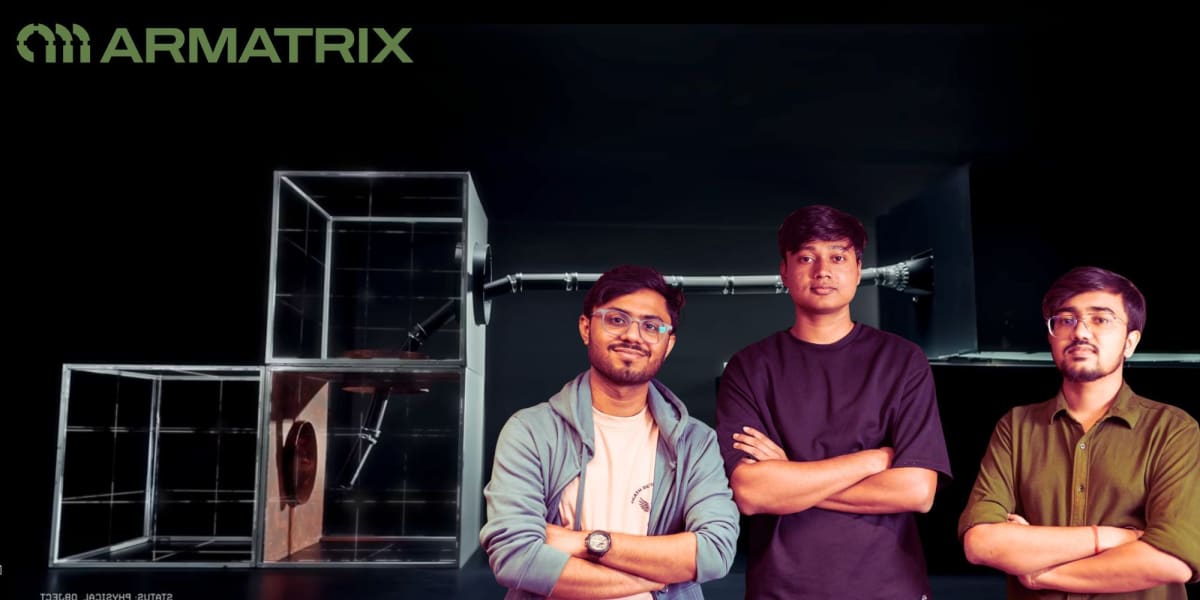
Armatrix, a Bengaluru startup founded in 2024, is building snake-like robots to take their place. The company's flexible robotic arms can thread through cramped, twisting passages that would crush a person or stop a conventional robot cold.
The three IIT Kanpur engineers behind Armatrix saw an industry stuck in a dangerous cycle. Companies shut down entire production lines to build scaffolding and send humans into hazardous spaces. The work is slow, expensive, and often happens only after something breaks rather than before disaster strikes.
Their solution is a robotic arm three to five meters long with more than 22 points of movement. It bends and curves like a snake, navigating through manholes set at right angles to one another. The mechanical structure of links, joints, and cables keeps all electronics and motors safely sealed away from dangerous environments.
The robot doesn't just look around. Its tip accepts different tools that can swap out for various jobs, so the same machine inspects surfaces one day and performs maintenance the next. AI guides the arm in real time, adapting to unpredictable industrial layouts through digital twin simulation.
Armatrix already has a working three-meter prototype. The team plans to rent the robots as a service to most customers while selling them outright to defense clients who need to keep sensitive work onshore.
In February 2025, the startup raised $2.1 million in a pre-seed round led by pi Ventures, joined by Inuka Capital, Boundless Ventures, Boost VC, Turbostart, and gradCapital. The funding will help finish the full product, grow their 13-person team, and launch pilot programs with shipyards, oil and gas companies, nuclear facilities, and aviation clients.
The Ripple Effect
The global market for robotic maintenance hit $41 billion in 2023 and is projected to reach $150 billion by 2032. Few companies worldwide build robots specifically for confined space work, and even fewer operate in India.
Armatrix's locally built systems could serve Indian shipyards and refineries more affordably than imported alternatives. For defense work, keeping the technology homegrown means sensitive operations stay secure and onshore.
The bigger shift is cultural. By making proactive maintenance possible without downtime or human risk, these robots could change how entire industries think about safety and equipment care.
Workers will soon watch from safe control rooms while mechanical arms do the crawling for them.
More Images


Based on reporting by YourStory India
This story was written by BrightWire based on verified news reports.
Spread the positivity!
Share this good news with someone who needs it