Berlin Was the World's Queer Capital in the 1920s
A century before today's pride parades, Berlin hosted the world's first gay rights organization and pioneered groundbreaking research on sexuality and gender identity. The city's vibrant queer community in the 1920s created a blueprint for LGBTQ+ activism that echoes into our present.
Before Berlin became known as a modern haven for LGBTQ+ life, it held that same title a hundred years ago, pioneering the world's first organized gay rights movement.
In 1897, physician Magnus Hirschfeld founded the Scientific-Humanitarian Committee in Berlin, considered the first organization in the world dedicated to defending gay rights. He argued that sexual orientation and gender identity were natural parts of human diversity rather than moral failings or crimes.
This radical thinking led Hirschfeld to establish the Institute for Sexual Science in 1919. The institute combined research and education with patient care, becoming internationally known for progressive work on sexuality, gender expression, and what we now understand as transgender identity.
The institute challenged rigid male-female binaries and offered counseling decades before such support became common elsewhere. It kept extensive archives and promoted ideas that were generations ahead of their time.
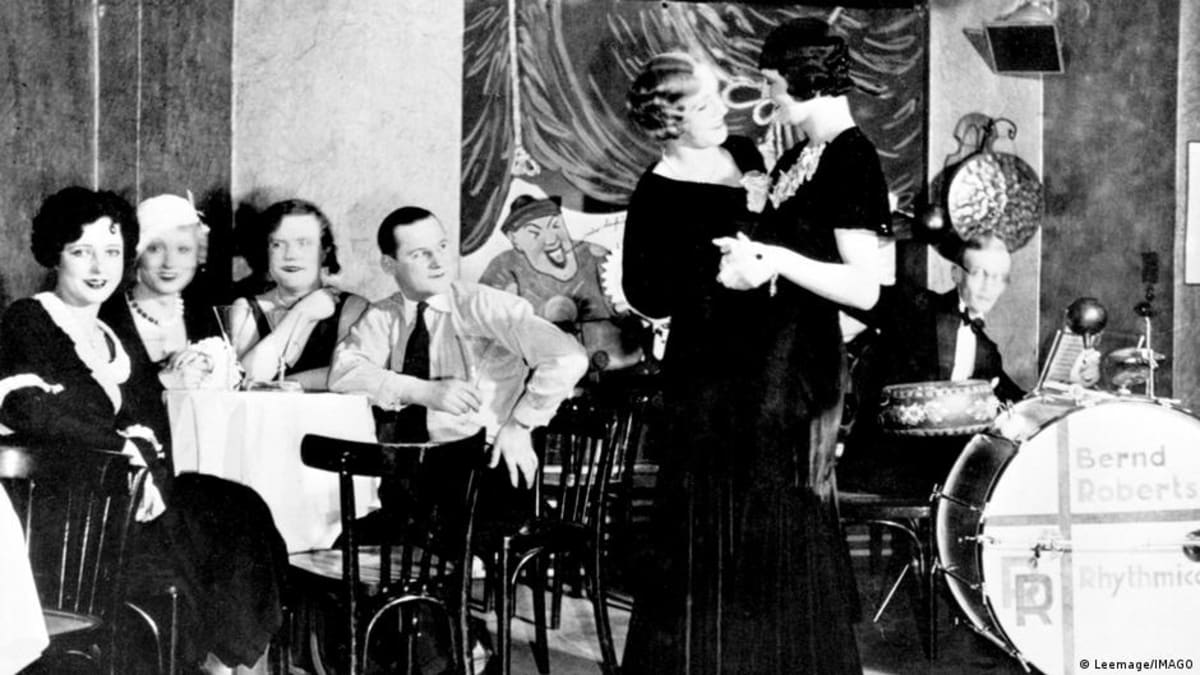
Berlin's neighborhood of Schöneberg became a meeting place for artists and creatives. The cafe Dorian Gray hosted literary readings, costume balls, and live music, serving as an especially important gathering place for the lesbian social scene.
The famous nightclub Eldorado opened in 1924, offering more than just entertainment. It became a meeting place for artists, writers, performers, and Berlin's LGBTQ+ community, hosting drag performances and creating space for social freedom.
Artist Otto Dix depicted scenes from Eldorado in his work. Marlene Dietrich reportedly performed there, and British author Christopher Isherwood visited the club, later writing "The Berlin Stories" based on the bohemian, queer atmosphere of 1920s Berlin.
The Ripple Effect
This vibrant culture emerged despite Paragraph 175, a law criminalizing sexual acts between men that remained on the books from 1871 until 1994 in parts of Germany. The pushback against this law from activists, doctors, and writers created one of Europe's earliest visible gay rights movements.
Berlin's status as a queer cultural center ended abruptly when the Nazis took power in 1933. On May 6 of that year, Hirschfeld's institute was raided and destroyed, with its library and research archives looted and burned during the notorious Nazi book burning four days later.
The Nazis arrested at least 50,000 gay men under Paragraph 175, and an estimated 5,000 to 15,000 were sent to concentration camps. Where Eldorado once stood, an organic grocery store operates today, though a commemorative plaque marks the institute's former location.
After decades of recovery, Berlin has reclaimed its position as a center of queer culture, carrying forward the legacy of those who built community against the odds.
Based on reporting by DW News
This story was written by BrightWire based on verified news reports.
Spread the positivity!
Share this good news with someone who needs it

%2Fhttps%3A%2F%2Ftf-cmsv2-smithsonianmag-media.s3.amazonaws.com%2Ffiler_public%2F3b%2Fee%2F3bee4220-cf7d-4425-aa4c-42e7c6a5693a%2Fcoin.png)
