Blue Origin's New Glenn Rocket Prepares for Historic Reflight
Blue Origin successfully tested a reusable rocket booster that's about to make space history. The New Glenn rocket is set to launch Sunday, becoming the company's first vehicle to fly a second mission.
A used rocket is about to prove that the future of affordable spaceflight is here.
Blue Origin fired up its New Glenn rocket for 19 seconds Wednesday morning at Cape Canaveral Space Force Station in Florida. The test kept the 322-foot-tall vehicle on track for a landmark achievement: its first-ever reflight on Sunday.
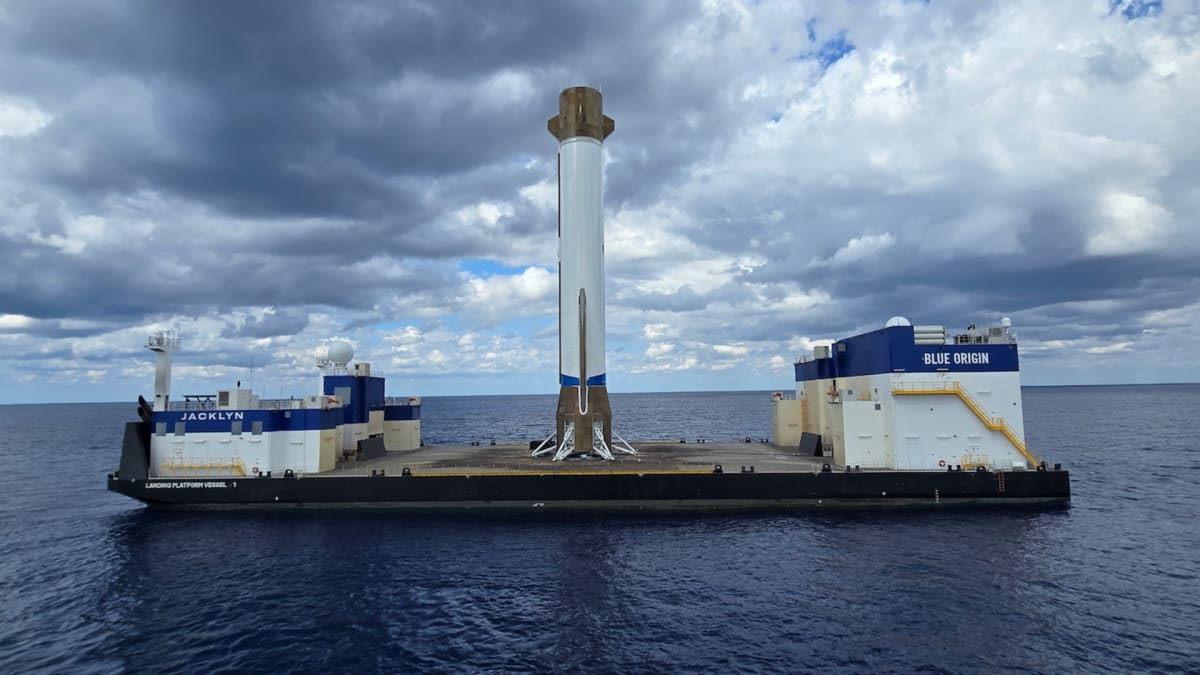
The mission will reuse a booster that previously launched NASA's ESCAPADE probes toward Mars last November. After that flight, the first stage landed softly on a drone ship named Jacklyn in the Atlantic Ocean, setting up this historic moment.
New Glenn has only launched twice since its debut in January 2025. But this reflight marks a crucial step toward making space launches more affordable and frequent.
CEO Dave Limp explained that the booster's shell will fly again with some key upgrades. The team replaced all seven engines and added a new thermal protection system to one engine nozzle. The engines from the November flight will fly on future missions.
Sunday's launch, scheduled for 6:45 a.m. EDT, will carry a massive satellite to low Earth orbit. The Block 2 BlueBird satellite for AST SpaceMobile will provide direct-to-cellphone internet service with an antenna covering 2,400 square feet.
The Ripple Effect
Reusable rockets are transforming space from an exclusive frontier into an accessible resource. Each New Glenn first stage is designed to fly at least 25 times, dramatically reducing the cost per launch.
This approach means more satellites connecting rural communities to the internet, more scientific missions exploring our solar system, and more opportunities for breakthrough discoveries. When rockets can be refurbished and reflown like airplanes, space becomes a tool for solving Earth's biggest challenges.
The booster launching Sunday could make two dozen more trips to space, carrying everything from weather monitoring equipment to deep space probes. Every successful reflight proves that sustainable spaceflight isn't just possible but practical.
Blue Origin is joining the movement to make space launches routine rather than rare. As more companies perfect reusable technology, the dream of affordable access to space edges closer to reality with every landing and reflight.
More Images


Based on reporting by Space.com
This story was written by BrightWire based on verified news reports.
Spread the positivity!
Share this good news with someone who needs it