Japan's Hayabusa Brought Home First Asteroid Samples
Despite fuel leaks, engine failures, and a broken sampling system, Japan's Hayabusa probe completed a seven-year journey in 2010 to deliver the first asteroid dust ever returned to Earth. The mission failed in almost every way it was supposed to work, yet succeeded in answering a fundamental question about where meteorites come from.
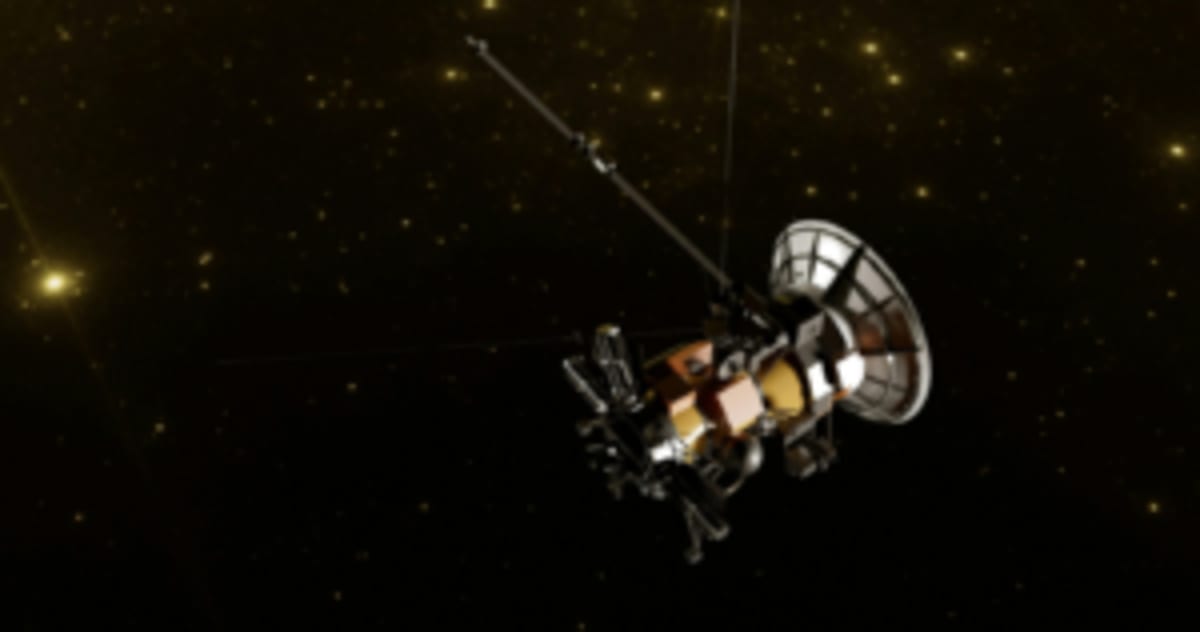
When Japan's Hayabusa spacecraft burned up over Australia in 2010, it completed one of the most improbable success stories in space exploration. The probe had survived fuel leaks, communications blackouts, engine malfunctions, and a sampling system that never fired, yet still managed to bring home the first asteroid samples in history.
Hayabusa launched in May 2003 with a destination of Itokawa, a near-Earth asteroid about 550 meters long. The mission was designed to test new technology while collecting surface samples using a clever system: touch down, fire a tantalum projectile into the surface, and funnel the debris into a sealed container.
Almost nothing went according to plan. The spacecraft's small hopping robot drifted off into space without ever reaching the asteroid. During the first touchdown in November 2005, safety systems aborted the mission and cancelled the projectile firing. The second touchdown days later also failed to trigger the collection mechanism.
But here's where the mission got lucky. When Hayabusa's sampling horn touched the asteroid's surface, the gentle contact kicked up dust in the near-zero gravity. Tiny particles drifted into the collection chamber and stayed there, accidentally captured by a system that was supposed to work completely differently.
The capsule parachuted into the Australian outback in June 2010, three years later than originally planned. Inside, scientists found roughly 1,500 dust grains from Itokawa, most smaller than a human hair. It took months to confirm they were truly from the asteroid and not Earth contamination.
The Ripple Effect
Those microscopic grains solved a decades-old puzzle. Scientists had long wondered whether common S-type asteroids were the source of ordinary chondrites, the most common meteorites found on Earth. The spectra didn't quite match, but researchers suspected this was due to space weathering, the gradual changes caused by solar wind and tiny impacts.
The Itokawa particles confirmed the connection. Their composition matched a specific type called LL chondrites, directly linking meteorites on Earth to their parent body in space for the first time using actual returned samples rather than educated guesses.
The mission proved that asteroid sample return was possible, even when almost everything goes wrong. Japan learned from every failure and launched Hayabusa2 in 2014 with a redesigned system. That successor collected surface and subsurface material from asteroid Ryugu and delivered it successfully in 2020, this time with all systems working as designed.
From a broken mission came both scientific answers and the roadmap for future success.
More Images

Based on reporting by Google News - Science
This story was written by BrightWire based on verified news reports.
Spread the positivity!
Share this good news with someone who needs it