NASA's Curiosity Rover Tracks Mars Seasons After 4,948 Days
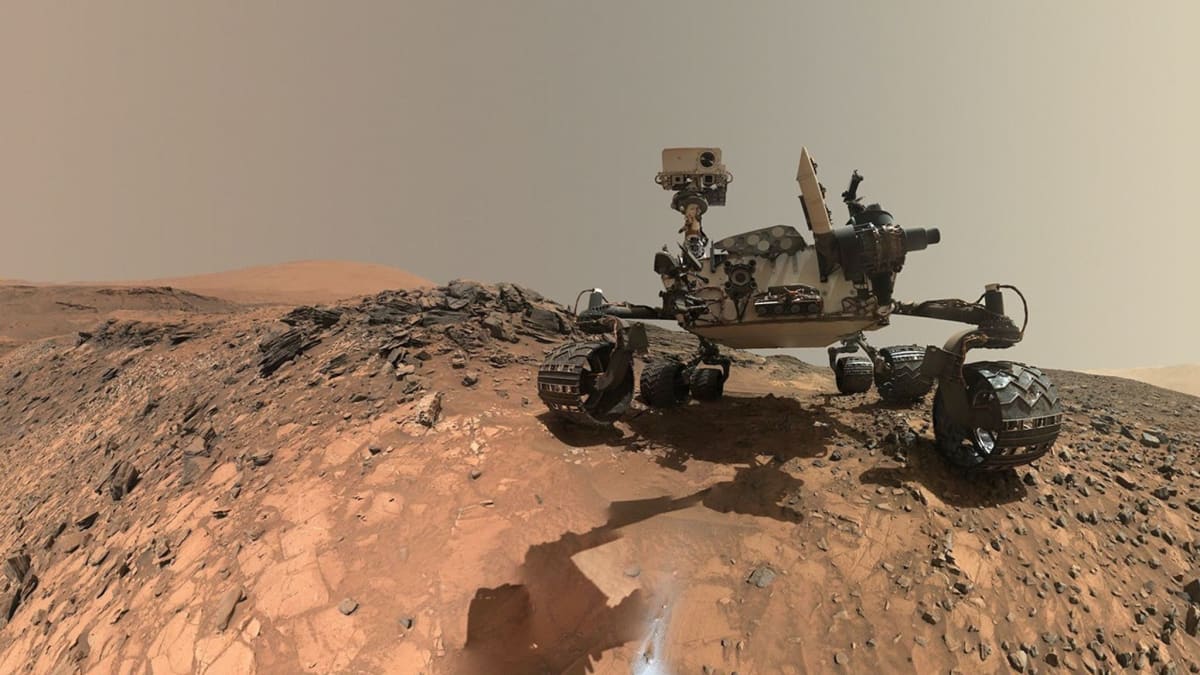
NASA's Curiosity rover just passed its 4,948th Martian day exploring Gale Crater, studying ancient rocks while tracking the Red Planet's changing seasons. The plucky explorer continues uncovering Mars' past while watching dust storms fade into cloud season.
After nearly 14 years on Mars, NASA's Curiosity rover is still going strong and making discoveries that help us understand the Red Planet's past and present.
During its latest week of exploration in July 2026, Curiosity visited three distinct geological areas in Gale Crater, each offering clues about Mars' ancient environment. The rover used its sophisticated instruments to examine rocks that tell stories millions of years old.
Two rocks caught scientists' attention this week because they looked different from their neighbors. Darker than surrounding stones, these specimens might have traveled from elsewhere or could even be meteorites that fell from the Martian sky.
While geology keeps Curiosity busy, the rover is also tracking something happening right now: Mars is changing seasons. The Red Planet is transitioning from its dusty summer into autumn, when clouds replace the dust storms that sweep across the crater.
Scientists are watching this shift closely because late summer brings what they call the "C storm season." Regional dust storms can still form during this period, making it an exciting time for atmospheric research.
The Ripple Effect
Curiosity's work does more than satisfy scientific curiosity. Every rock composition it analyzes and every weather pattern it tracks helps scientists understand whether Mars could have supported life in its watery past.
The rover's daily meteorological measurements are building a comprehensive climate record of Gale Crater. This data helps researchers compare Martian seasons to Earth's and plan future missions, including potential human exploration.
Each geological unit Curiosity studies reveals how water, wind, and time shaped the Martian landscape billions of years ago. Features formed by ancient erosion tell stories of when Gale Crater had a very different environment than the dusty basin we see today.
The mission team gives every examined rock a name because each one is special, contributing another piece to the puzzle of Mars' history. From Monday's mysterious dark stone to Wednesday's potential meteorite, every sample matters.
As Curiosity approaches the end of another Martian year, it continues proving that persistence pays off. The rover keeps exploring, keeps measuring, and keeps sending back images through Gale Crater's dusty air.
After 4,948 Martian days and counting, one thing is clear: our little robot explorer still has plenty of work to do on the Red Planet.
More Images



Based on reporting by NASA
This story was written by BrightWire based on verified news reports.
Spread the positivity!
Share this good news with someone who needs it