Boeing and Israel's Technion Partner on Clean Aviation Fuel
Boeing has teamed up with Israel's Technion Institute to develop sustainable aviation fuel that could cut carbon emissions by 80 percent. The groundbreaking collaboration aims to make clean jet fuel commercially viable using hydrogen and captured CO₂.
The aviation industry just took a major leap toward cleaner skies. Boeing and Israel's prestigious Technion Institute announced a partnership to develop sustainable aviation fuel that could slash carbon emissions by up to 80 percent compared to traditional jet fuel.
The collaboration tackles one of aviation's biggest challenges: meeting ambitious net-zero emissions targets by 2050 while keeping costs manageable. Currently, sustainable aviation fuel accounts for less than 1 percent of total jet fuel consumption and costs two to three times more than fossil-based alternatives.
Boeing's choice of Technion is strategic. The Haifa-based university, often called the Israeli MIT, brings deep expertise in chemical engineering and innovation. Together, they're focusing on producing fuel from hydrogen and carbon dioxide, two ingredients that could revolutionize how planes power their flights.
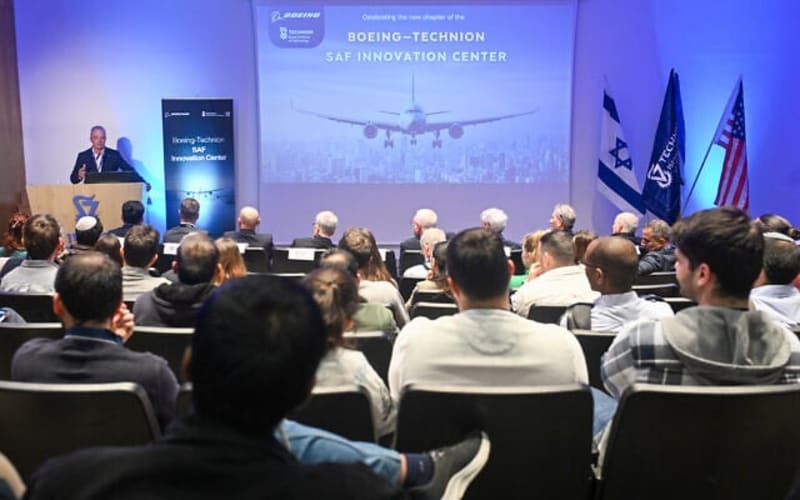
"If there is one country in the world capable of solving civil aviation's emissions challenge, it is Israel, led by the Technion," said Dr. Brendan Nelson, president of Boeing Global, during his visit to the campus last week.
The project started in 2023 with Boeing funding a feasibility study at Technion's SAF Innovation Center. Now, with multi-million-dollar backing for the next three years, the team is scaling up. Professor Gidi Grader leads 11 faculty members and dozens of doctoral students from five different departments working on various aspects of fuel production.
Their approach banks on the future affordability of green hydrogen, which is produced using renewable energy. "We envision that the cost of green hydrogen is going to come down, just as the cost of a solar cell came down by orders of magnitude over the last 20 years," Professor Grader explained.
Within three years, Technion plans to operate an experimental fuel-testing facility, only the second of its kind worldwide. This lab will help perfect the continuous production process needed for large-scale commercial manufacturing.
The Ripple Effect
This partnership reaches far beyond aviation. The technology being developed could transform multiple industries by providing alternatives to fossil fuels. The same process used to create sustainable aviation fuel can produce methanol and other raw materials needed for polymer refineries and chemical manufacturing.
For Israel, the collaboration strengthens energy security while positioning the country as a leader in clean technology exports. Technion President Professor Uri Sivan called it "a historic collaboration of national importance" for the Israeli economy.
Boeing has committed to delivering commercial airplanes capable of flying entirely on sustainable fuel by 2030. This partnership with Technion could make that ambitious goal a reality while creating a blueprint other institutions can follow.
The work happening in Haifa today could help solve one of climate change's toughest puzzles: how to keep the world connected by air without destroying the planet in the process.
---
More Images



Based on reporting by Google News - Israel Technology
This story was written by BrightWire based on verified news reports.
Spread the positivity!
Share this good news with someone who needs it