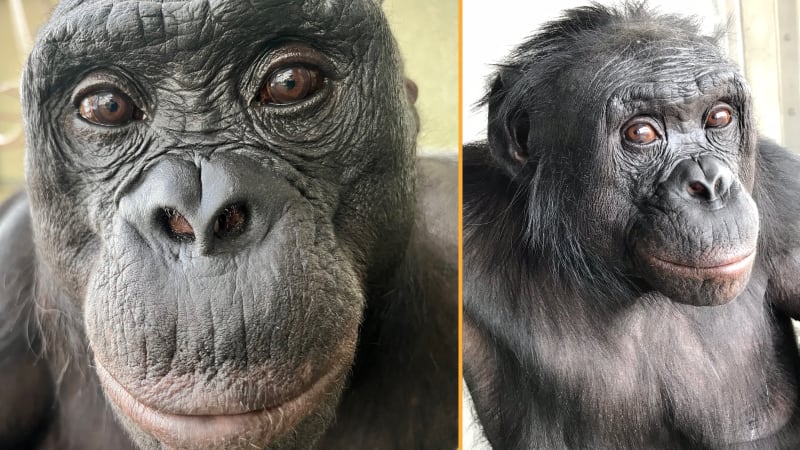
Bonobo Kanzi Played Pretend Just Like Human Toddlers
A bonobo named Kanzi could track imaginary juice and grapes during pretend tea parties, proving for the first time that our closest relatives share a mental ability scientists thought only humans possessed. This discovery suggests our capacity for imagination evolved over 6 million years ago.
Scientists just proved that bonobos can do something we thought made humans special: play pretend.
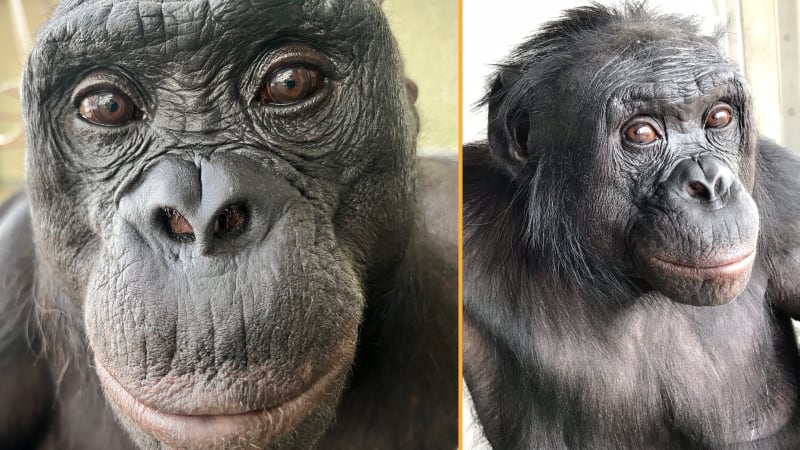
Kanzi, a remarkable bonobo who understood English, successfully tracked imaginary juice during pretend tea parties with researchers. Just like a 2-year-old child, he could follow along when experimenters poured invisible liquid from cup to cup, pointing to the correct location 68% of the time.
The research team at Johns Hopkins University wanted to test whether great apes could truly imagine objects that weren't there. Previous observations of wild chimpanzees playing with sticks as dolls or captive bonobos "eating" food from photographs were intriguing, but scientists couldn't rule out that the animals simply misunderstood what was real.
So they designed a clever experiment. First, they trained Kanzi to point to real juice in transparent bottles, which he did perfectly every time. Then came the test: researchers pretended to pour invisible juice from an empty jug into transparent cups, moving the imaginary liquid around while Kanzi watched.
The bonobo kept careful track of where the pretend juice ended up. But the researchers needed to be sure Kanzi knew it was pretend, not real.
In a follow-up test, they placed one cup with actual juice and one empty cup on the table. They pretended to pour into the empty cup but held the jug over the real juice without making the pouring motion. If Kanzi thought both cups contained juice, he'd choose randomly.
Instead, he picked the cup with real juice nearly 78% of the time. He clearly understood the difference between real and pretend.
The Ripple Effect
This discovery reshapes our understanding of when imagination first appeared in our evolutionary history. The mental building blocks for pretend play likely existed in the common ancestor humans and bonobos shared over 6 million years ago.
Christopher Krupenye, the study's co-author, said the team was in awe of the finding. Something fundamental to human development and creativity turns out to be shared with our closest living relatives.
Kanzi passed away in March 2025 at age 44, but his legacy extends far beyond this single study. Throughout his life, he helped scientists understand the surprising cognitive abilities bonobos possess, bridging the gap between human and animal minds.
The research suggests that the seeds of human creativity, storytelling, and even art may have much deeper roots than we imagined.
More Images



Based on reporting by Live Science
This story was written by BrightWire based on verified news reports.
Spread the positivity!
Share this good news with someone who needs it