Brain Implant Lets Paralyzed Man Feel His Dog Again
Keith Thomas lost the ability to move and feel below his neck after a diving accident, but a groundbreaking brain implant helped him pet his dog again. The experimental device restored both movement and sensation by sending coordinated signals to his brain and spinal cord.
Keith Thomas just wanted to feel his dog's fur again.
A 2020 diving accident damaged Thomas' spinal cord and left him unable to move or feel his limbs below his neck. When Bow, his malshipoo, curled up in his lap or nuzzled against him, Thomas couldn't sense it or pet him back.
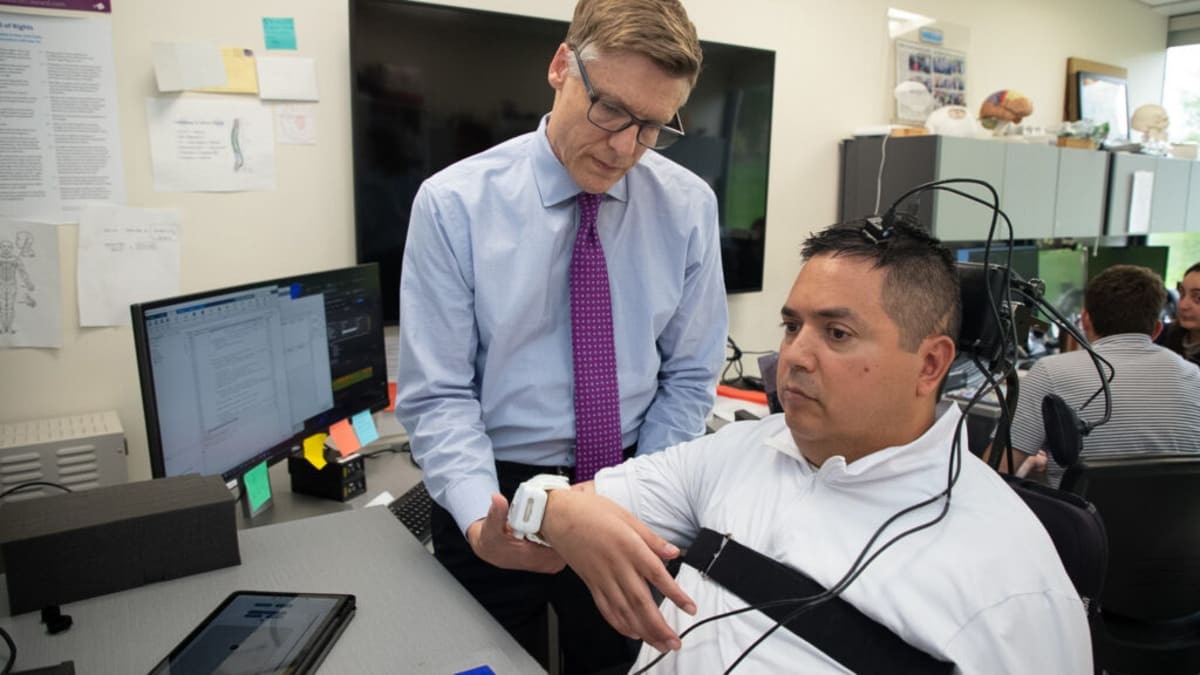
That changed in 2023 when Thomas received an experimental brain implant. The device works like a bridge across his damaged spinal cord, sending tiny electrical signals to both his brain and spine at the same time.
The results amazed researchers and Thomas alike. He could lift his arms and shoulders again. More importantly, he could stroke Bow's fur and actually feel it.
The breakthrough represents a major advance in "double neural bypass" technology. Previous brain-computer interfaces focused on either restoring movement or sensation, but rarely both together.
Thomas' family adopted Bow right around the time he received the implant. The timing turned out to be perfect. One of the first things Thomas wanted to do with his restored abilities was connect with his new companion.
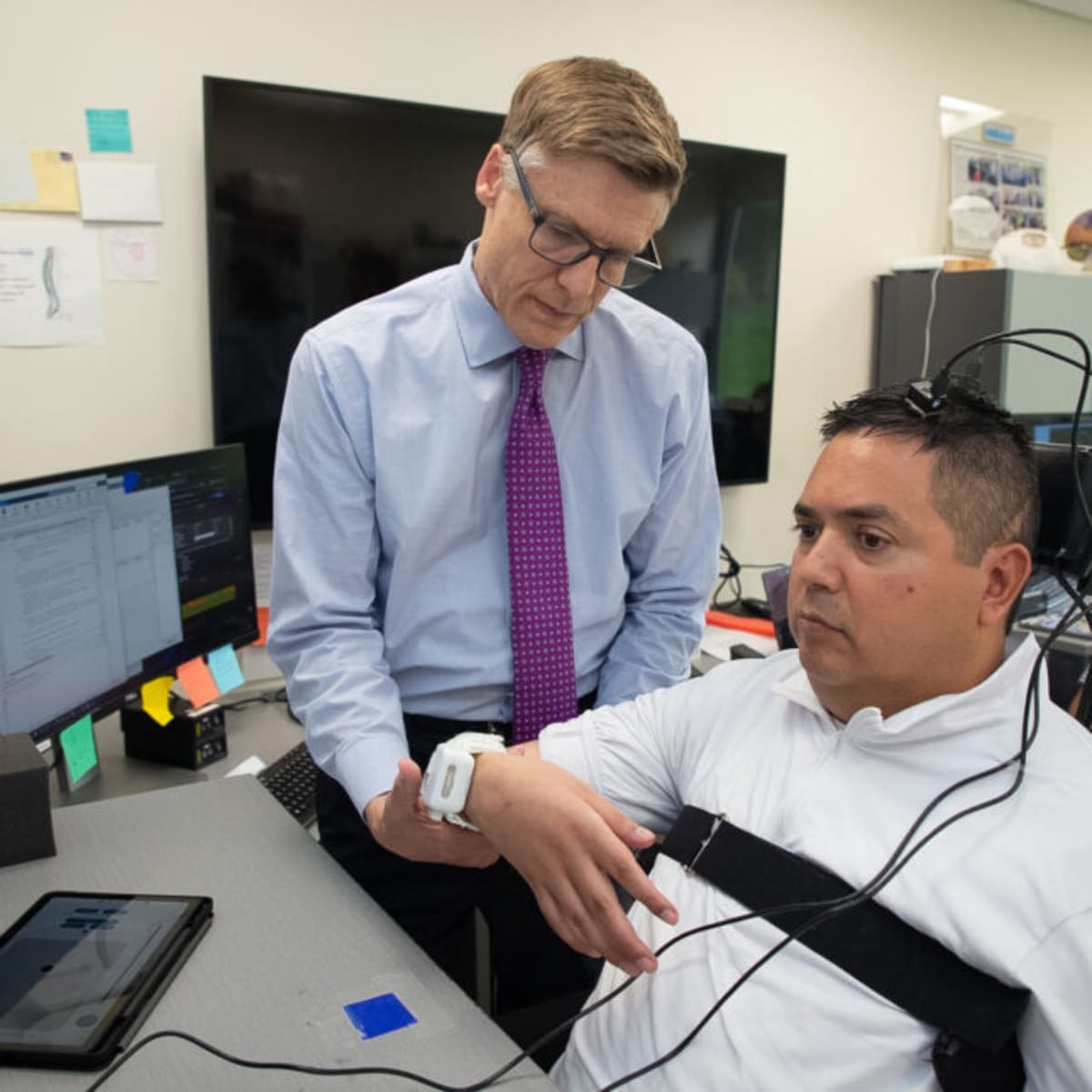
The clinical trial, conducted by brain-computer interface researcher Chad Bouton at the Feinstein Institutes for Medical Research, combines an implanted device with a wearable stimulation patch worn over the skin. Together, they create a communication pathway that bypasses the damaged section of Thomas' spine.
Why This Inspires
Thomas' journey shows how medical innovation can restore not just function, but meaningful connection. Being able to pet a dog might seem small compared to walking or running, but these everyday moments of touch and affection define our relationships.
The technology could help thousands of people with spinal cord injuries regain both movement and sensation. Researchers estimate over 300,000 Americans currently live with paralysis from spine damage.
What makes this approach especially promising is its dual action. By restoring sensation along with movement, it gives users better control and a more complete experience of their environment. Thomas can feel where his hand is and what it's touching, making movements more natural and purposeful.
The study continues to track Thomas' progress and refine the technology for wider use.
For now, Thomas has what he wanted most: the simple joy of petting his dog and feeling Bow's soft fur beneath his fingers.
More Images



Based on reporting by STAT News
This story was written by BrightWire based on verified news reports.
Spread the positivity!
Share this good news with someone who needs it