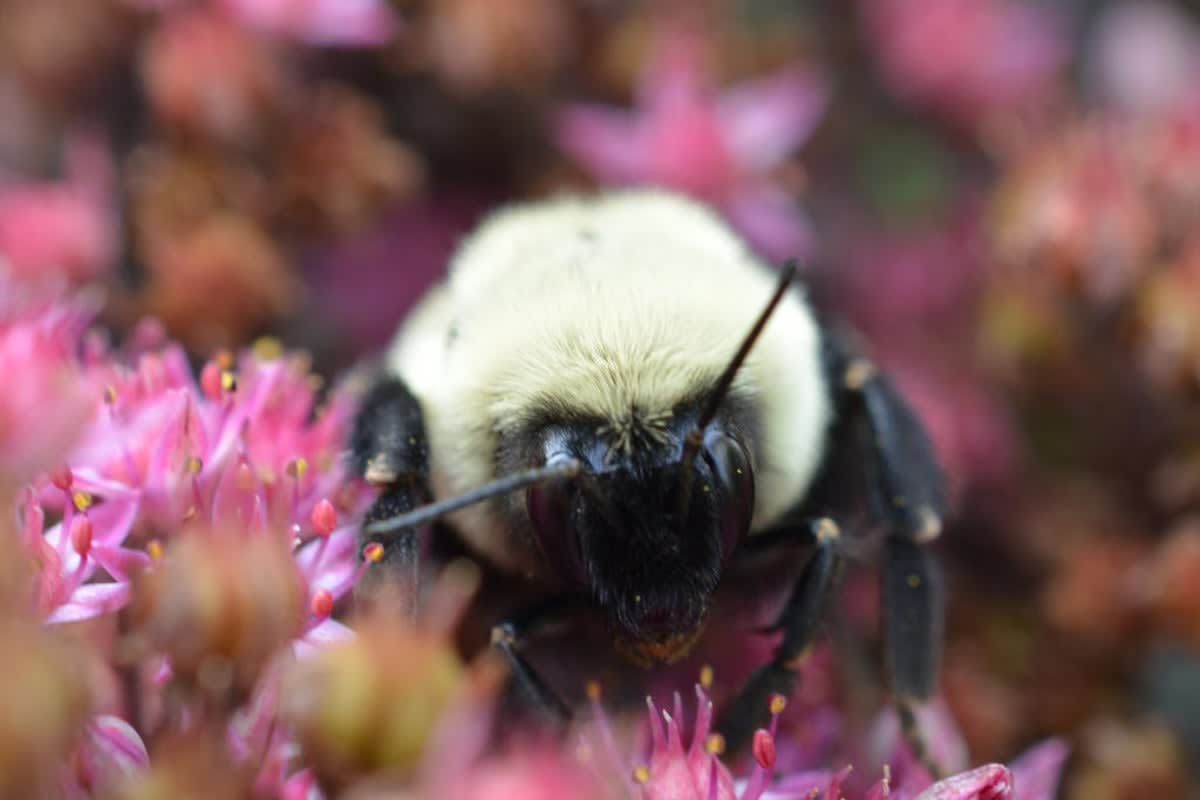
Bumblebee Queens Can Survive Underwater for a Week
Scientists accidentally discovered that hibernating queen bumblebees can breathe underwater for up to a week, solving the mystery of how these vital pollinators survive spring floods. This remarkable adaptation could help us understand how bee populations will cope with climate change.
A refrigerator malfunction just revealed one of nature's most surprising superpowers.
Ecologist Sabrina Rondeau was storing hibernating queen bumblebees in a lab fridge when condensation dripped into their containers. When she checked on them a week later, fully expecting to find drowned insects, all four queens were alive and well.
That happy accident launched a groundbreaking study at the University of Ottawa. Scientists had long wondered how queen bees survive when melting snow and spring rains flood their underground winter hideouts, but nobody had tested whether they could actually breathe while submerged.
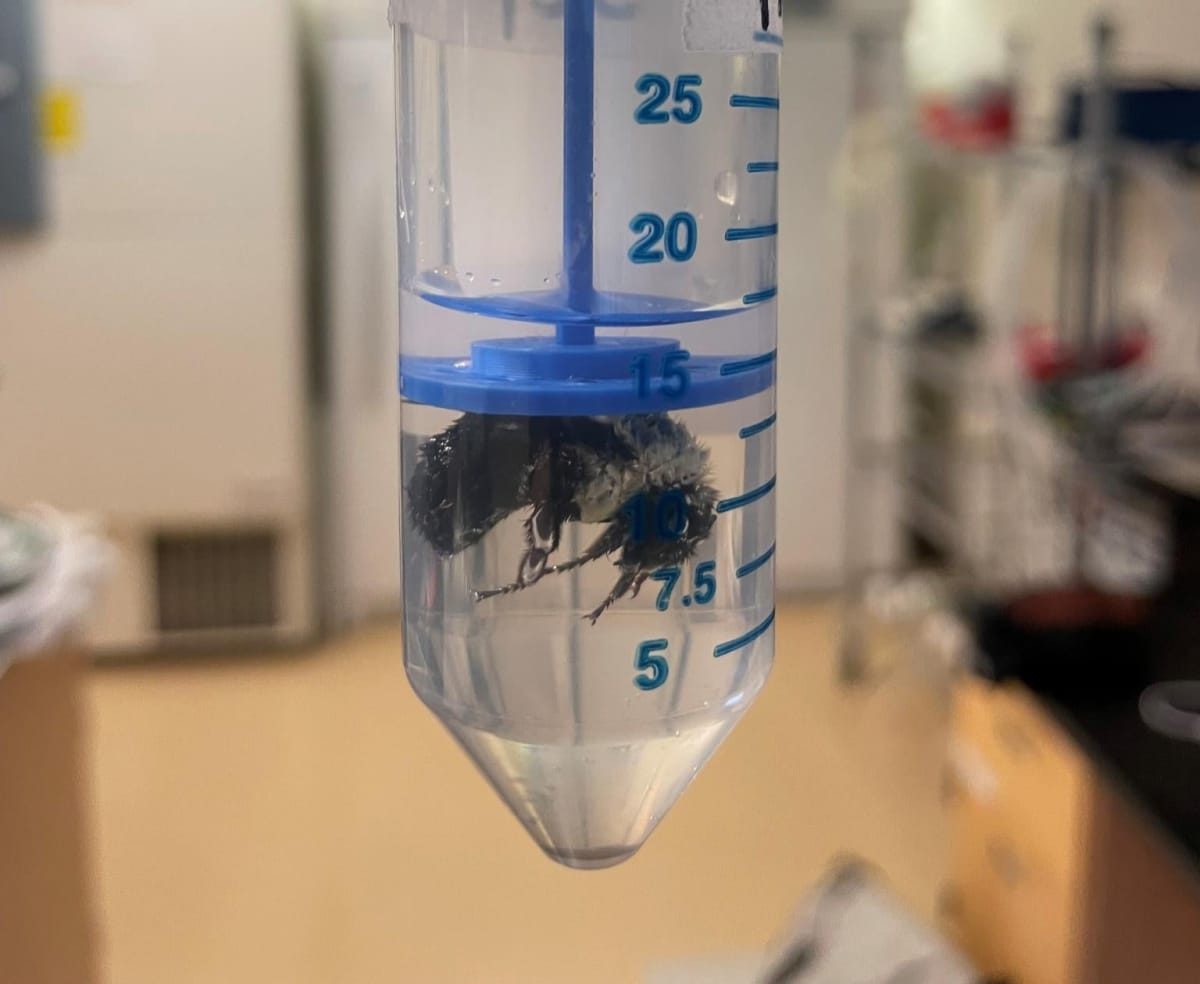
The research team recreated winter conditions in the lab, placing queen bees into diapause (a hibernation-like state) for four to five months. Then they submerged the queens in water for eight days while monitoring their metabolic rates and oxygen exchange.
The results stunned the scientific community. The queens continued breathing underwater by maintaining an ultra-low metabolic rate and using multiple survival strategies simultaneously.
Professor Charles-Antoine Darveau explained the bees' secret weapon: a thin layer of air that surrounds their bodies acts as a "physical gill." This bubble exchanges oxygen and carbon dioxide with the surrounding water, similar to how some aquatic insects breathe.
But the bees don't rely on just one trick. They combine underwater gas exchange with anaerobic metabolism, the same process that lets your muscles work without oxygen during intense exercise.
After eight days underwater, the queens showed they were built to bounce back. Their metabolic rate spiked dramatically for two to three days as they recovered, then returned to normal levels within a week.
Why This Inspires
This discovery shows nature's incredible resilience in the face of extreme conditions. Bumblebees are among our most important pollinators, responsible for helping grow countless fruits, vegetables, and wildflowers.
As climate change brings more frequent and severe spring flooding, understanding how these tiny survivors cope becomes increasingly critical. The fact that queen bees evolved this remarkable ability long before humans started tracking weather patterns reminds us that nature often has solutions we haven't discovered yet.
The research also highlights how accidental discoveries can lead to breakthrough science. Rondeau's leaky refrigerator opened a window into survival mechanisms that might help predict how bee populations will adapt to our changing planet.
These queens are proving they're tougher than we ever imagined, giving us hope for the future of these essential pollinators.
More Images
Based on reporting by Google News - Scientists Discover
This story was written by BrightWire based on verified news reports.
Spread the positivity!
Share this good news with someone who needs it