BYD's 4-Cent Battery Could Power Grids for 33 Years
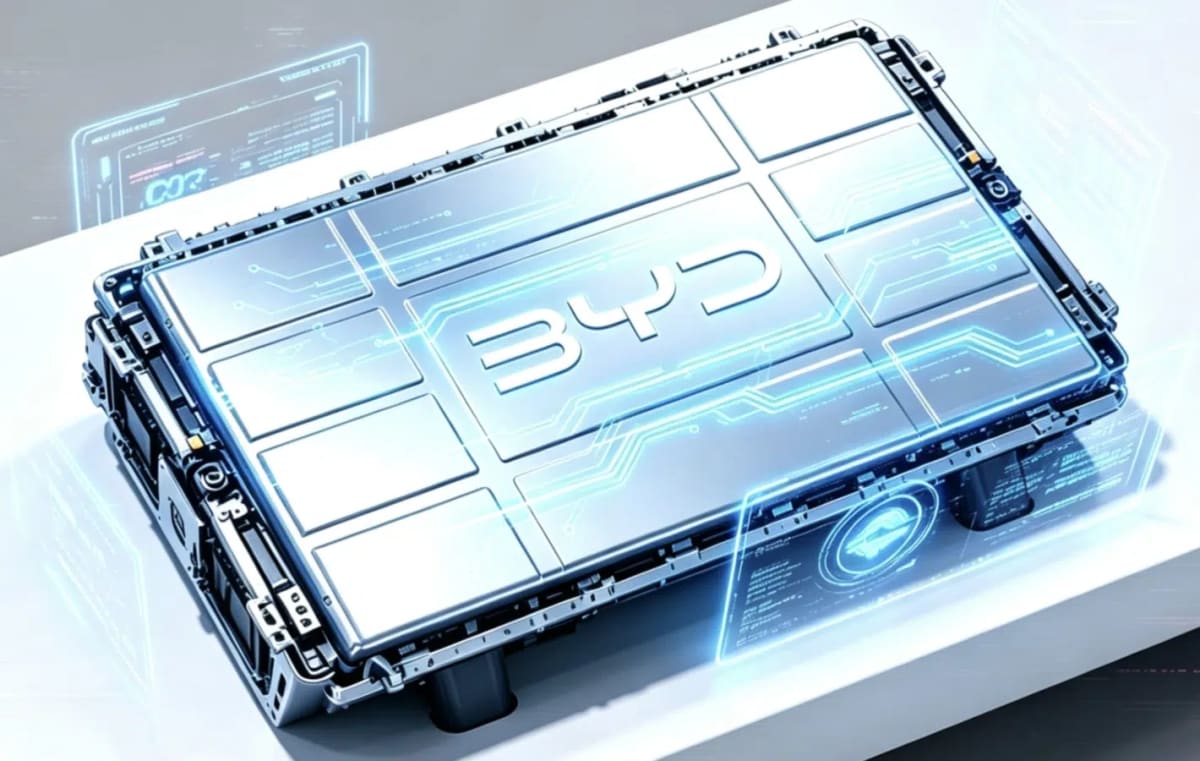
Chinese automaker BYD is developing sodium batteries so cheap and durable they could revolutionize how the world stores renewable energy. At just 4 cents per watt-hour, these batteries could last over three decades in power grids.
While most electric vehicle makers race to build better car batteries, BYD is quietly solving one of clean energy's biggest problems: how to store wind and solar power affordably for entire cities.
The Chinese manufacturer is building massive sodium-ion batteries designed specifically for power grids, not cars. By 2027, BYD expects to produce these batteries at a breakthrough cost of just 0.04 USD per watt-hour, roughly 30 cents per kilowatt-hour for complete systems.
That price point could make renewable energy storage finally competitive with fossil fuel power plants. The batteries are engineered to last more than 10,000 charge cycles, translating to 33 years of reliable service under normal grid operations.
BYD's strategy diverges sharply from competitor CATL, which recently launched sodium batteries for passenger vehicles. Instead of chasing the automotive market where it already holds strong positions, BYD is targeting the trillion-dollar energy storage sector where weight doesn't matter but longevity does.
The secret lies in what scientists call polyanion chemistry. BYD's third-generation design uses special phosphate structures that remain stable at extreme temperatures. While competing battery technologies can overheat dangerously at 484 degrees Celsius, BYD's cells don't experience thermal runaway until 273 degrees, making them safer for indoor commercial installations.
The Ripple Effect
This breakthrough addresses a critical bottleneck in the global shift to renewable energy. Solar panels and wind turbines generate power inconsistently, requiring massive battery banks to store excess energy for cloudy days and calm nights.
Until now, lithium batteries dominated storage projects, but volatile lithium prices and limited supplies created uncertainty. Sodium, by contrast, is abundant in seawater and costs a fraction of lithium to extract.
BYD already deployed pilot megawatt-scale sodium systems in 2025. The company's specialized 189-amp-hour cells are built like workhorses rather than racehorses, optimized for decades of steady cycling rather than quick acceleration.
The technology still faces challenges. Hard carbon anodes, essential components for sodium batteries, lack standardized manufacturing processes globally. Industry analysts don't expect full cost parity with established lithium systems until 2027.
Yet the momentum is undeniable. China's push toward sodium technology reflects broader efforts to reduce dependence on lithium supply chains. As battery giants navigate toward distinct chemistry niches, a multi-technology future is emerging where different batteries serve different purposes.
BYD's grid batteries won't replace the lithium packs in electric cars. Instead, they'll complement them, creating a world where vehicles use energy-dense lithium while buildings and utilities rely on durable, affordable sodium. The convergence of both technologies brings humanity closer to a fully renewable energy system that's not only clean but economically sustainable for generations.
More Images



Based on reporting by Google News - Electric Vehicle
This story was written by BrightWire based on verified news reports.
Spread the positivity!
Share this good news with someone who needs it