California Pitcher Plant Farms Its Own Food Supply
Scientists discovered a carnivorous plant that lets 98% of its prey escape alive, essentially cultivating wasps like a farmer tends livestock. This groundbreaking finding rewrites what we thought we knew about predator-prey relationships in nature.
A carnivorous plant in California has been caught doing something nobody expected: farming its own food.
Researchers at the Okinawa Institute of Science and Technology discovered that Darlingtonia californica pitcher plants intentionally release 98% of the wasps that land on them. For over a century, scientists believed all carnivorous plants existed solely to trap and kill prey, but this species appears to be playing a much smarter game.
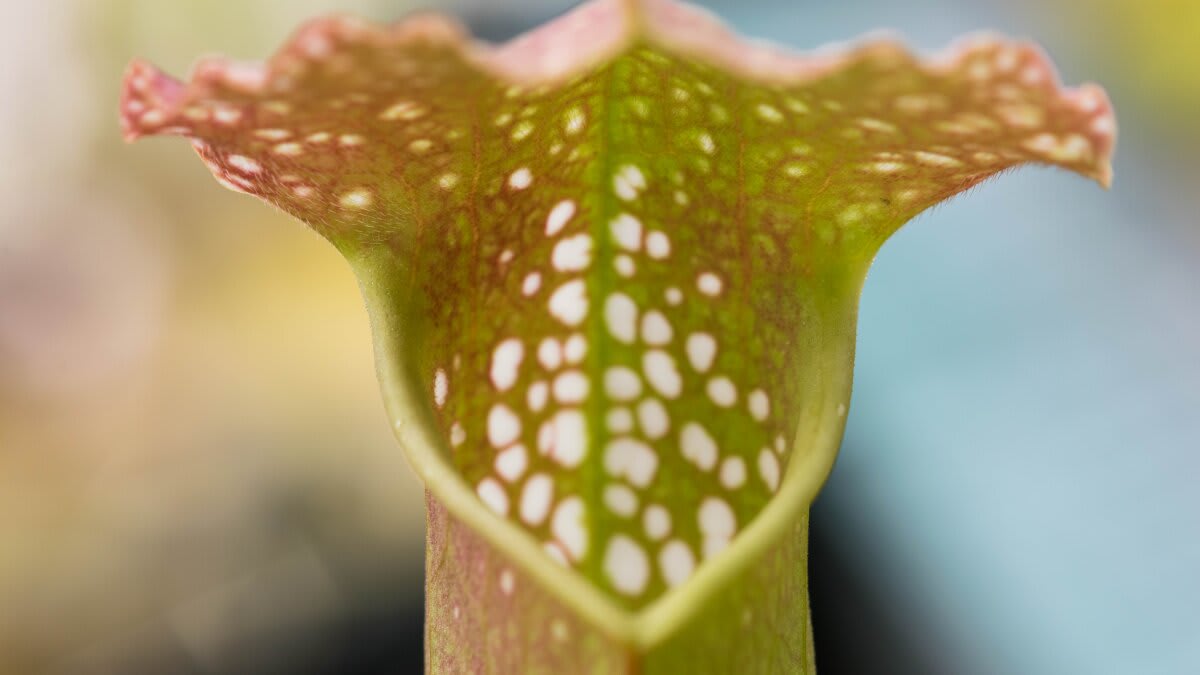
The plant lures wasps with nitrogen-rich nectar on its specialized trap door. Most visitors get their fill and fly away safely, but the plant occasionally adjusts the firmness of its leaf platform to snag an unlucky wasp for dinner. It's not failing at being a predator; it's succeeding at being a rancher.
Professor David Armitage and his team used mass spectrometry to analyze nitrogen levels in wasps living near the pitcher plants versus those farther away. The nearby wasps showed elevated levels of nitrogen-15, a heavier isotope that accumulates in tissue and indicates they're dining regularly on the plant's enriched nectar.
The wasps become dependent on this reliable food source, repeatedly returning despite the small risk of becoming lunch themselves. Meanwhile, the plant maintains a steady supply of visitors, ensuring it always has prey within reach when needed.
The discovery challenges how ecologists categorize relationships in nature. "Generally, we ecologists like to categorize relationships as just being one fixed, discrete type of interaction, such as predator-prey or competitive," says Armitage. "But what we're becoming more aware of is that these ecological interactions are much more context-dependent and fluid."
Why This Inspires
This finding reveals that nature is far more creative and collaborative than we imagined. A plant once thought to be a simple trap has turned out to be sophisticated enough to cultivate its own renewable food source, balancing reward and risk to keep its prey coming back.
The research opens exciting new questions about how many other species might be engaging in similarly complex relationships we haven't recognized yet. What we categorize as simple predator and prey might actually be intricate partnerships shaped over millions of years.
For Armitage, watching this relationship unfold in real time was eye-opening. "If you hang out with pitcher plants enough, you'll always see insects landing on them, feeding, or doing something, and then flying off," he explains. The seemingly ineffective trap was actually working exactly as intended.
Nature just taught us that sometimes the smartest hunters know when not to kill their prey.
More Images


Based on reporting by New Atlas
This story was written by BrightWire based on verified news reports.
Spread the positivity!
Share this good news with someone who needs it

%2Fhttps%3A%2F%2Ftf-cmsv2-smithsonianmag-media.s3.amazonaws.com%2Ffiler_public%2Fd2%2F92%2Fd292d8d8-8791-4789-b02a-3bd11093c6c5%2Fcarnivorous-plants-con.jpg)