Chemical Recycler Takes Major Step Toward First Industrial Plant
A Canadian company is partnering with an experienced Italian engineering firm to build the world's first industrial-scale facility that transforms plastic waste using innovative water-based chemistry. The project could establish a new blueprint for turning hard-to-recycle plastics into valuable materials.
A chemical recycling company is moving from the laboratory to the real world with a groundbreaking facility that could change how we handle plastic waste.
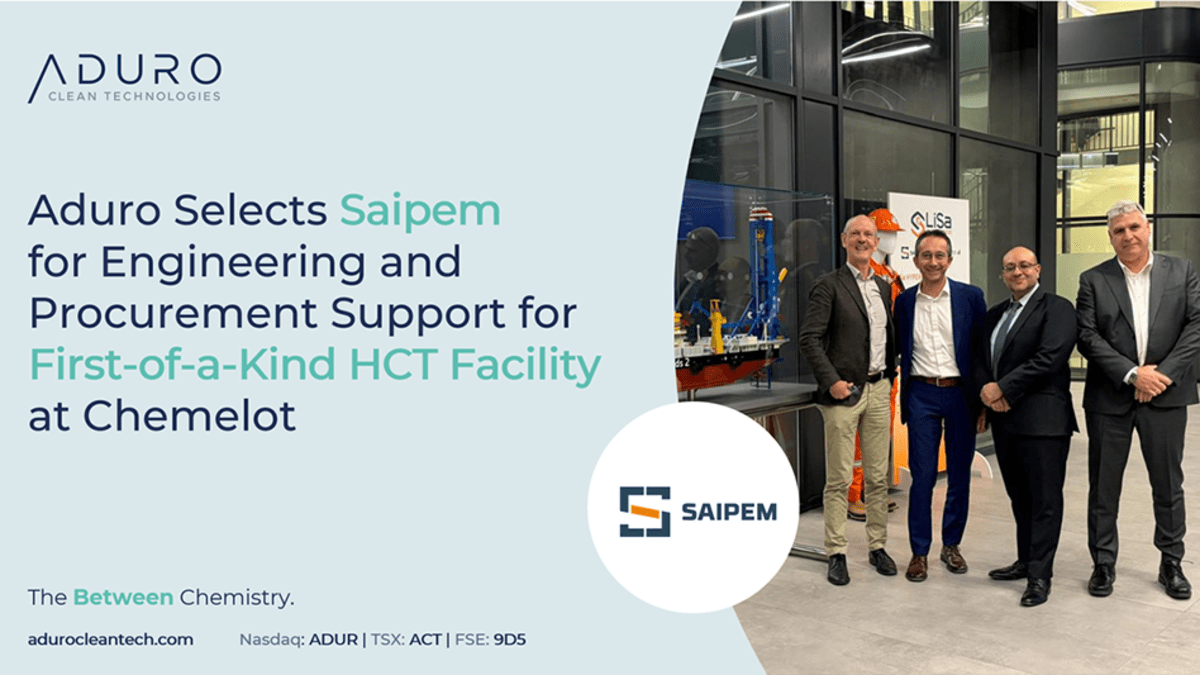
Aduro Clean Technologies, based in London, Ontario, has selected Italian engineering giant Saipem to help develop its first industrial-scale plant in the Netherlands. The facility will use hydrochemolytic technology, a process that breaks down plastics using water-based chemistry rather than traditional heat-intensive methods.
What makes this partnership noteworthy is the timing. Rather than waiting until their technology is fully perfected, Aduro brought Saipem in early to help optimize the design as they continue learning from their pilot plant operations.
"By engaging with Saipem at an early stage, we can work together to optimize process and engineering decisions," says Aduro CEO Ofer Vicus. The approach lets them incorporate real-world lessons directly into the industrial design, reducing risks before construction even begins.
The facility will be built at Chemelot, a major chemical industry hub in the Netherlands. Saipem brings decades of experience building complex industrial facilities, expertise that Aduro believes will help them avoid common pitfalls that derail first-of-their-kind projects.
The initial work focuses on refining the process design, selecting critical equipment, and getting cost estimates more precise. Aduro plans to fund this phase from existing resources without needing additional financing, a sign of careful financial planning.
The Ripple Effect
This project represents more than just one facility. Aduro envisions it as a repeatable model that could be deployed globally wherever plastic waste needs solutions.
Chemical recycling addresses a crucial gap in sustainability efforts. Traditional mechanical recycling struggles with mixed plastics, contaminated materials, and products like food packaging. These "difficult" plastics often end up in landfills or incinerators because conventional recycling can't handle them economically.
Hydrochemolytic technology offers a different path. By using chemistry to break plastics down to their molecular building blocks, the process can handle materials that mechanical recycling rejects. The result is high-quality feedstock that can become new plastics or other valuable chemicals.
The staged approach also matters beyond this single project. Too many promising technologies have failed because companies rushed to scale up before working out critical details. By aligning engineering work with ongoing pilot testing, Aduro is building knowledge systematically.
Each development phase includes clear milestones before moving forward. The collaboration will progress through front-end engineering design, detailed engineering, procurement, construction, and commissioning only if each stage meets its goals.
This disciplined progression helps ensure that investor money goes toward a design validated by actual operating data rather than theoretical projections. It also creates a knowledge base that future projects can build upon.
The Netherlands location is strategic. Europe has set aggressive targets for plastic waste reduction and circular economy development. The Chemelot site already hosts chemical manufacturing infrastructure, making it easier to integrate utilities and potentially find customers for the facility's outputs.
For communities frustrated by plastic pollution washing up on beaches and filling landfills, technologies like this offer tangible hope. While reducing plastic consumption remains important, dealing with existing plastic waste and materials that will continue being produced requires solutions that work at industrial scale.
The collaboration between a innovative clean-tech company and an established engineering firm also shows how bringing together different types of expertise can accelerate progress on environmental challenges.
If successful, Aduro's facility could prove that chemical recycling can work economically at commercial scale, potentially unlocking investment in similar projects worldwide and creating a genuine alternative for plastics that currently have nowhere to go but landfills.
More Images
Based on reporting by Google News - Netherlands Technology
This story was written by BrightWire based on verified news reports.
Spread the positivity!
Share this good news with someone who needs it