China Beams 1,180 Watts to Moving Targets From 100 Meters
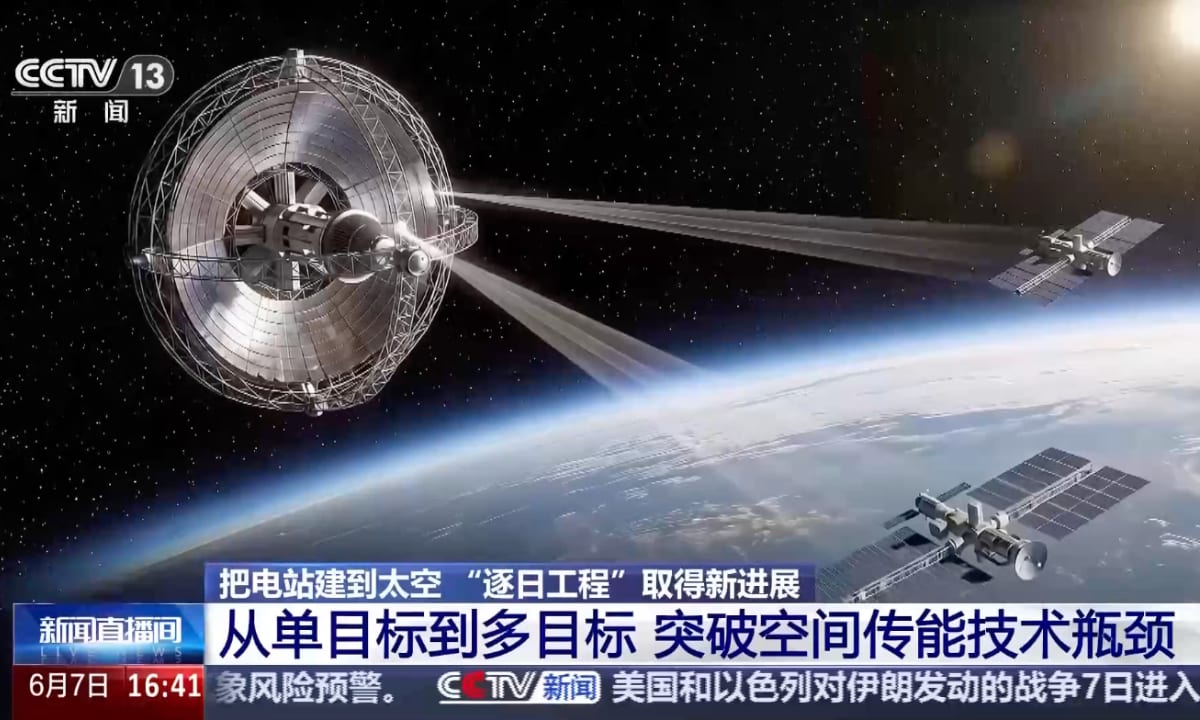
Chinese scientists just powered multiple moving targets wirelessly from 100 meters away, bringing the dream of space-based solar power stations closer to reality. The breakthrough could one day mean unlimited clean energy beamed down from orbit.
Imagine charging your phone, powering a drone, and running a satellite all at once without a single wire or battery. Chinese researchers just made that future more realistic by successfully beaming over 1,000 watts of electricity to multiple moving targets at the same time.
Scientists at Xidian University completed a major milestone for their "Zhuri" project, which means "sun chasing" in Chinese. Their 75-meter-tall test facility on campus can now wirelessly transmit power to several moving objects simultaneously, solving one of the biggest challenges for space-based solar stations.
The team, led by Professor Duan Baoyan, built the system to test how space solar power stations would work before launching anything into orbit. In space, there's no night, no clouds, and no atmosphere blocking the sun, which means solar panels could collect energy 24/7 and beam it wherever it's needed.
Getting here wasn't easy. Early tests kept losing track of targets, and the energy beams would miss their marks completely. The researchers spent nearly four years upgrading from basic point-to-point transmission to hitting multiple fast-moving targets, which they compared to striking several distant objects in total darkness.
Their latest tests achieved 20.8 percent efficiency converting direct current over 100 meters and delivered 1,180 watts of power. While that might sound low, it's a significant jump for wireless power transmission technology and proves the core concept works on Earth.
Back in early 2022, the same team completed the world's first full demonstration of every step needed for a space solar power station: collecting sunlight, converting it to electricity, transforming it into microwaves, beaming those microwaves through space, receiving them, and converting them back into usable power.
The Ripple Effect
Space-based solar power could reshape how our entire planet runs on energy. These orbital stations would provide constant, uninterrupted electricity regardless of weather, time of day, or location on Earth.
Associate Professor Fan Guanheng explains the stations could dramatically reduce our dependence on fossil fuels while cutting carbon emissions. Remote areas currently without reliable power could receive clean energy beamed directly from space.
The technology could also create "charging stations" in orbit for spacecraft, eliminating the need for heavy fuel tanks or limited battery life. Deep-space missions could stay powered indefinitely, and satellites wouldn't need to retire when their batteries die.
China isn't alone in pursuing this technology, but the Zhuri project's ability to power multiple moving targets simultaneously represents a crucial step forward. Spacecraft and ground equipment never stay still, so any practical system must track and power objects on the move.
The future could bring receiving stations on rooftops, drones that never land, and electric vehicles that charge while driving. What seemed like science fiction is becoming engineering reality, one wireless watt at a time.
Based on reporting by Google: solar power breakthrough
This story was written by BrightWire based on verified news reports.
Spread the positivity!
Share this good news with someone who needs it