China Builds World's First Bamboo Solar Farm at Sea
A Chinese shipyard just launched a floating solar platform made from bamboo strong enough to withstand ocean waves and saltwater. The renewable energy breakthrough could replace steel and plastic in offshore clean energy projects worldwide.
Imagine building a solar farm that floats on the ocean and is made almost entirely from grass. That's exactly what engineers in China just pulled off using bamboo.
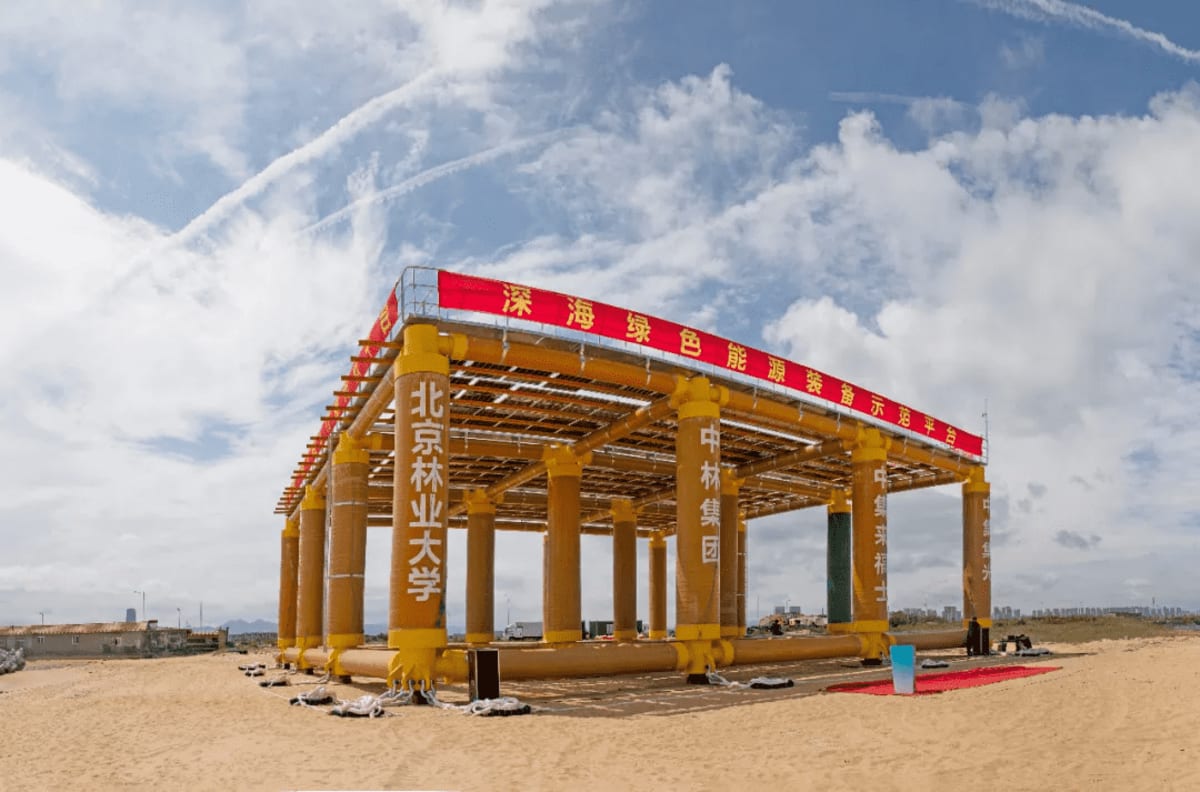
Yantai CIMC Raffles Shipyard recently completed the world's first bamboo-based offshore floating solar platform in Shandong province. The 100-kilowatt structure now bobs in the Yellow Sea, generating clean electricity for a hydrogen production facility.
The platform uses specially engineered "bamboo-wound" tubes and Sea Bamboo Pipe, a high-tech composite that combines wood and bamboo fibers. These materials are prestressed and fiber-reinforced, giving them the strength to handle crashing waves and constant saltwater exposure without corroding like metal or breaking down like plastic.
The team designed the bamboo composite to be lightweight yet incredibly strong. Traditional offshore platforms rely on heavy steel or high-density polyethylene, both of which require significant energy to produce and eventually contribute to pollution.
This project represents a tenfold leap from the team's first attempt. In 2023, they launched a 10-kilowatt test platform measuring just 23 feet by 23 feet. The new Jilin No. 2 platform significantly expands both size and power capacity.
CIMC Ocean Engineering Institute partnered with China Forestry Group Corporation and Beijing Forestry University to develop the technology. The collaboration brought together marine engineers, renewable energy experts, and forestry scientists who spent years perfecting the bamboo composite formula.
The Ripple Effect
The implications stretch far beyond one solar platform. The development team is already planning a megawatt-scale pilot project that would be ten times larger than the current installation. They're also working on international standards and product certifications to make the technology available worldwide.
Bamboo grows incredibly fast, sometimes up to three feet per day, and absorbs more carbon dioxide than most trees. Using it as a construction material for renewable energy infrastructure creates a double climate benefit.
The technology could revolutionize more than just solar farms. The partners are exploring applications in marine piping, shipboard systems, and other ocean structures that currently rely on materials with larger environmental footprints.
Countries with abundant bamboo resources and long coastlines could particularly benefit. The approach offers a replicable model for coastal nations looking to expand renewable energy without depending on imported steel or petroleum-based plastics.
The platform now supplies power to a demonstration project producing hydrogen, ammonia, and methanol using clean energy. These fuels represent the next frontier in decarbonizing heavy industry and shipping.
This bamboo breakthrough shows how nature-based solutions can meet modern engineering challenges while protecting the planet.
More Images


Based on reporting by PV Magazine
This story was written by BrightWire based on verified news reports.
Spread the positivity!
Share this good news with someone who needs it