China Discovers Largest Sauropod Footprint Site in Ningxia
Scientists in China's Ningxia region uncovered 241 dinosaur footprints frozen in time for 110 million years, revealing how giant sauropods moved in herds and gathered at watering holes. The discovery offers a vivid snapshot of life during the Early Cretaceous period.
Imagine walking through a prehistoric park where giants the size of buildings once roamed. That's exactly what researchers found carved into a steep mountainside in China's Liupan Mountains.
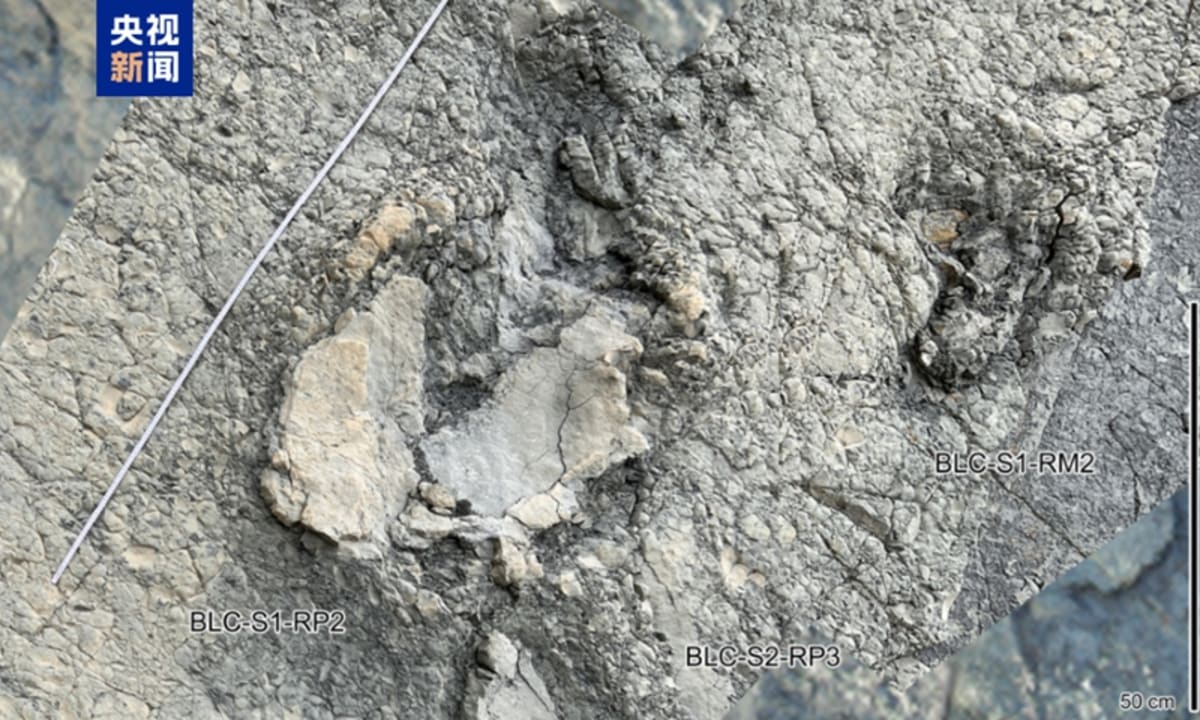
A team from China University of Geosciences discovered 241 dinosaur footprints preserved on a 650-square-meter rock face in Ningxia's Longde County. The prints date back 110 million years to the Early Cretaceous period, when massive sauropods left their mark in what was likely soft lakeside mud.
The footprints tell an incredible story of daily dinosaur life. Nine distinct trackways show these creatures weren't just passing through randomly. Some prints measure up to 143.5 centimeters long, suggesting dinosaurs that stood 3.55 meters tall at the hip and stretched 22 meters from head to tail.
Professor Xing Lida, the paleontologist leading the research, noticed something fascinating in the longest trackway. The spacing between fore and hind footprints gradually decreased over its 20.1-meter length, showing the dinosaur was slowing down as it walked. These weren't just fossils but frozen moments of actual behavior.
The scattered orientation of the tracks revealed another surprise. The dinosaurs passed through at different times, not all at once. Researchers identified at least two separate periods when the footprints formed, suggesting this spot served as a popular gathering place, possibly a watering hole that drew herds back repeatedly.
Why This Inspires
This discovery transforms how we understand dinosaur social behavior. These weren't solitary monsters but community-oriented animals that returned to familiar places and moved together in groups. The fact that a stable lakeside environment preserved their footprints across different time periods shows nature's remarkable ability to capture history.
The Liupan Mountains site connects to other discoveries nearby, including fossils of related species like Huanghetitan and Daxiatitan found in neighboring Gansu Province. Together, these findings paint northwestern China as a thriving dinosaur highway during the Mesozoic Era, where terrestrial giants lived, traveled, and gathered for millions of years.
Scientists believe these footprints belonged to medium-to-large sauropods, the gentle giants of their time. The preserved trackways provide rare physical evidence of how these creatures moved, where they traveled, and how they interacted with their environment and each other.
The stable geological conditions that preserved these prints remind us that moments in time can endure far longer than we imagine, waiting to share their stories with future generations.
Based on reporting by Google: fossil discovery
This story was written by BrightWire based on verified news reports.
Spread the positivity!
Share this good news with someone who needs it