China Launches Product-Based PhDs for Elite Engineers
In China, PhD students can now graduate by creating real-world innovations instead of writing traditional dissertations. Over 60 engineers have already earned their doctorates by solving actual industry problems.
Imagine earning a doctorate by building something that changes an entire industry instead of writing a 300-page thesis that few will read. That's exactly what China made possible in 2024 with a groundbreaking new law.
The country now allows engineering PhD students to graduate with practical achievements like innovative products, techniques, or projects. Since January 2024, more than 60 doctoral candidates have taken this path to their degrees.
The program pairs each student with two supervisors: one at a university and another at a company. Students split their time between academic learning and hands-on problem solving in real factories and businesses. Around 50 specialized postgraduate colleges have opened across China since 2021 to support this initiative.
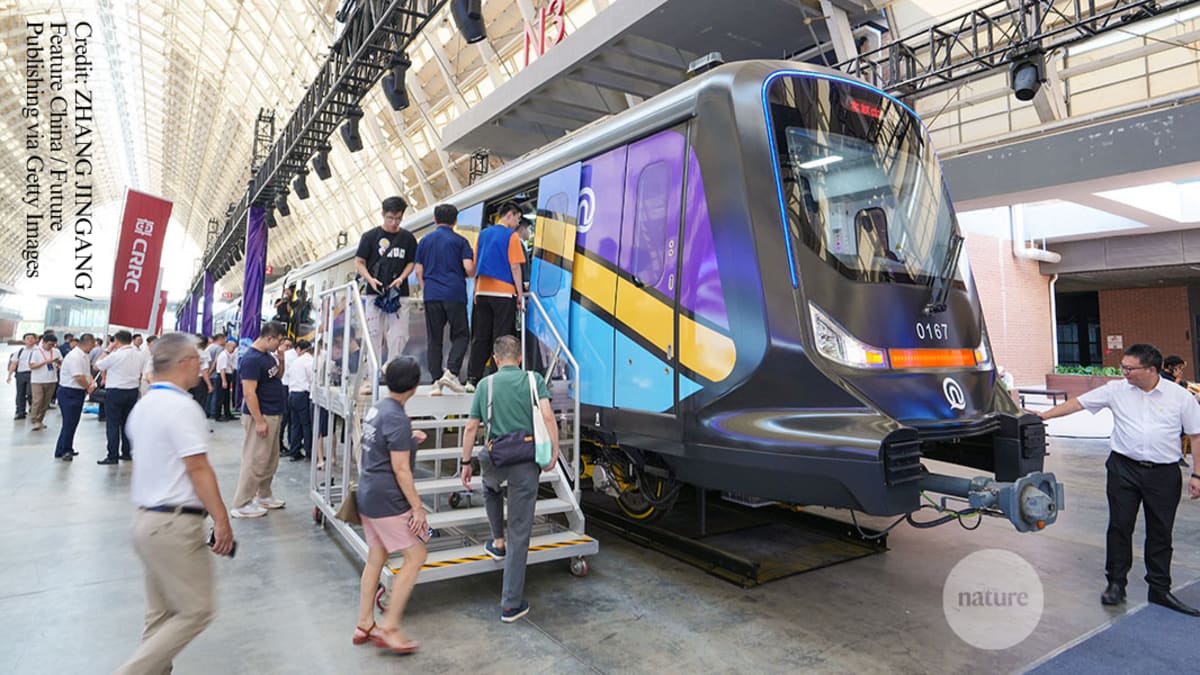
Wu Xiangyang is living proof the approach works. After years as a railway engineer, he returned to school in 2022 to pursue his PhD while keeping his job at Qingdao CRRC Sifang Rolling Stock. His challenge? China's rail factories had advanced machines and skilled workers, but no system to coordinate everything efficiently.
Wu spent countless hours on noisy factory floors collecting data from every manufacturing step. He built computer models to identify solutions, then returned to test his system on actual production lines. The risk was real: any mistake could halt an entire factory's operations.
His proudest moment came when the production line moved for the first time under his system's command. Instead of theoretical equations on paper, Wu created something that immediately improved how trains are built.
Why This Inspires
This program represents a fundamental shift in how we think about advanced education. Traditional PhDs create experts who can analyze and theorize. These practical doctorates create experts who can actually build solutions to pressing problems.
Zong Yingying, dean of the College of Elite Engineers at Harbin Institute of Technology, explains the mutual benefits. Universities gain research funding, access to industry experts, and use of production lines. Companies get cutting-edge innovations from motivated students working on their toughest challenges.
While industrial PhDs exist in other countries, most still require written dissertations. China's approach removes that barrier entirely for engineering students who want to focus on creation over documentation.
The program targets what China calls "technological bottlenecks" by training what it hopes will become a new generation of elite engineers. These graduates understand both academic theory and real-world constraints because they've lived in both worlds simultaneously.
For students like Wu, the choice was clear: prove your worth through what you build, not just what you write. His railway coordination system now helps factories run more safely and efficiently every single day.
That's a legacy no thesis could match.
More Images




Based on reporting by Nature News
This story was written by BrightWire based on verified news reports.
Spread the positivity!
Share this good news with someone who needs it