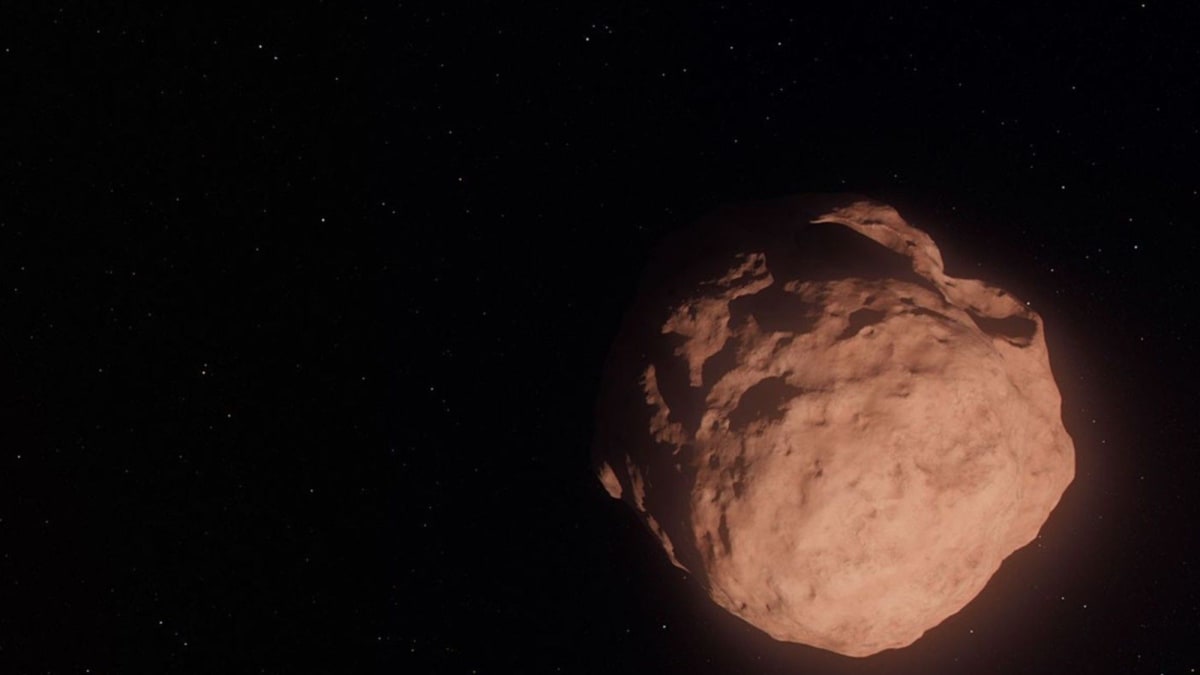
China Targets 2027 Launch for Asteroid Defense Mission
China is preparing to launch its first planetary defense mission in December 2027, aiming a spacecraft at asteroid 2016 WP8 to test humanity's ability to protect Earth from space threats. The mission marks another nation joining the effort to keep our planet safe from asteroids.
Protecting Earth from asteroids just became a team effort, and China is joining the mission with an ambitious 2027 launch date.
China announced it will target asteroid 2016 WP8 for its first planetary defense test mission, scheduled to launch in December 2027. The mission follows NASA's successful 2022 DART test, which proved that humanity can nudge an asteroid off course if we ever need to defend Earth from a collision.
The Chinese mission takes an innovative approach by sending two spacecraft in one launch. An observer craft will first fly past Venus before meeting up with the asteroid in 2029, spending months studying it up close. Meanwhile, an impactor spacecraft will stay in Earth's orbit before zooming out to strike 2016 WP8 later that year.
After impact, the observer spacecraft will stick around to measure exactly how much the asteroid's path changed. This data helps scientists worldwide understand how to protect Earth more effectively.
The asteroid 2016 WP8 belongs to a class called Aten asteroids, which cross Earth's orbit but mostly stay closer to the sun than our planet does. China chose this target carefully, making sure it posed no risk before or after impact and offered good observation opportunities.
The mission has evolved since China first announced planetary defense plans in 2022. The target changed several times as engineers refined their approach, moving from asteroid 2020 PN1 to 2019 VL5, then to 2015 XF261, and now to 2016 WP8.
The Ripple Effect
This mission represents more than one country's achievement. As more nations develop planetary defense capabilities, humanity builds a stronger collective shield against space threats. China's approach of combining both impact and observation into a single mission could make future defense efforts more efficient and affordable.
The mission also received backing in China's latest Five-Year Plan, approved just last week, showing high-level government commitment to protecting Earth. Scientists are even proposing space-based observatories positioned between Earth and the sun to spot potentially dangerous asteroids earlier.
Europe's Hera spacecraft will arrive at NASA's DART impact site this November, giving scientists even more data about how asteroid deflection works in practice. Together, these missions from different nations create a knowledge base that benefits everyone on Earth.
China is also asking its public to help name the mission, turning planetary defense into something people can connect with personally.
When launch day arrives in December 2027, it will mark another step toward ensuring that dinosaur-scale asteroid disasters remain firmly in Earth's past, not our future.
Based on reporting by SpaceNews
This story was written by BrightWire based on verified news reports.
Spread the positivity!
Share this good news with someone who needs it