Mars Rover Finds 7 New Molecules Hinting at Ancient Life
NASA's Curiosity rover discovered seven never-before-seen organic molecules in a Martian rock, bringing the strongest evidence yet that ancient Mars had the chemistry needed for life. One molecule found contains the building blocks similar to DNA and RNA.
A dusty rock on Mars just revealed the strongest clues yet that the Red Planet once had everything needed for life to emerge.
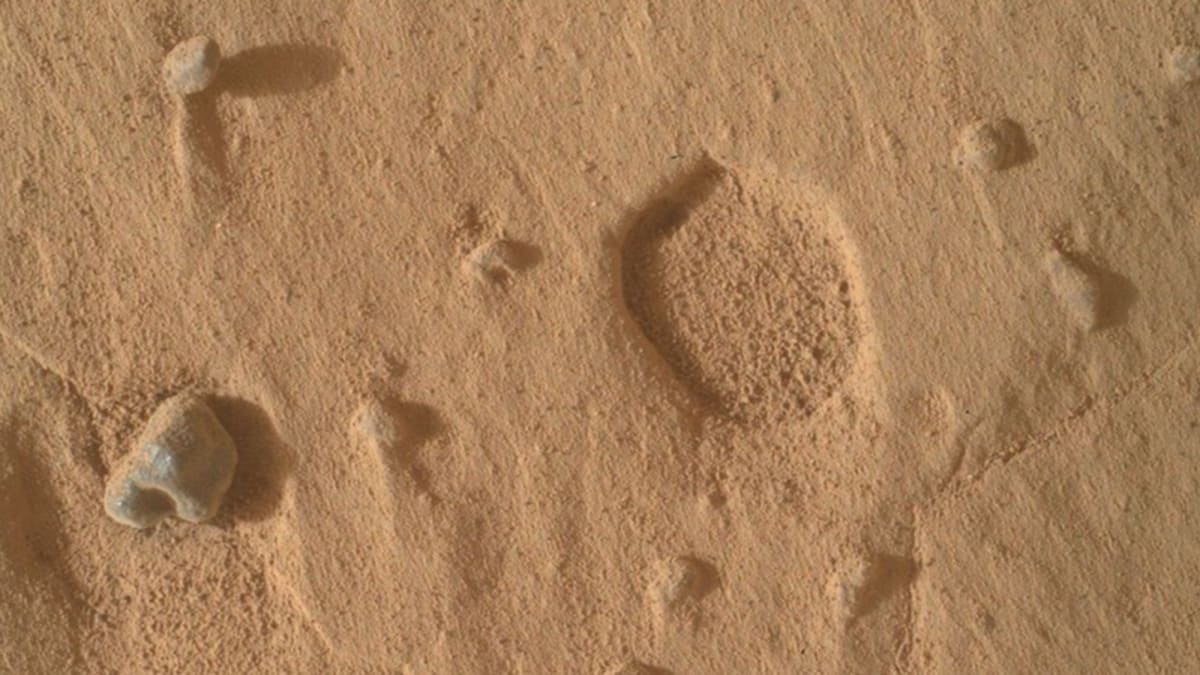
NASA's Curiosity rover found 21 organic molecules in a single rock sample, including seven compounds never detected on Mars before. One of them contains chemical structures similar to the building blocks of DNA and RNA.
The rock, drilled in 2020 from Mount Sharp's lower slopes, came from an area that billions of years ago held lakes and streams. Water came and went over time, leaving behind clay-rich layers that acted like a protective vault for delicate molecules.
That protection mattered. Mars has been bombarded by radiation for billions of years, which normally destroys complex chemistry.
Among the new discoveries, a molecule called a nitrogen heterocycle stood out. On Earth, similar ring-shaped structures help form the genetic code of all living things.
"That detection is pretty profound because these structures can be chemical precursors to more complex nitrogen-bearing molecules," said lead researcher Amy Williams from the University of Florida. No one had ever confirmed these molecules on Mars before.
Another compound, benzothiophene, contains both carbon and sulfur. Scientists have found it in ancient meteorites that may have spread life's raw ingredients across the early solar system.
Curiosity didn't just stumble on these molecules. The rover carries a compact laboratory called SAM that heats rock powder and analyzes the gases released. For this sample, engineers used a special liquid treatment for the first time on Mars, helping break apart larger molecules into detectable pieces.
To verify their results, researchers tested the same method on a 4-billion-year-old meteorite from Earth. It produced similar molecules, suggesting the Martian rock might hide even more complex chemistry waiting to be uncovered.
Why This Inspires
This discovery doesn't prove life existed on Mars, but it shows ancient Mars had the right ingredients. Water flowed. Organic molecules formed. Some survived billions of years against incredible odds.
"This collection of organic molecules once again increases the prospect that Mars offered a home for life in the ancient past," said Ashwin Vasavada from NASA's Jet Propulsion Laboratory. Engineers are already preparing improved lab systems for future Mars missions.
A planet that looks dead today may have once teemed with possibility.
Based on reporting by Google News - Science
This story was written by BrightWire based on verified news reports.
Spread the positivity!
Share this good news with someone who needs it