China Turns CO2 Into Heat, Power, and Even Food
China is transforming carbon dioxide from a greenhouse gas into a valuable resource, using it to heat homes, generate electricity, and create food products. The country's innovative approaches showcase how emissions reduction can drive economic growth and technological breakthroughs.
Imagine using the same gas that causes global warming to heat your home this winter. That's exactly what's happening in Zhengzhou, China, where the country's first geothermal heating system powered by carbon dioxide began operating this May.
The system works by sending supercritical carbon dioxide 2,500 meters underground to capture heat from the earth. The gas acts as an energy carrier, bringing warmth to the surface without releasing emissions into the atmosphere.
But heating homes is just the beginning. China has launched the world's first power plant that uses waste heat and supercritical carbon dioxide to generate electricity. The system converts heat to electricity 75 percent more efficiently than traditional steam power plants.
In Lianyungang's petrochemical park, carbon dioxide gets transformed into polyether polyols, chemicals used to make car parts, adhesives, and synthetic leather. Meanwhile, scientists at the Tianjin Institute of Industrial Biotechnology recently succeeded in turning carbon dioxide into sugar, building on their earlier breakthrough of creating starch from the gas in a laboratory.
The innovations extend beyond manufacturing. At the Aonan Oilfield in Heilongjiang province, workers inject liquid carbon dioxide underground to help extract more oil while simultaneously storing the gas deep in the earth. By the end of 2025, nearby Jilin Oilfield had stored 3.61 million tons of carbon dioxide underground, matching the carbon absorption of more than 30 million trees.
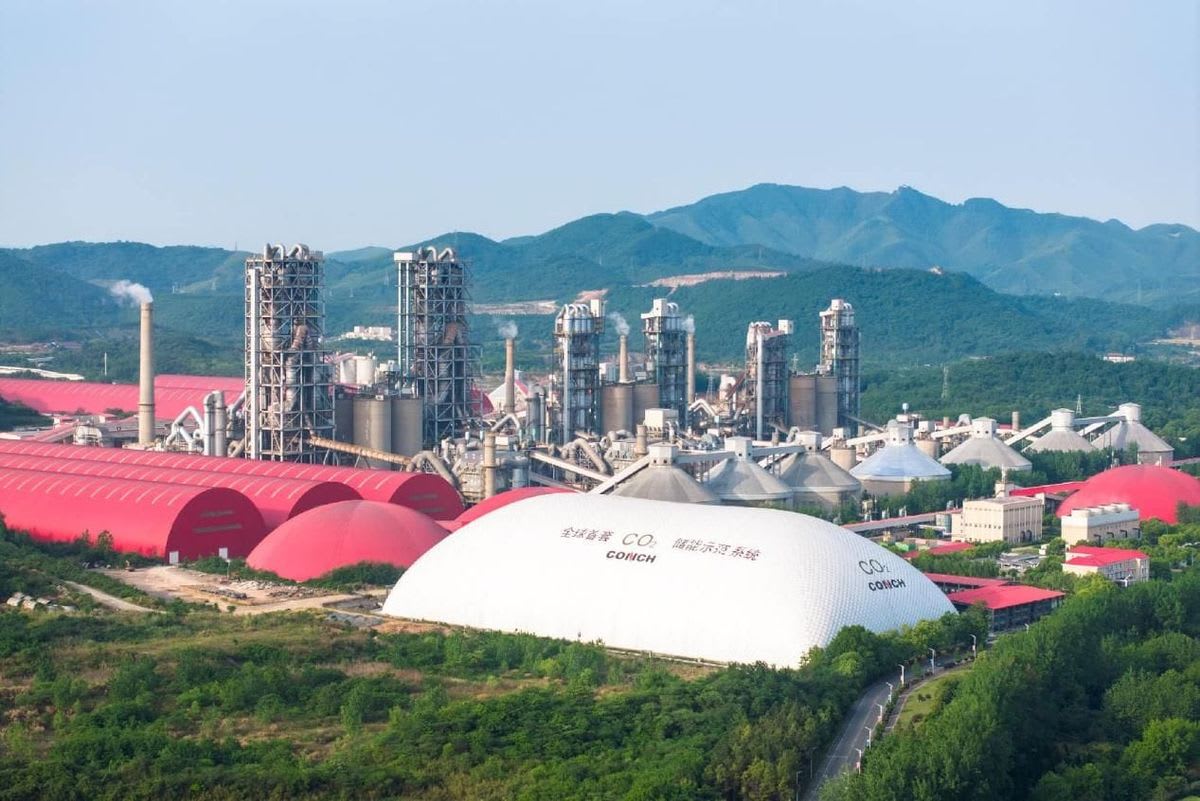
A cement company in Jiangsu province shows how these green technologies boost profits rather than cut them. The factory captures waste heat from exhaust gases and converts it into electricity, now meeting 73 percent of its production power needs. Compared to 2020, China's cement industry reduced carbon emissions per unit of economic value by 15.8 percent in 2025.
The Ripple Effect
China's carbon innovations are reaching far beyond its borders. In Nauru, a Chinese company built a solar project that now powers the entire nation. In Ethiopia's capital Addis Ababa, a ring road constructed by Chinese builders includes renewable energy systems and rainwater recycling that dramatically cut resource use.
The country recently released its carbon peaking action plan for 2026 through 2030, mapping out detailed steps for the next five years. The roadmap focuses on breakthrough technologies in clean energy, advanced storage systems, and carbon asset management.
These advances prove that cutting emissions doesn't mean slowing economic growth. Instead, the push to reduce carbon is sparking innovation across industries and creating new business opportunities. What was once considered waste is now becoming a valuable production material.
China's approach demonstrates that environmental protection and economic development can reinforce each other when supported by the right technologies and commitment.
More Images




Based on reporting by Google News - Emissions Reduction
This story was written by BrightWire based on verified news reports.
Spread the positivity!
Share this good news with someone who needs it