China Unveils World's Most Powerful Vanadium Flow Battery
A Chinese company just revealed a breakthrough battery system that could make renewable energy storage cheaper, smaller, and more flexible than ever before. The innovation tackles the biggest barriers holding back clean energy expansion worldwide.
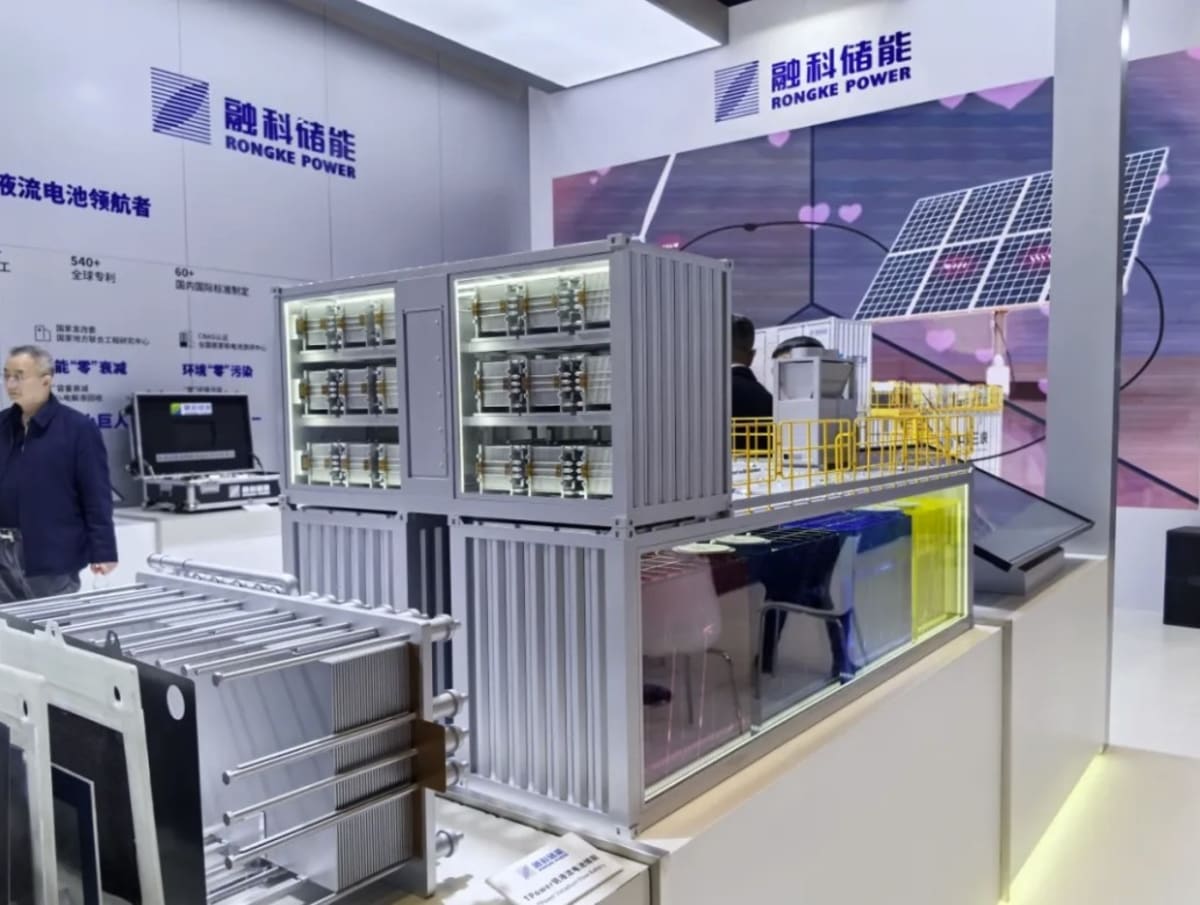
Chinese manufacturer Rongke Power unveiled what they're calling the world's highest-power single vanadium flow battery storage system in Beijing, and it could change how we store renewable energy.
The new TPower2000 system packs 2 megawatts of power and 8 megawatt-hours of storage capacity. That's enough to power hundreds of homes for hours, all while taking up 28% less space than typical battery systems on the market today.
What makes this exciting isn't just the power. Vanadium flow batteries have long promised safer, longer-lasting energy storage than traditional lithium batteries, but they've struggled with real-world adoption because they were too expensive, too bulky, and too complicated to install.
Rongke tackled those problems head-on. Their new design maintains over 81% efficiency even under heavy use and can scale from 2 megawatts up to 10 megawatts by simply adding modules. The system fits in about 35 square meters per megawatt-hour, making it feasible for projects where space comes at a premium.
The company built the system around more powerful 62.5 kilowatt stacks, several times stronger than previous generations. This standardized architecture means faster installation and simpler engineering, which translates to lower costs for renewable energy projects.
Rongke designed the TPower2000 specifically for long-duration storage projects connected to solar and wind farms, grid stabilization, and microgrids. As renewable energy expands globally, storing that power when the sun isn't shining and wind isn't blowing remains one of the biggest technical challenges.
The Ripple Effect
Better battery storage doesn't just help one wind farm or solar array. It strengthens the entire case for renewable energy by solving the intermittency problem that's slowed adoption for decades. When batteries become cheaper, smaller, and more reliable, utilities can confidently replace fossil fuel plants with clean alternatives.
The move toward standardization could spark broader industry adoption. Right now, every large battery installation feels like a custom engineering project. If Rongke's modular approach catches on, we could see vanadium flow batteries deployed at scale across renewable energy projects worldwide, accelerating the transition away from coal and gas.
This breakthrough arrives as countries race to meet climate goals while keeping electricity grids stable and affordable. Technologies that make both goals easier to achieve simultaneously represent genuine progress worth celebrating.
Energy storage might not sound glamorous, but it's the missing piece that makes a renewable-powered future actually work.
More Images

Based on reporting by PV Magazine
This story was written by BrightWire based on verified news reports.
Spread the positivity!
Share this good news with someone who needs it