China's Flying Wind Turbine Floats 1.2 Miles High
A helium-filled airship turbine just became the world's first to capture wind energy at 2,000 meters altitude. The S2000 could power cities from the sky where winds blow stronger and steadier.
Imagine a wind turbine that floats higher than most clouds, catching winds that ground-based towers can never reach.
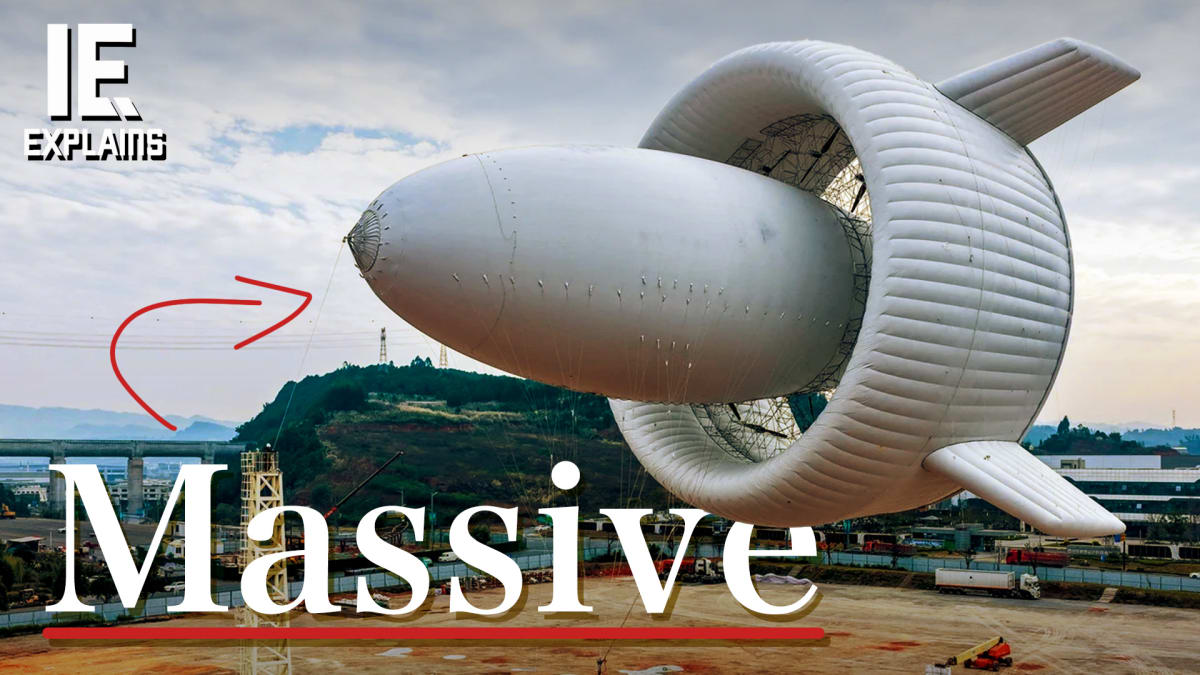
China just unveiled the S2000, the world's first megawatt-class airborne wind turbine that hovers 2,000 meters (1.2 miles) above Earth. This isn't science fiction anymore.
The floating power station stretches 60 meters long and looks like a massive blimp with a purpose. Filled with helium to keep it aloft, the airship houses 12 internal turbines that spin inside a ducted channel, capturing wind energy where the air moves faster and more consistently than at ground level.
Traditional wind turbines face a fundamental problem: they're stuck on the ground where wind speeds vary wildly and obstacles create turbulence. The higher you go, the stronger and steadier the wind becomes, but building towers tall enough gets impossibly expensive.
The S2000 solves this by simply floating up to where the best winds blow naturally. The system can generate up to 3 megawatts of capacity, enough to power roughly 2,000 homes, and it's designed to serve urban areas, remote locations, or offshore sites that struggle with traditional power infrastructure.
The technology opens doors that were previously closed. Remote communities that can't build massive wind farms could anchor these airborne platforms nearby. Offshore installations wouldn't need the expensive foundation work that traditional turbines require in deep water.
Why This Inspires
This innovation reminds us that sometimes the best solutions come from thinking vertically instead of horizontally. For decades, engineers made wind turbines taller and taller, pushing the limits of what steel towers could support. The S2000 team asked a different question: what if we didn't need the tower at all?
The timing matters too. As countries race to meet clean energy goals, innovations like floating turbines expand where renewable power can reach. Mountains, oceans, and deserts that seemed too challenging for traditional renewables suddenly become viable.
While the technology still needs to prove itself in long-term testing, the concept works, and the first unit exists. That's the hardest step.
Clean energy just learned to fly, and the sky's literally the limit.
More Images

Based on reporting by Google News - Wind Energy
This story was written by BrightWire based on verified news reports.
Spread the positivity!
Share this good news with someone who needs it