Clean Energy Wins Big as Courts Block Wind Farm Ban
Federal courts just dealt the Trump administration two major defeats, clearing the path for America's booming clean energy expansion to continue. Despite months of policy roadblocks, the U.S. is on track to add a record 79.7 gigawatts of clean power in 2026.
America's clean energy boom just got a powerful legal boost, and the numbers tell an inspiring story of resilience.
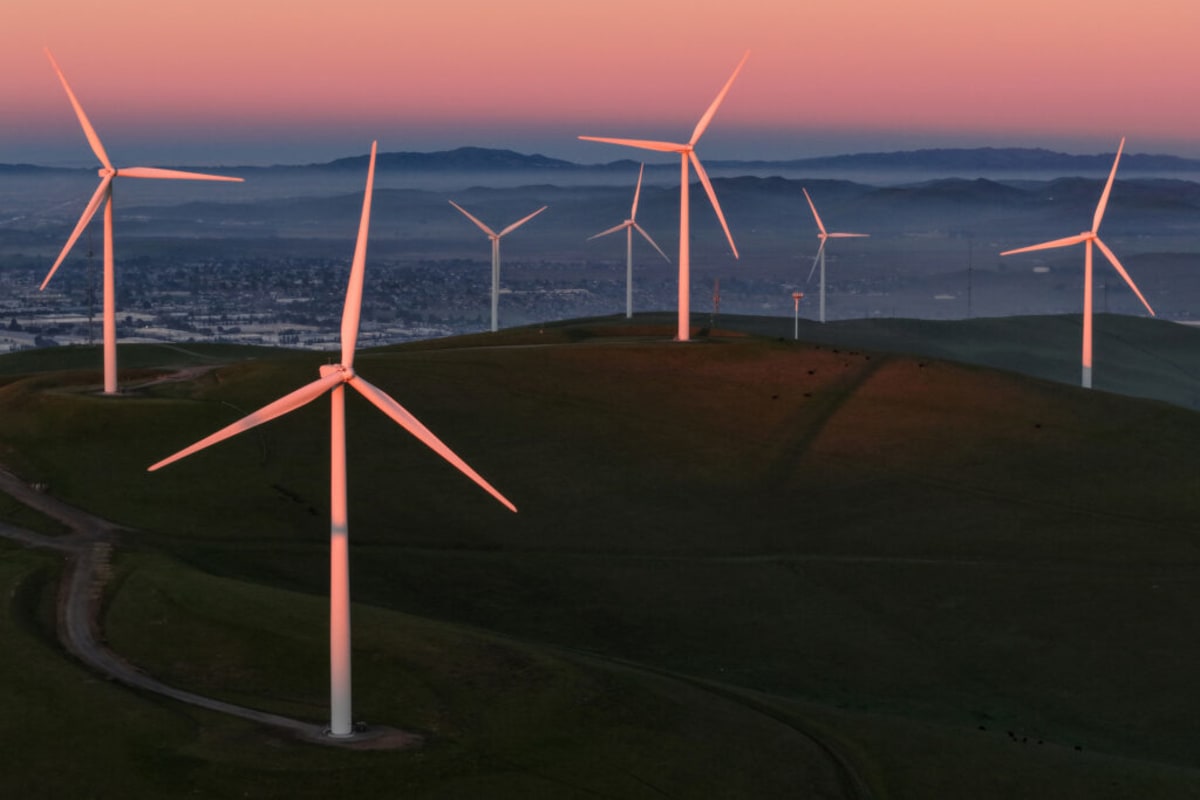
On Monday, a federal appeals court officially ended the Trump administration's attempt to freeze wind energy projects nationwide. The decision came after the Justice Department voluntarily dropped its appeal of a lower court ruling that found the original executive order "arbitrary and capricious."
The case began in May 2025 when 17 states and Washington, D.C., led by New York Attorney General Letitia James, challenged President Trump's sweeping ban on federal wind project permits. U.S. District Court Judge Patti Saris ruled in December that the order exceeded presidential authority and violated federal law.
"Renewable energy continues to prevail and grow in spite of relentless attacks," said Nancy Pyne, a senior advisor to the Sierra Club. She pointed out that while many Americans face rising energy bills, renewable power offers an affordable path to lower costs and cleaner air.
The timing couldn't be better. Clean energy production is surging across America despite numerous administrative hurdles thrown up over the past year.
According to a recent report from the Environmental Defense Fund and Atlas Public Policy, the country added a record 51.6 gigawatts of clean power in 2025. That's enough to power millions of homes, equivalent to about 25 Hoover Dams worth of capacity.
The pipeline looks even stronger moving forward. Developers have announced plans to invest $377 billion in new clean energy projects through 2031, with 222 gigawatts of capacity currently planned or under construction.
The victory came just one week after another federal court restored a crucial tax credit pathway for renewable developers. Judge Colleen Kollar-Kotelly ruled that the administration hadn't provided sound reasoning for changing longstanding rules that helped wind and solar projects qualify for federal tax credits.
Solar and battery storage now account for 85 percent of the planned energy pipeline. The U.S. already has 471 gigawatts of clean power online and generating electricity for homes and businesses nationwide.
The Ripple Effect
These court wins mean more than legal victories. They translate directly into jobs, cleaner air, and more stable energy prices for American families.
The continued expansion of renewable energy creates manufacturing jobs building solar panels and wind turbines, construction jobs installing them, and maintenance jobs keeping them running. Communities across the country benefit from the tax revenue these projects generate.
Lower energy costs matter especially now. Renewable energy offers price stability that fossil fuels simply can't match because sunshine and wind don't have fluctuating global markets.
Environmental groups celebrated the decisions as validation that clean energy's momentum can't be stopped by executive orders alone. The market forces and public demand driving the transition to renewable power proved stronger than political headwinds.
David Villagrana, lead counsel for clean energy tax solutions at EDF, noted that while the administration significantly delayed some projects, the industry's fundamentals remain solid. Developers want consistency, and the courts just provided it.
America's clean energy future just got a whole lot brighter, powered by the rule of law and unstoppable innovation.
Based on reporting by Inside Climate News
This story was written by BrightWire based on verified news reports.
Spread the positivity!
Share this good news with someone who needs it