Costa Rican Astronomer Discovers New Galaxy in Public Data
A Costa Rican astrophysicist discovered a previously unknown galaxy by analyzing publicly available James Webb Space Telescope data from his home computer. His find proves that groundbreaking space discoveries are no longer limited to those with access to billion-dollar observatories.
Homer Dávila Gutiérrez just rewrote the rules on who gets to discover galaxies.
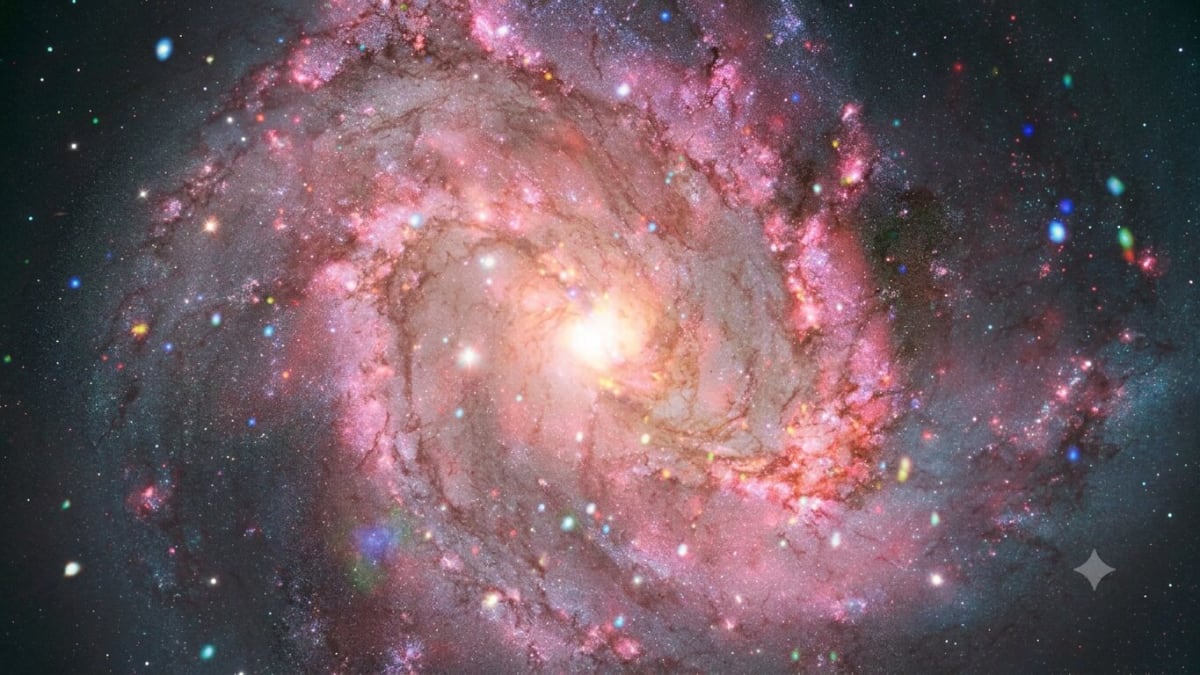
The Costa Rican astrophysicist found a never-before-seen galaxy by combing through public data from the James Webb Space Telescope, working independently from his computer. The discovery, now designated as galaxy "A1," was confirmed by the official JWST scientific teams who verified that no one had ever cataloged or studied this object before.
Dávila examined 54 observation fields and analyzed 1,591 candidate objects before A1 caught his attention. The galaxy appeared as a brilliant arc of light, stretched and magnified by the gravity of a massive galaxy cluster called MACS J0308.9+2645, a natural phenomenon called gravitational lensing.
Three features made A1 stand out: its extreme elongation from gravitational lensing, remarkable brightness despite its distance, and complete absence from every major astronomical database. After Dávila performed his own photometric analysis, specialists confirmed he was indeed the discoverer.
"It is most likely a galaxy," Dávila said. "Nobody had seen it before. It has already been confirmed to me via email that no one had investigated this object. In this first phase, what we have is confirmation that I am the discoverer."
Dávila, founder of SKYCR.org and the first Costa Rican fellow of the Royal Astronomical Society, also uncovered a second potential galaxy candidate during his research. Both discoveries are currently undergoing peer review for publication in the Publications of the Astronomical Society of Japan.
The Ripple Effect
This discovery marks a turning point in how space exploration works. Multi-billion-dollar telescopes like Webb now publish their raw data publicly, meaning anyone with analytical skills and basic computing tools can contribute to humanity's understanding of the universe.
Independent researchers and citizen scientists around the world can now make discoveries that once required institutional access and massive funding. Dávila's work proves that the next great cosmic finding might come from someone's home office in San José rather than a university laboratory.
The modeling to finalize A1's parameters is still underway, but the confirmation alone represents a victory for democratized science. Hidden treasures are waiting in Webb's public archives for anyone curious and determined enough to look.
One astronomer, one computer, and public data just expanded our map of the universe.
More Images

Based on reporting by Google: James Webb telescope
This story was written by BrightWire based on verified news reports.
Spread the positivity!
Share this good news with someone who needs it