Crops Thrive Under Solar Panels in German Climate Study
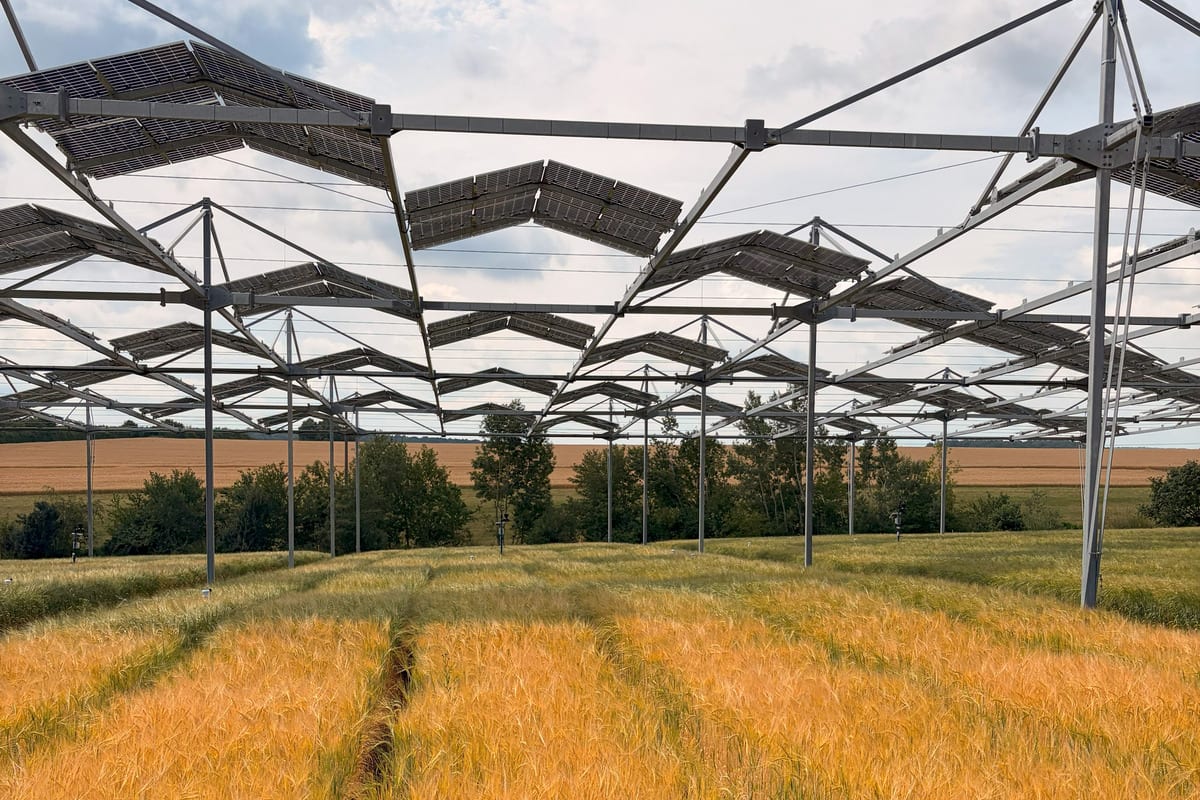
Farmers might soon grow food and energy on the same land without sacrificing their harvests. A groundbreaking German study shows common crops adapt remarkably well to sharing farmland with solar panels.
What if the same acre of land could produce both your morning toast and the electricity to cook it? Scientists in Germany just proved it's more possible than anyone imagined.
Researchers from the University of Hohenheim and Jülich Research Centre planted barley, beans, potatoes, cabbage, and corn beneath solar panels across five German locations. They wanted to know if these everyday crops could handle the shade from photovoltaic modules above them.
The answer surprised even the scientists. All five crops adapted their internal systems to thrive with less sunlight, adjusting how they breathe and photosynthesize.
The plants made a clever trade. They lost less carbon dioxide through respiration while needing less light to grow and produce food. Lead scientist Jennifer Moore explained that crops basically learned to do more with less, fixing the carbon they needed despite reduced sunshine.
What makes this discovery remarkable is that none of these crops naturally grow in shade. Barley, corn, and the others are sun lovers. Yet they showed hidden flexibility no one knew existed.
The adaptations happened everywhere researchers looked. Location didn't matter. Soil type didn't matter. Farming methods and different shading levels didn't change the outcome.
The Ripple Effect
This discovery opens doors farmers desperately need as climate change intensifies. Agrivoltaic systems, where solar panels stand above crops, create cooler microclimates that protect plants during heat waves. The shade helps soil hold moisture longer during droughts.
Plant ecologist Andreas Schweiger points out that extreme heat and drought will likely hurt crops more than solar panel shade ever could. The same farmland could provide both food security and clean energy while actually protecting plants from climate extremes.
Scientists now have a roadmap for matching specific crop varieties to partial shade conditions. They can identify which plants handle shade best and even breed new varieties optimized for dual use farmland. This knowledge makes planning agrivoltaic and agroforestry systems far more precise.
The researchers caution that physiological adaptation doesn't automatically mean bigger harvests. Yield data varied by location and crop type without clear patterns. But understanding how plants respond to natural shading gives agriculture powerful new options.
Germany's farmland may soon work double duty, and crops are proving they're ready for the challenge.
More Images

Based on reporting by PV Magazine
This story was written by BrightWire based on verified news reports.
Spread the positivity!
Share this good news with someone who needs it