Czech Backyard Stone Is 3,000-Year-Old Weapon Maker
A stone someone thought was just an old barn foundation turned out to be a Bronze Age factory for crafting spearheads. The 3,000-year-old discovery reveals surprising connections across ancient Europe.
What looked like ordinary building material buried in a Czech backyard has turned out to be a 3,000-year-old weapon factory that rewrites what we know about Bronze Age trade networks.
In 2007, a homeowner in Morkůvky, a village in South Moravia, spotted a rectangular stone poking through the garden soil. For years, everyone assumed it was just another leftover from an old barn foundation.
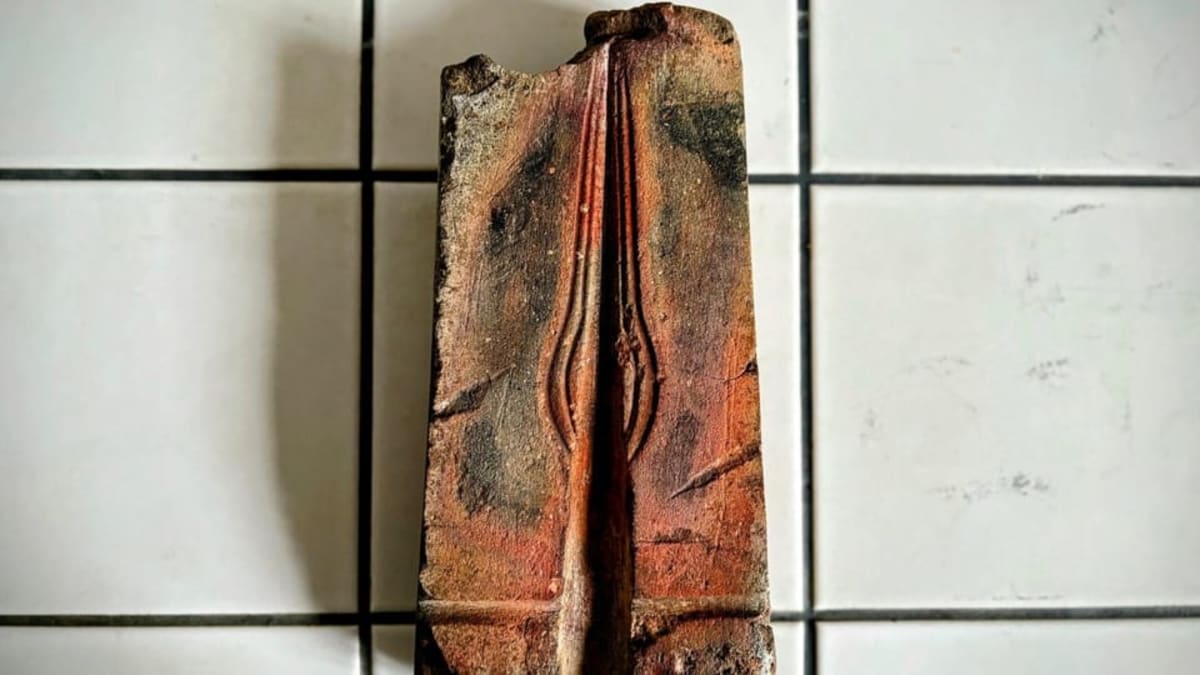
Then specialists from the Archaeological Institute of the Moravian Museum took a closer look. What they found was remarkable: the stone was actually a casting mould used to create bronze spearheads during the Late Bronze Age.
The mould's surface shows a carefully carved negative impression shaped exactly like a spearhead blade. Wear patterns suggest it was used dozens of times, indicating organized weapon production rather than occasional hobbyist metalworking.
Here's where it gets even more interesting. Geological testing revealed the stone isn't from Moravia at all.
The mould is made from volcanic tuff, a rock type found in the Carpathian region, likely from the Bükk Mountains in present-day Hungary. Someone transported this heavy stone across significant distances 3,000 years ago.
That journey wasn't random. It points to established trade routes connecting Central European communities during the Bronze Age, when the region was far more interconnected than many people realize.
The Ripple Effect
The discovery shows how Bronze Age societies valued specialized tools enough to import them from hundreds of miles away. The Carpathian Basin was one of Europe's major bronze production centers, rich in the copper and tin needed to create the alloy.
This mould helped produce spearheads with distinctive features: ribs along the blade and a pronounced ridge on the socket. These weren't just weapons but symbols of status and power in increasingly hierarchical Bronze Age societies.
The stone's durability made it invaluable. Unlike clay moulds that broke after one use, this volcanic tuff could cast weapon after weapon, serving an entire community or warrior elite.
The find adds to our understanding of the Urnfield culture that influenced Moravia between 2300 and 800 BCE, a time when control over metal resources shaped social structures and power dynamics.
Sometimes the most extraordinary discoveries are hiding in plain sight, waiting for someone to look twice.
Based on reporting by Google: archaeological discovery
This story was written by BrightWire based on verified news reports.
Spread the positivity!
Share this good news with someone who needs it