Dad's Toddler Discovers New Type of Honeybee Worker
A scientist's two-year-old son asked why queen bee cells aren't hexagons, sparking a breakthrough discovery. Researchers found "royal engineer" bees that use their bodies as furnaces to build specialized cells that help create healthy queens.
A curious toddler's question about honeycomb shapes just led scientists to discover an entirely new type of worker bee that had been hiding in plain sight.
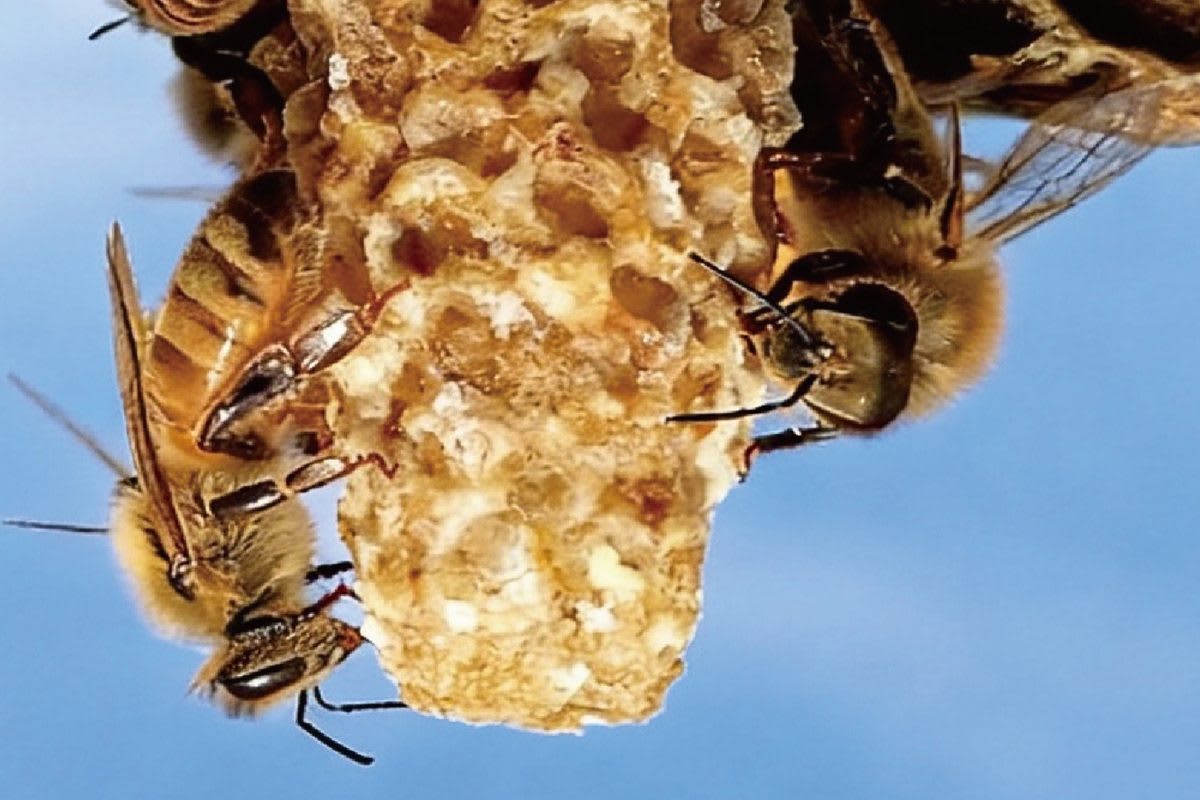
When bee expert Kai Wang brought his two-year-old son Dongyue to his lab at the Chinese Academy of Agricultural Sciences in Beijing, the boy pointed to a peanut-shaped queen cell and asked, "Daddy, is this also a bee's house? Why isn't it a hexagon?" That innocent question changed everything.
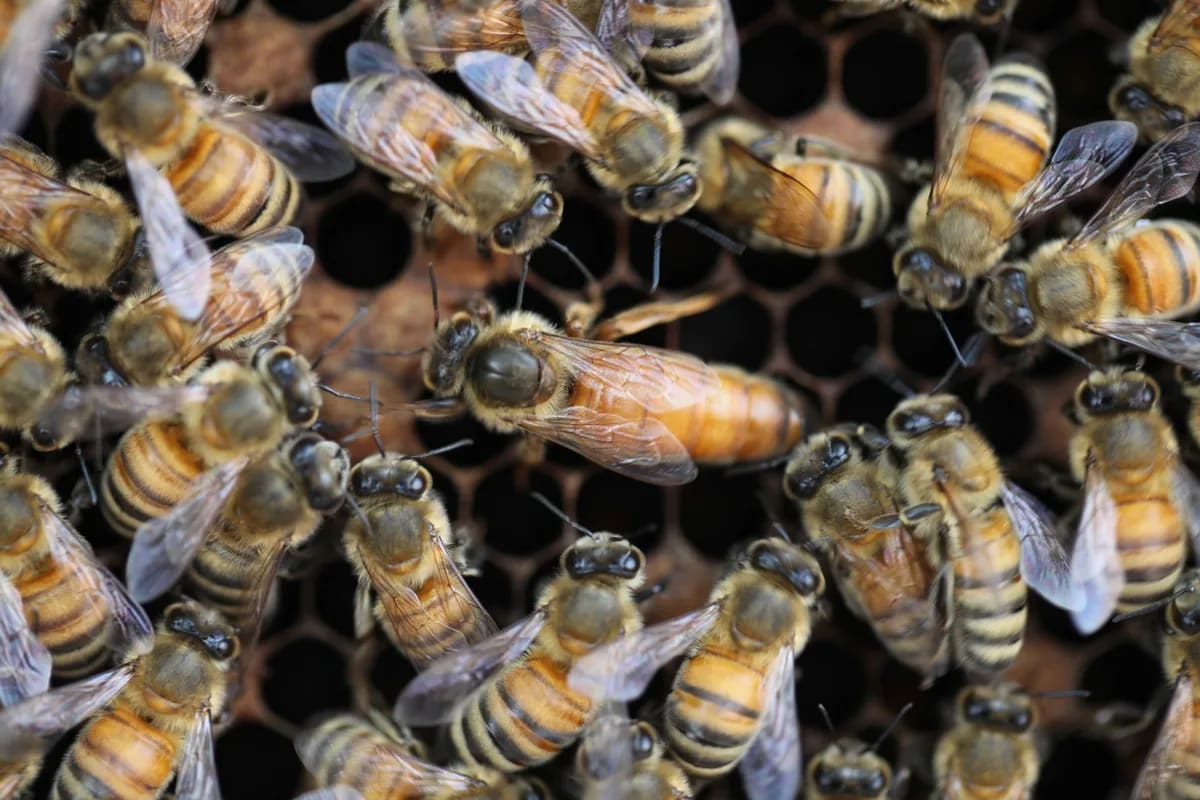
Wang and his team started watching their observation hive more carefully. They noticed something strange: certain worker bees spent their time chewing and manipulating wax on queen cells, behaving differently from regular workers who build the familiar hexagonal honeycomb.
Using infrared thermal cameras, the researchers made a stunning discovery. These special workers were heating their thoraxes to extreme temperatures, essentially transforming their bodies into tiny living furnaces to soften and shape the wax.
Wang calls them "royal engineers" because their sole job is building the odd-shaped cells where future queens develop. These bees even showed different patterns of gene expression in their abdomens, proving they're biologically distinct from other workers.
But the discovery got even more interesting. For years, scientists believed queen bees became queens simply by eating royal jelly as larvae. The shape and structure of their cells seemed irrelevant.
Wang's team used scanning electron microscopy to analyze the wax itself. Queen cell wax turned out to have unique properties: less dense, more pliable, and with a higher melting point than regular worker cell wax.
To test whether this mattered, they conducted an experiment with 172 queen larvae. Some developed in cells made from queen wax, others in cells made from worker wax. The results were dramatic: queens raised in worker wax cells were smaller and more likely to die.
The findings, published in Nature, prove that queen cells aren't just containers. They're engineered microenvironments that play a critical role in creating healthy, viable queens.
Why This Inspires
Sometimes the biggest scientific breakthroughs come from the simplest questions. A toddler's curiosity led to discoveries that reshape our understanding of one of Earth's most studied creatures.
After decades of honeybee research, scientists are still finding new layers of complexity in how these insects organize their societies. The bees aren't just following instinct. They're sophisticated architects engineering specialized environments for different purposes.
Wang's discovery also reminds us that expertise paired with fresh perspectives creates magic. His son couldn't have made this discovery alone, but neither could Wang without that childlike willingness to question what seems obvious.
The research has practical implications too, potentially helping beekeepers support healthier queen development at a time when bee populations face serious threats. Understanding how bees naturally create optimal conditions for their queens could inform conservation efforts worldwide.
As Wang puts it, honeybees are "true masterminds" whose strategic complexity goes far beyond our current understanding, and there's clearly much more to learn.
More Images

Based on reporting by Google News - Science
This story was written by BrightWire based on verified news reports.
Spread the positivity!
Share this good news with someone who needs it