Denmark Homeowner Finds Largest Viking Silver Hoard in Yard
A Danish homeowner preparing to build a backyard terrace struck metal and uncovered 18.5 kilograms of Viking silver buried 1,000 years ago. The treasure includes 700 artifacts from the Middle East to Britain, revealing the stunning global reach of Viking trade networks.
A routine home improvement project in northern Denmark turned into the archaeological discovery of a lifetime when a homeowner's shovel struck something metallic beneath the garden soil.
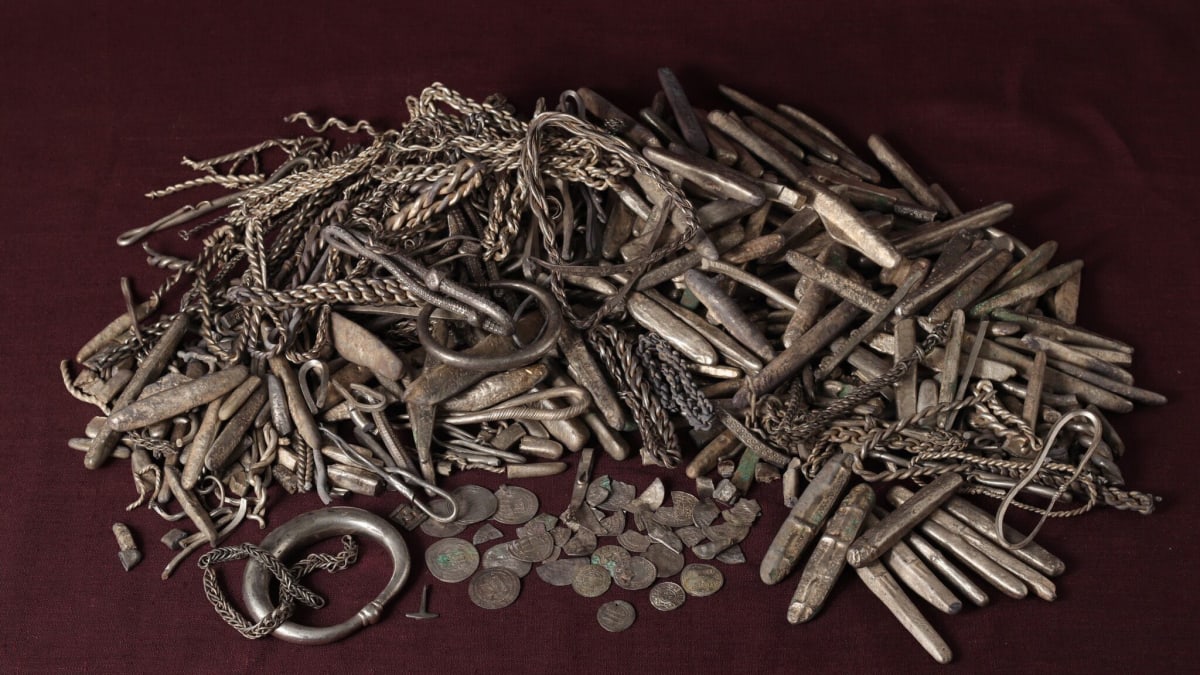
What emerged was nearly 41 pounds of Viking Age silver dating back to the 10th century, making it the largest hoard ever discovered in Denmark. The collection is nearly three times bigger than any Viking treasure previously found in the country.
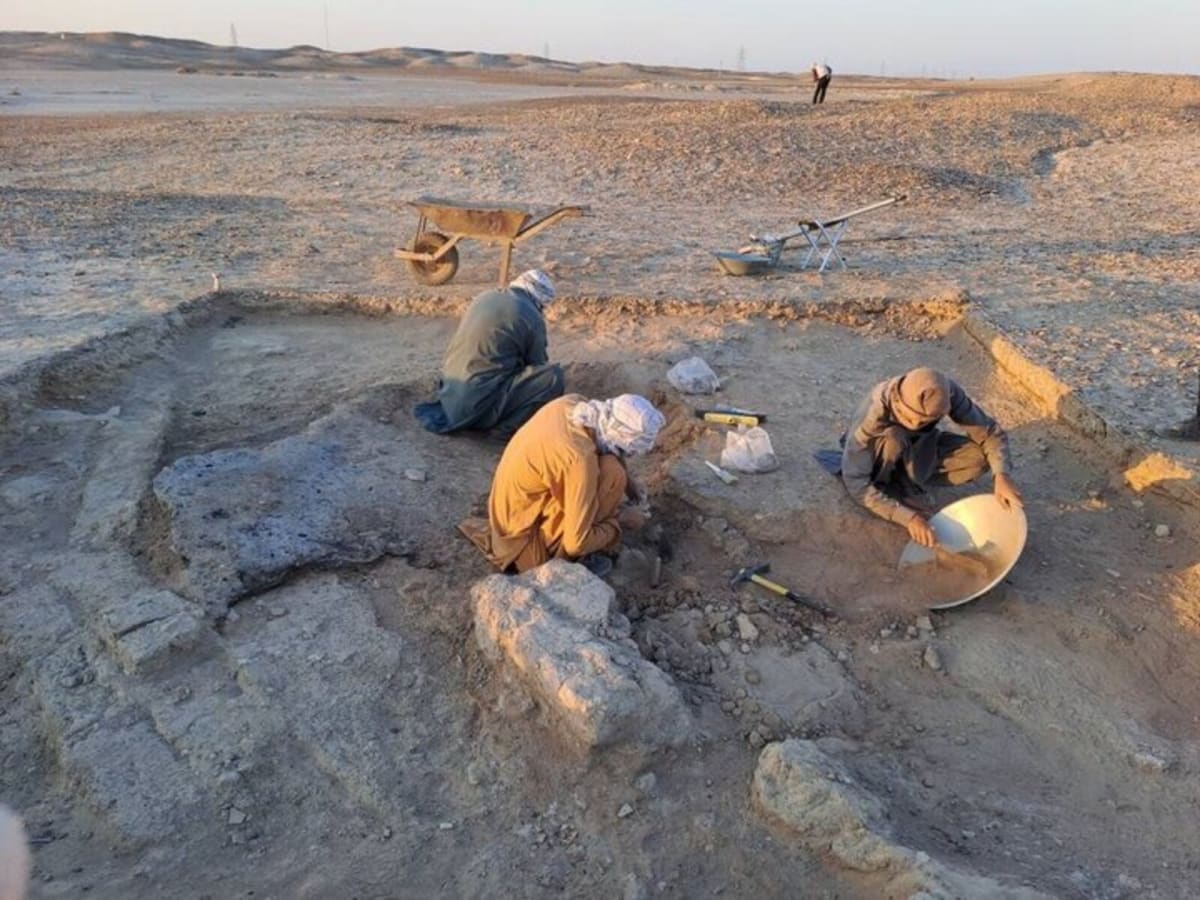
The homeowner in the Rebild area was preparing to install a new terrace when they accidentally hit buried metal objects. Recognizing the potential significance, they contacted local authorities, who dispatched archaeologists from Nordjyske Museer to investigate.
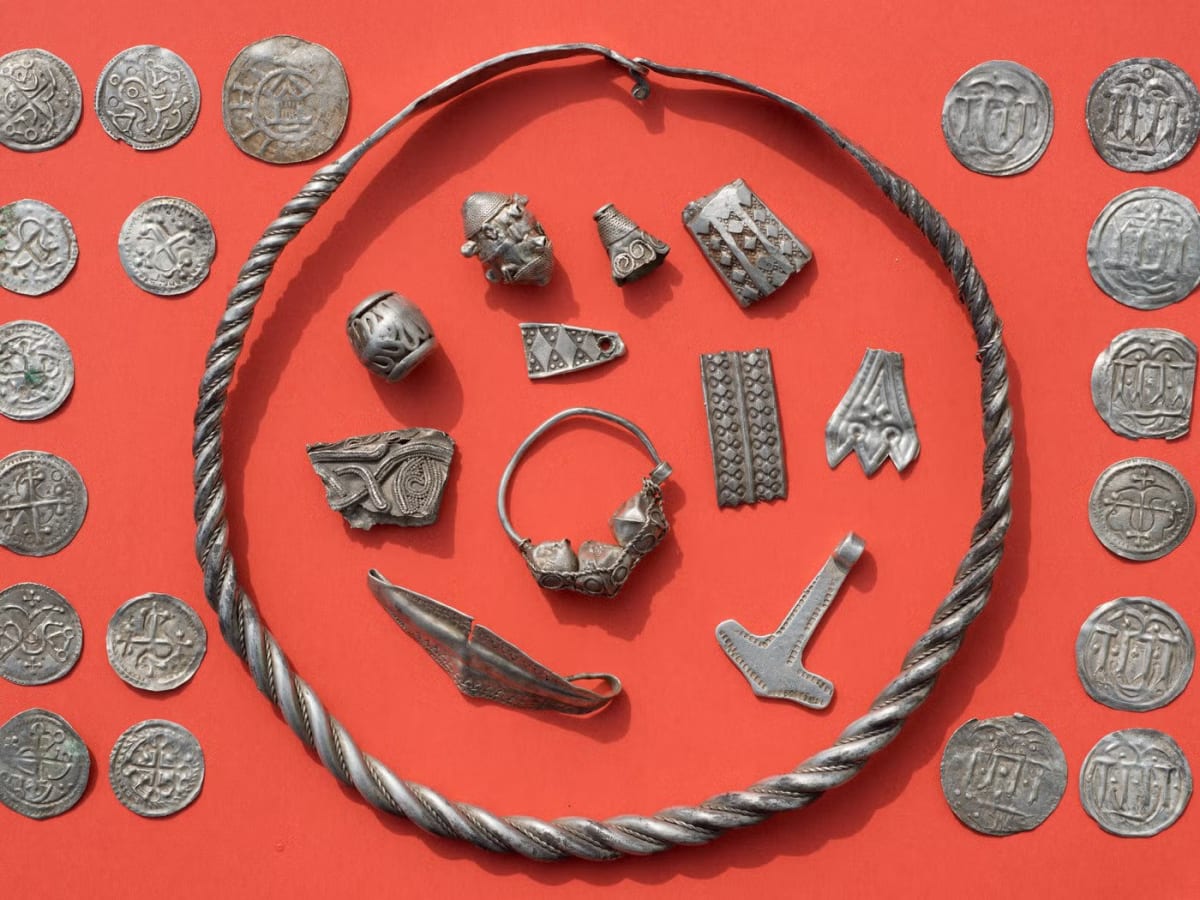
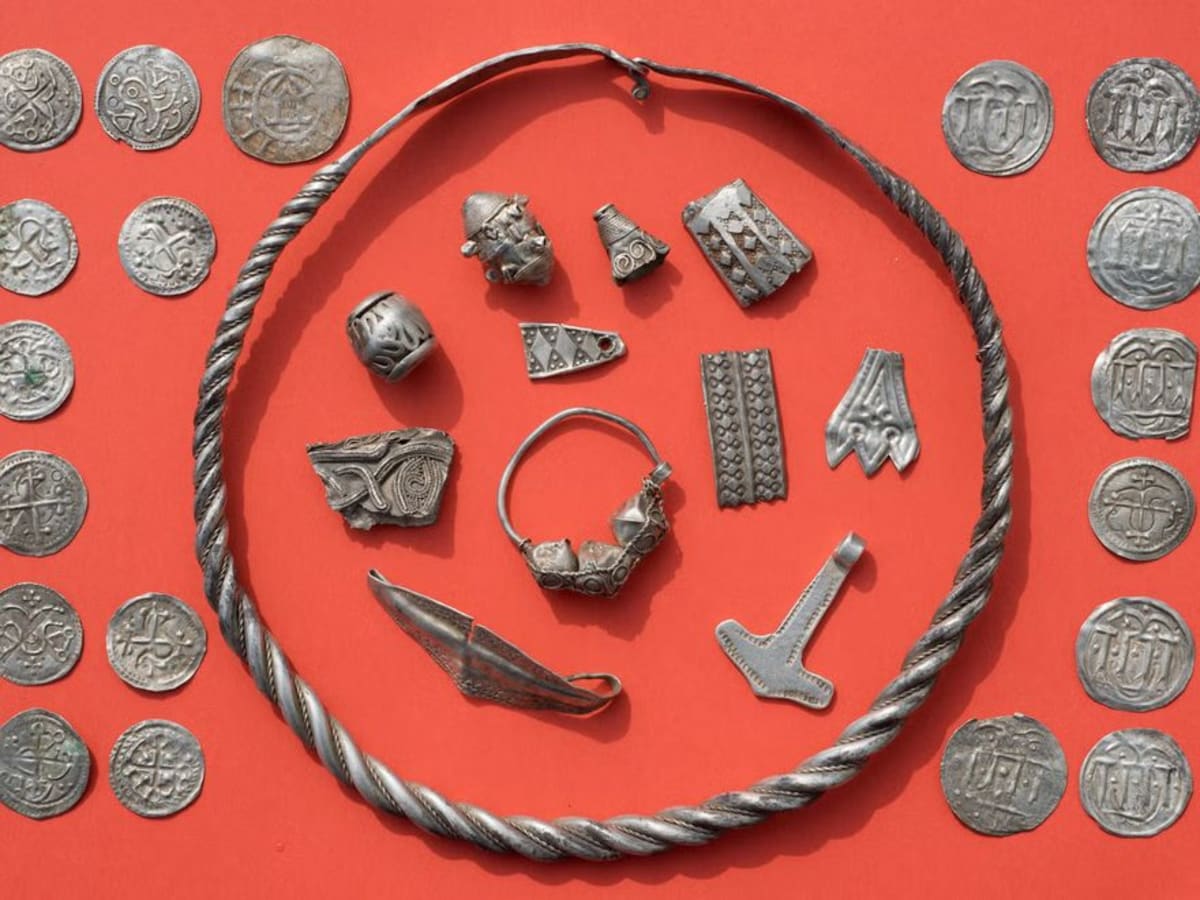
The excavation revealed around 700 silver artifacts that had been hidden beneath the property for more than 1,000 years. The treasure includes silver ingots, bracelets, jewelry, and 47 complete and fragmented coins.
What makes the discovery especially fascinating is where the silver came from. Many of the coins are Islamic silver dirhams from the Arab world, while others originated in England, painting a picture of Vikings as sophisticated international traders rather than just raiders.
About 14 pounds of the silver remained perfectly preserved inside the original ceramic vessel where it was buried during the Viking era. Archaeologists describe it as a "Viking Age safe deposit box," explaining that Vikings used silver both as currency and as a store of wealth.
Rather than relying solely on minted coins, Vikings often traded silver by weight, cutting jewelry and coins into smaller pieces for everyday transactions. This hoard provides physical evidence of how that system worked in practice.
The Ripple Effect
This discovery is rewriting what we know about Viking economic life and their connections across continents. The artifacts link Scandinavian Vikings to trade routes stretching from the Middle East to the British Isles, proving they were part of a truly global economy.
Experts believe someone deliberately buried the treasure during a period of political uncertainty or conflict, intending to retrieve it later but never returning. That loss has become modern archaeology's gain.
The artifacts are now undergoing conservation and scientific analysis at the National Museum of Denmark. Researchers will study their origins, composition, and historical context to learn even more about Viking society and commerce.
Once the analysis is complete, the collection will be displayed at Fyrkat Viking Museum, one of Denmark's premier Viking heritage sites. The public will have the chance to see this extraordinary time capsule up close.
Danish cultural authorities are calling it one of the most significant archaeological finds in decades, offering a rare window into how Vikings operated as merchants and traders across vast distances more than a millennium ago.
More Images

Based on reporting by Google: archaeological discovery
This story was written by BrightWire based on verified news reports.
Spread the positivity!
Share this good news with someone who needs it