Disco Ball Satellite Proves Einstein Right to 0.2% Precision
Scientists used a golf ball-sized disco satellite and decades-old NASA technology to measure how Earth twists space and time, confirming Einstein's predictions with record-breaking accuracy. The experiment proves we can test the universe's deepest mysteries with creativity and persistence.
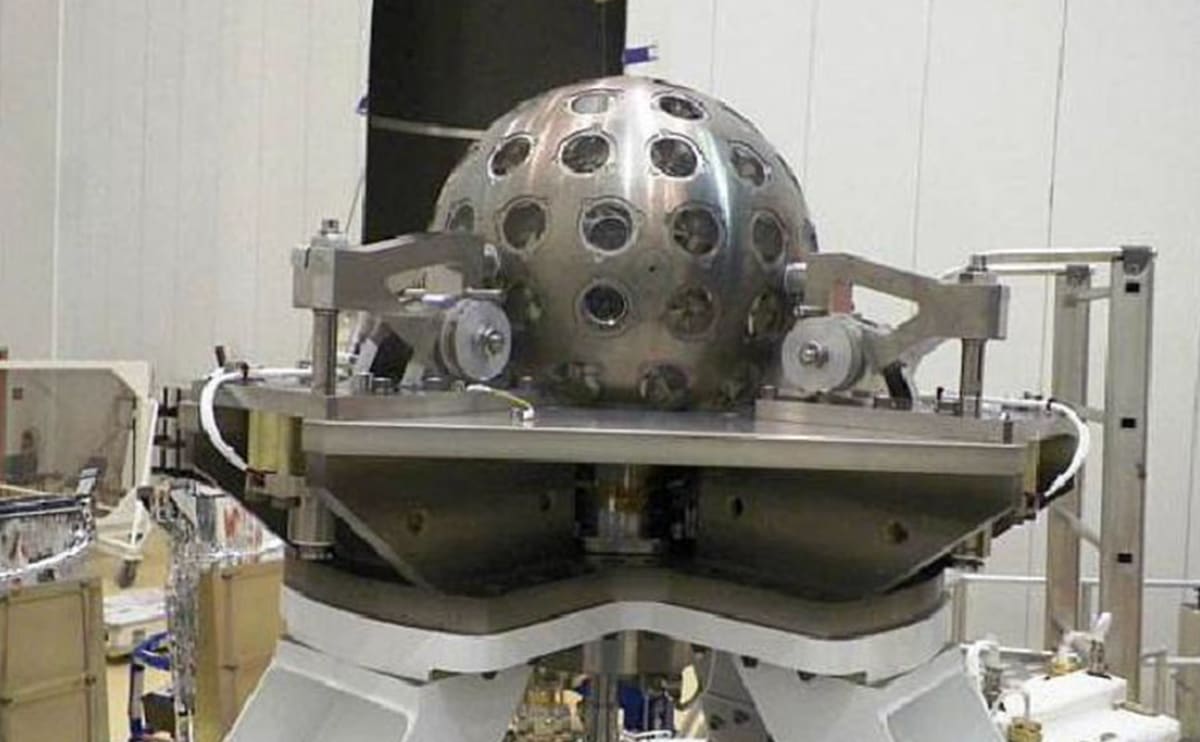
A satellite that looks like a disco ball just helped scientists achieve the most accurate test of Einstein's theory ever performed near Earth.
Physicist Ignazio Ciufolini and his team measured how our spinning planet drags the fabric of space and time around with it, a mind-bending effect called frame dragging. Their measurements matched Einstein's 1915 predictions to within just 0.2 percent, ten times more accurate than previous attempts.
The secret weapon? A 40-centimeter sphere covered in 303 tiny mirrors called LARES-2, launched by Italy in 2022. It has no electronics, no thrusters, and no solar panels. Just dense metal and reflectors, weighing 294 kilograms.
Scientists on Earth shot laser pulses at the orbiting disco ball and measured the reflections to track its position within one millimeter. Over three years, they collected 200,000 measurements to detect how Earth's rotation nudges the satellite's orbit by a tiny 61.3 milliarcseconds per year.
The challenge was enormous. Earth's equatorial bulge creates forces thousands of times stronger than the frame dragging signal the team wanted to measure. Solar and lunar tides constantly shift Earth's shape, further complicating the data.
Ciufolini's solution was brilliantly simple. He paired LARES-2 with LAGEOS, a NASA satellite launched in 1976, positioning them at opposite orbital angles that sum to 180 degrees. The unwanted noise from Earth's bulge canceled out mathematically, while the frame dragging signal doubled.
The team then collected data for exactly 1,050 days, one complete orbit cycle, allowing tidal effects to average out completely. What remained was the pure signature of spacetime twisting, exactly as Einstein predicted over a century ago.
Why This Inspires
This discovery shows that world-changing science doesn't always require billion-dollar budgets or massive new infrastructure. Sometimes it takes a 40-year-old satellite, a new disco ball companion, and patient scientists willing to wait three years for perfect data.
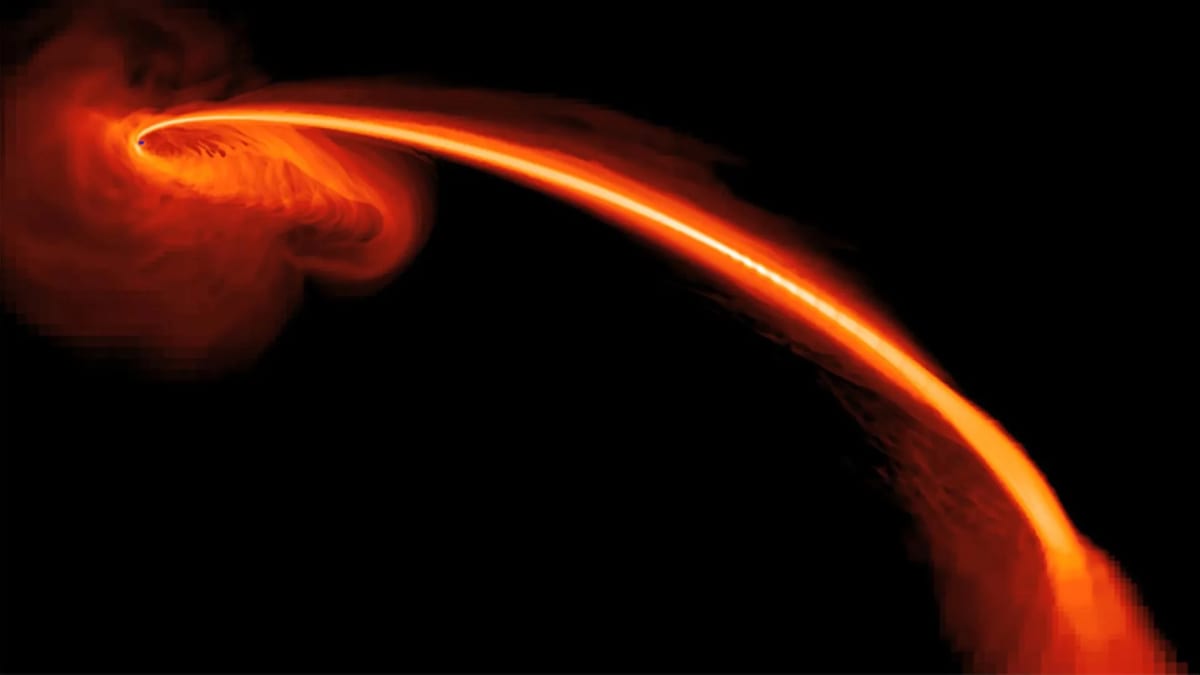
The same principles used here could help us understand massive black holes millions of light years away. Frame dragging becomes dramatically stronger around these cosmic giants, and our improved Earth-based measurements give us better tools to study them.
Even more remarkable, this experiment proved that a simple metal sphere covered in mirrors can answer questions about the fundamental nature of reality. The team's creative approach to eliminating noise turned an impossible measurement into the most precise gravitational test ever conducted in Earth's neighborhood.
Einstein's theory continues standing strong against every test we throw at it, and each confirmation helps us understand the universe we call home.
More Images



Based on reporting by Ars Technica Science
This story was written by BrightWire based on verified news reports.
Spread the positivity!
Share this good news with someone who needs it