DNA Reveals Family of 7 Neanderthals in Polish Cave
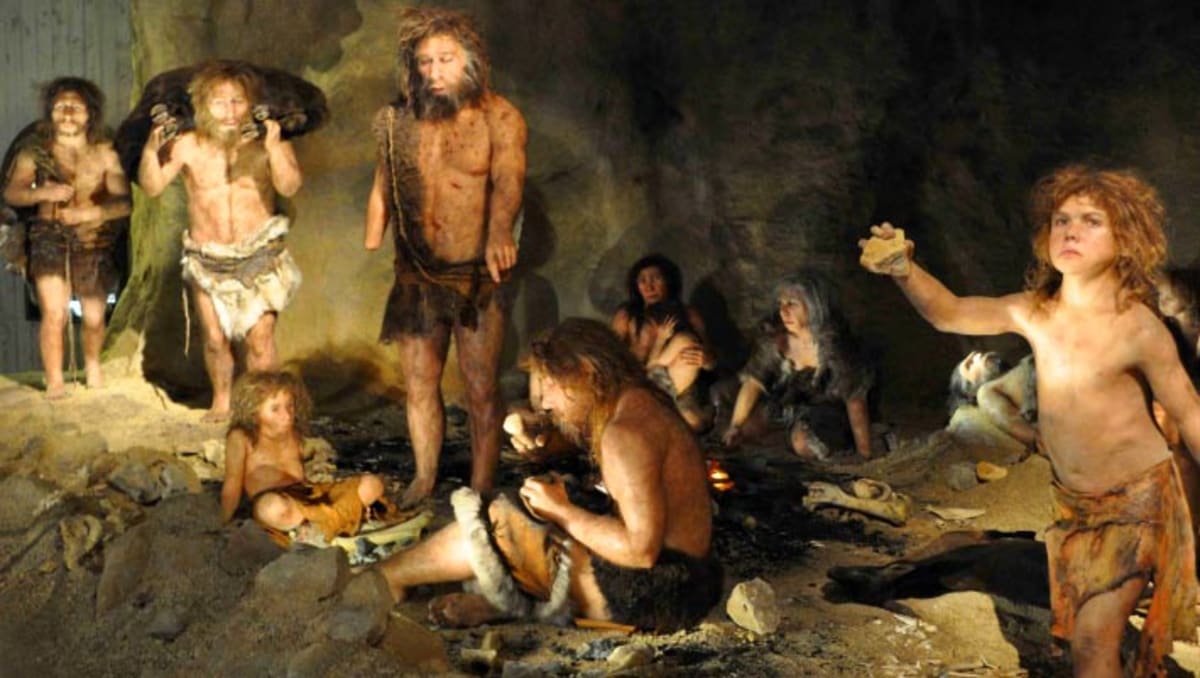
Scientists have pieced together the genetic story of at least seven Neanderthals who lived together in a Polish cave 100,000 years ago, creating the oldest known snapshot of a prehistoric family. Three of them shared identical DNA, suggesting they were a mother and her children or close maternal relatives.
For the first time, researchers have reconstructed an entire Neanderthal community from a single location, revealing what appears to be a family group that called Stajnia Cave home during a warm period in prehistoric Poland.
The team analyzed DNA from nine teeth discovered in the limestone cave between 2007 and 2010. They identified at least seven individuals, possibly eight, who lived together roughly 100,000 years ago.
The most remarkable finding came from three teeth belonging to two children and one adult. All three carried identical mitochondrial DNA, which passes directly from mother to child. This strongly suggests these Neanderthals were closely related through their maternal line, possibly a mother with her kids or siblings from the same mother.
Professor Andrea Picin from the University of Bologna celebrated the breakthrough. Most Neanderthal genetic evidence comes from single fossils scattered across different times and places, making it nearly impossible to understand how they lived together. This discovery changes that completely.
The cave sits at 359 meters elevation in southern Poland's Kraków-Częstochowa Upland. Its narrow entrance and massive limestone formation created a protected space where this small group made their home during a period when Europe experienced warmer temperatures.
Why This Inspires
This discovery does more than add data to textbooks. It brings an ancient family back to life after 100,000 years.
We can now imagine a Neanderthal mother caring for her children in that Polish cave, teaching them to survive, creating bonds that lasted long enough to leave traces we can still read today. These weren't solitary wanderers. They were families who loved, protected, and lived alongside each other.
The research also revealed something unexpected about Neanderthal history. The maternal genetic line found in Stajnia once spread across enormous distances, from southeastern France to the Iberian Peninsula and the northern Caucasus. Later, a different genetic line replaced it across Europe, showing how Neanderthal populations shifted and changed over tens of thousands of years.
Dr. Wioletta Nowaczewska and Dr. Adam Nadachowski from Polish research institutions noted that finding such an ancient family group in one complex site represents a major achievement for understanding European Neanderthals.
The study appeared this week in Current Biology, offering the clearest genetic picture yet of how these ancient humans organized themselves into communities and cared for their young, reminding us that the drive to protect family runs deeper than our species.
More Images
Based on reporting by Google News - Science
This story was written by BrightWire based on verified news reports.
Spread the positivity!
Share this good news with someone who needs it
%2Fhttps%3A%2F%2Ftf-cmsv2-smithsonianmag-media.s3.amazonaws.com%2Ffiler_public%2F75%2F34%2F75342ac4-0f4b-4563-a63d-3012f0feae31%2Fgettyimages-2293659629.jpg)
%2Fhttps%3A%2F%2Ftf-cmsv2-smithsonianmag-media.s3.amazonaws.com%2Ffiler_public%2Fef%2F5b%2Fef5b9055-962e-483d-b70c-ed912c2a6481%2Fviikinkaikainen_rahakatko.jpeg)