Earth's Fungal Network Could Stretch 12,000 Light Years
Scientists just mapped the entire underground fungal network covering our planet, and it's so massive that if stretched out, it would span nearly 12,000 light years into space. These hidden helpers weigh four to six times more than all humans combined and quietly keep 70 percent of Earth's plants alive.
Beneath your feet right now, an invisible network is working around the clock to keep our planet thriving, and scientists just discovered it's far more massive than anyone imagined.
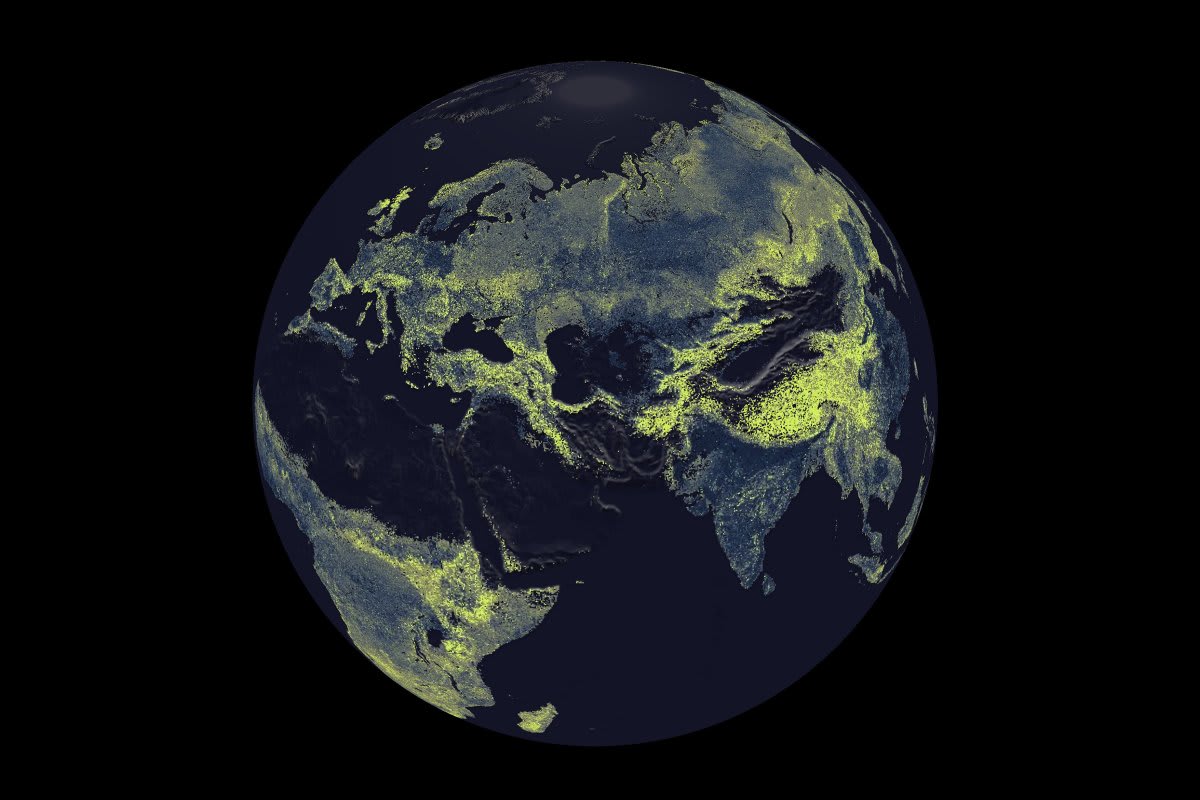
Researchers have created the first complete map of Earth's underground fungal network, revealing a web of life so extensive it would stretch 12,000 light years if laid end to end. That's enough to reach the Westerlund 1 super star cluster and cover a tenth of our entire Milky Way galaxy.
The study, published in the journal Science, focused on arbuscular mycorrhizal fungi that most people have never heard of but can't live without. These microscopic organisms form the hidden backbone of our soil, circulating water and nutrients while locking away massive amounts of carbon that would otherwise warm our atmosphere.
The numbers are staggering. Scientists analyzed over 16,000 soil samples from around the world and found more than 110 quadrillion kilometers of fungal filaments woven through Earth's topsoil. That's nearly a billion times the distance between Earth and the Sun.
All together, this global network weighs around 300 megatons, which is four to six times heavier than every human being on the planet combined. About 70 percent of all ground plants depend on these fungi to survive, yet most of us never give them a second thought.
The researchers discovered that 40 percent of the fungal mass lives in high-altitude or flooded grasslands like Florida's Everglades. These wild grasslands are disappearing fast, which worries the scientists who now understand just how vital they are.
"People just aren't paying attention to these ecosystems," said coauthor Toby Kiers, an evolutionary biologist at Vrije University Amsterdam. She hopes the mapping project will shine a spotlight on these hidden patterns underground.
Lead author Justin Stewart emphasized the urgency. "These are areas that people are really ripping up because it's much easier to rip up a grass than it is to rip up a tree," he told Live Science.
Why This Inspires
This discovery reminds us that some of the most powerful forces on Earth work quietly, without fanfare or recognition. The fungal networks don't demand our attention, yet they've been supporting nearly three quarters of plant life on our planet all along.
The research also shows what's possible when scientists look beyond what's immediately visible. By piecing together thousands of soil samples and using machine learning, they revealed a living system more vast than most people thought possible.
Now that we can see this hidden world, we have the chance to protect it. The model showed that farmland has about half the fungal density of wild areas, giving conservationists clear targets for restoration efforts.
Understanding what's been supporting us all along is the first step toward making sure it continues to thrive.
More Images
Based on reporting by Futurism
This story was written by BrightWire based on verified news reports.
Spread the positivity!
Share this good news with someone who needs it