Earth's Largest Volcano Found 6,500 Feet Under Pacific
Scientists discovered the Tamu Massif, a 145-million-year-old underwater volcano the size of New Mexico, hiding beneath the Pacific Ocean. This colossal structure rivals only Mars' Olympus Mons in scale.
Deep beneath the Pacific Ocean, scientists just confirmed something extraordinary: the largest single volcano ever discovered on Earth has been hiding in plain sight for millions of years.
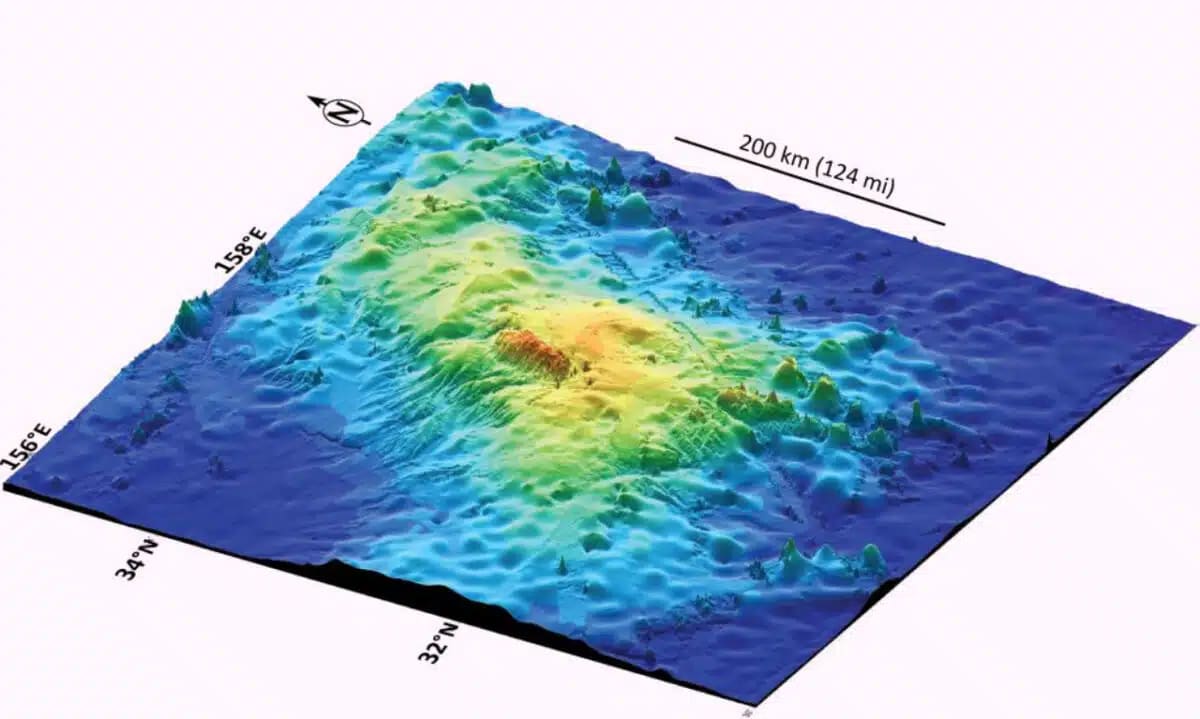
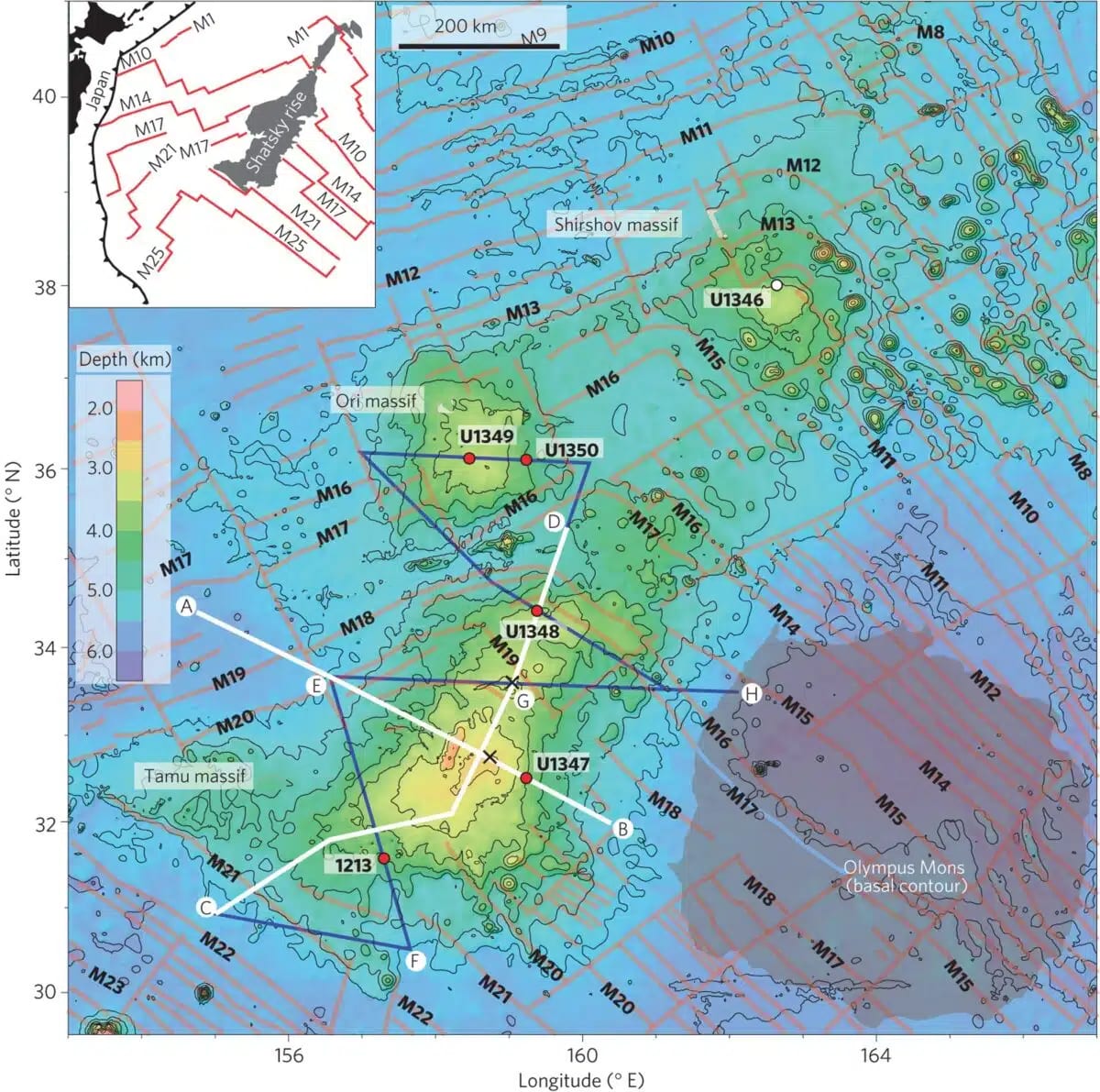
The Tamu Massif sits 1,000 miles east of Japan, buried 6,500 feet below the ocean surface. For decades, researchers thought they were looking at three separate underwater mounds in a region called the Shatsky Rise.
Dr. William Sager from the University of Houston led the team that revealed the truth. Using detailed seismic data, they discovered continuous lava flows connecting what everyone assumed were distinct formations into one massive volcanic system.
The numbers are staggering. The Tamu Massif spans roughly 120,000 square miles, about the size of New Mexico. Its slopes are so gradual that if you stood on its flank, you couldn't tell which way was downhill.
This discovery reshapes how scientists understand volcanic formation. The massif formed around 145 million years ago when an enormous volume of magma rose from deep within Earth's mantle, spreading outward to create a wide, shield-like structure unlike any other submarine volcano known today.
The volcano became inactive shortly after forming, but its legacy remains profound. By contrast, Hawaii's Mauna Loa, the largest active volcano on Earth, covers only 2,000 square miles. The Tamu Massif is 60 times larger.
Why This Inspires
This discovery proves that Earth still holds massive secrets waiting to be uncovered. The Tamu Massif challenges previous theories about oceanic plateaus and opens new pathways for understanding how our planet's interior works.
Only Olympus Mons on Mars can match this volcano's scale. Finding something this colossal on our own planet reminds us how much we have yet to explore, even in our own backyard.
The research, published in Nature Geoscience, represents years of meticulous work mapping the seafloor. What scientists once casually called "the one on the left, the one on the right, and the big one" now stands as one of the most significant geological findings in recent decades.
Dr. Sager explained that understanding how such a structure formed provides crucial information for geologists studying Earth's interior processes. The sheer volume of magma required to build something this size tells us about forces deep within our planet that shaped the world we live on today.
Even 145 million years later, the Tamu Massif continues teaching us about the powerful forces that built our world.
More Images

Based on reporting by Google News - Science
This story was written by BrightWire based on verified news reports.
Spread the positivity!
Share this good news with someone who needs it