ECU Medical School Expands to Train 30% More Doctors
East Carolina University just topped out a $265 million medical education center that will train 30 more doctors each year for underserved eastern North Carolina. The seven-story building is 100% dedicated to student learning spaces, no offices allowed.
East Carolina University celebrated a construction milestone Thursday that will help address North Carolina's doctor shortage in a big way.
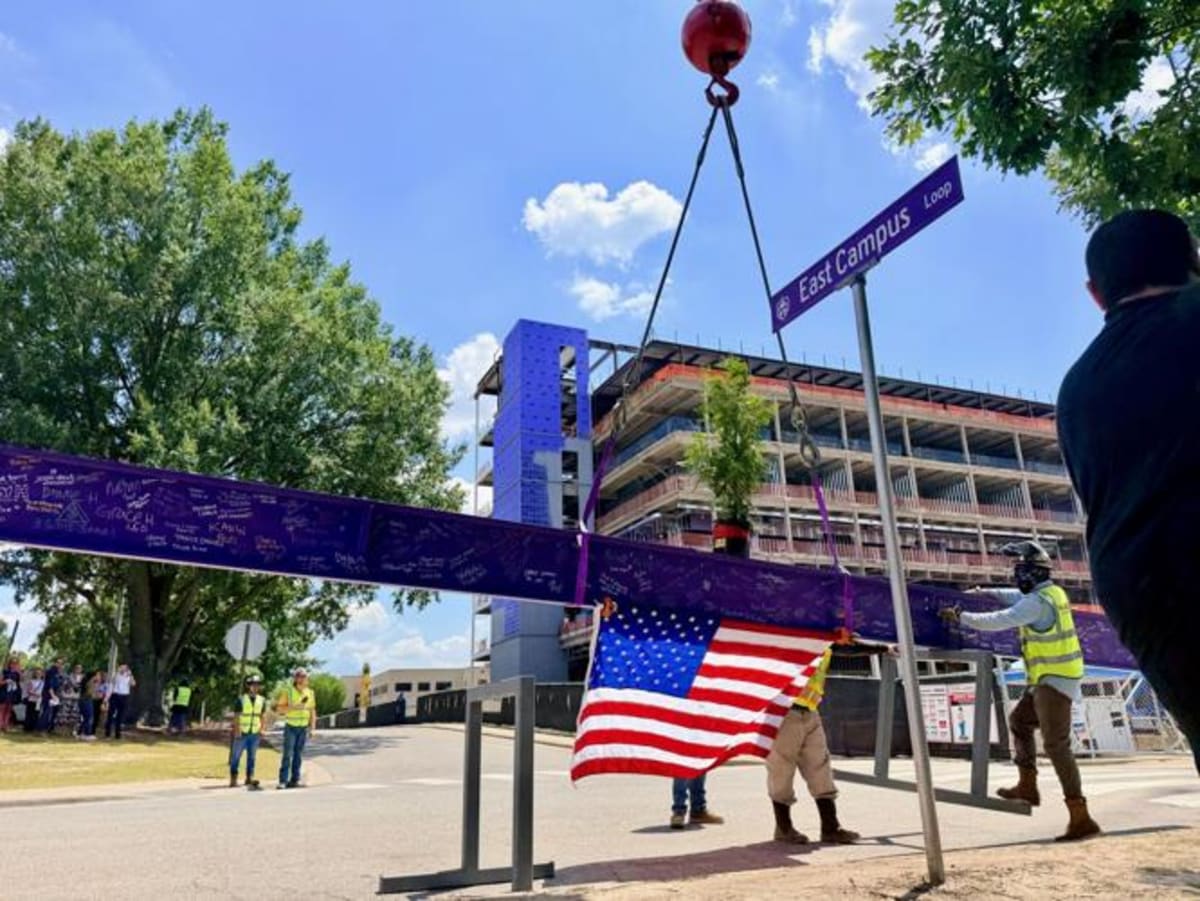
The school marked the installation of the final steel beam on its new Brody Center for Medical Education, a seven-story building designed to increase medical school enrollment from 90 to 120 students per year. That's 30 additional doctors annually who will graduate with half the debt of typical medical school grads.
The $265 million facility stands apart from traditional medical buildings. Executive Dean Dr. Jason Higginson made it clear: zero offices will occupy the 195,000 square feet. Every inch is designed for students.
"It's 100% aimed at students to attract the brightest and the best to this community," Higginson said. The building will feature learning communities where students can collaborate, socialize, and access career opportunities unavailable elsewhere.
More than 1,100 workers have poured over 350,000 hours into the project so far. The structure contains enough steel to build 950 Chevy trucks and enough concrete to create a 40-foot slab stretching 11 football fields.
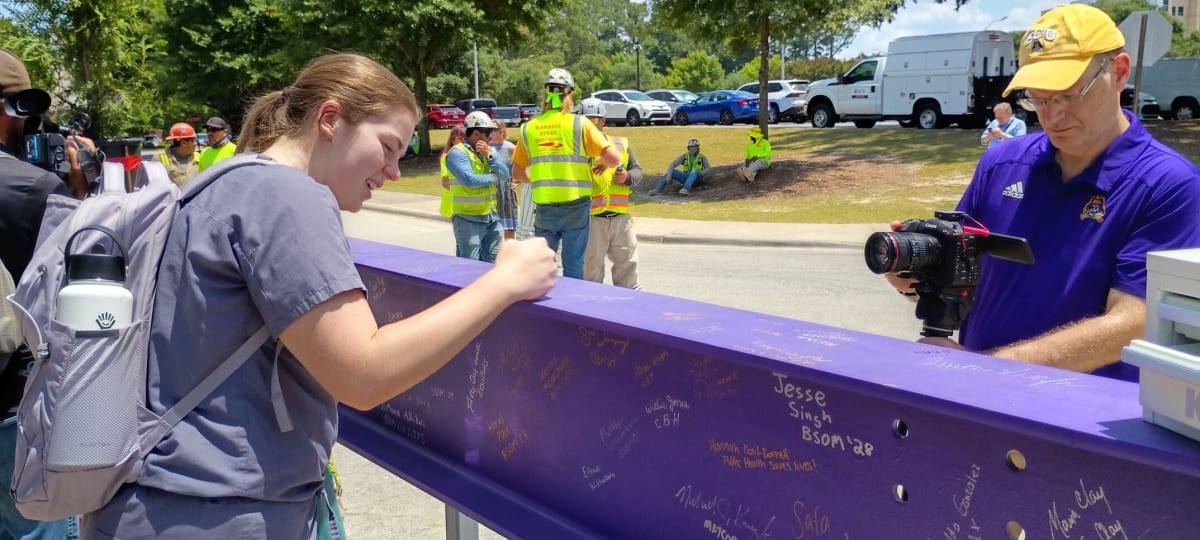
Before the final beam rose into place, construction workers, university officials, and students signed their names on it. Third-year student Lauren McMahan, whose clinical rotation ended early, called it "a blessing" to participate in the moment.
The building honors the Brody family, whose $35 million in cumulative giving has supported ECU's medical mission for decades. Hyman Brody's father and uncles believed in founding chancellor Leo Jenkins' vision to establish the medical school.
"The good that it can do for so many people in eastern North Carolina," Brody said. "We're proud to be associated with that."
The Ripple Effect
Eastern North Carolina has long faced healthcare access challenges, with many rural communities struggling to attract and keep physicians. By training 30 additional doctors each year in the region, ECU expects many will choose to practice where they studied.
The Golden LEAF Foundation added $1 million to outfit a cutting-edge learning studio with 360-degree screens and simulation technology. Students will learn in spaces designed specifically for modern medical education.
Construction continues with completion expected in 2027, just in time for current students like McMahan to experience it before graduation in 2028.
More Images


Based on reporting by Google News - Education Milestone
This story was written by BrightWire based on verified news reports.
Spread the positivity!
Share this good news with someone who needs it