Humanoid Robot Successfully Removes Pig's Gallbladder
A surgeon-controlled humanoid robot named Surgie just completed its first live surgeries in a standard operating room, using ordinary surgical tools to remove gallbladders from pigs. This breakthrough could bring life-saving operations to remote communities that lack access to specialized surgical care.
A humanoid robot just made medical history by performing real surgery alongside human doctors.
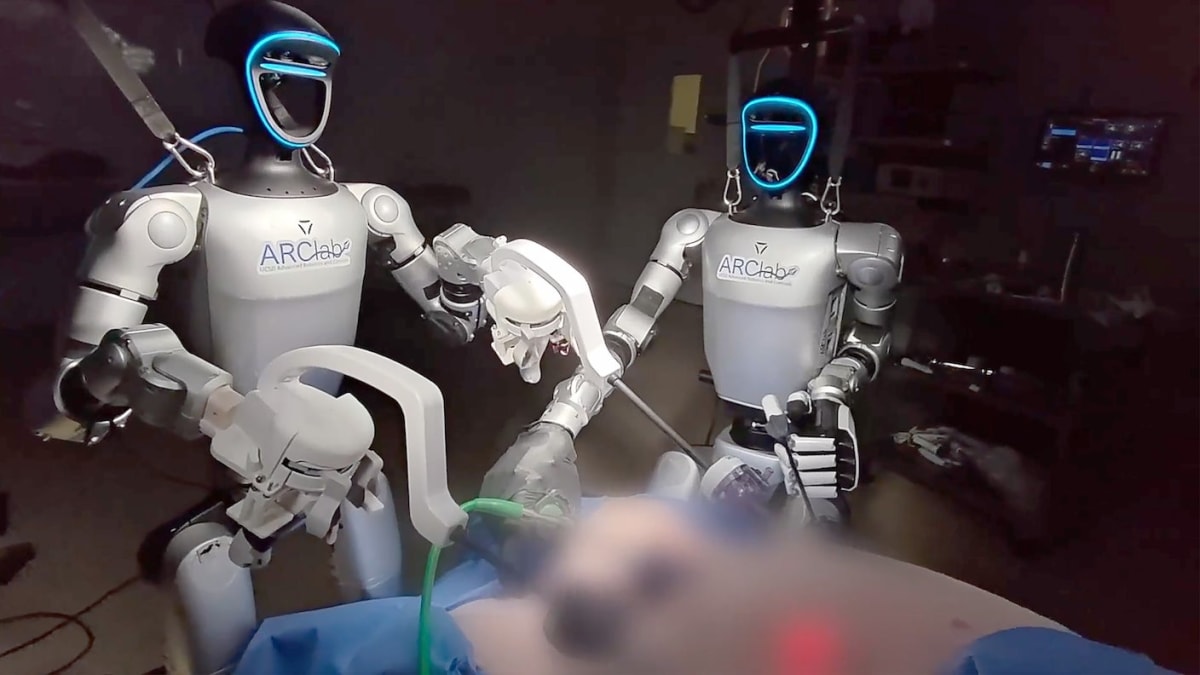
Surgie, a four-foot-tall humanoid robot, successfully removed gallbladders from two pigs in a standard operating room at UC San Diego. Unlike bulky surgical robots that require redesigned operating rooms and specialized tools, Surgie used regular surgical instruments and fit comfortably in existing hospital spaces.
The robot wasn't working alone. An expert surgeon controlled Surgie remotely using a headset with a magnified 3D view and hand controls that translated movements in real time. Human surgeons stayed nearby in case of emergencies, but Surgie completed both operations with minimal intervention.
The surgeons who operated Surgie reported feeling less physically strained and frustrated compared to traditional robotic systems. They noted better overall performance, though the robot did occasionally overheat and need repositioning.
The Ripple Effect
This advancement addresses a major problem in healthcare access. Current surgical robots like the Da Vinci system cost millions of dollars, require specially designed operating rooms, and need extensive staff training. Many rural hospitals and underserved communities simply can't afford them.
Surgie weighs just 77 pounds and stands barely over four feet tall. It takes up a fraction of the space that conventional surgical robots need and can work with tools and equipment that hospitals already own.
"Remotely operated and autonomous humanoid robots have real potential for amplifying access to critical surgeries to which patients would otherwise not have access," said study author Michael Yip. The technology could reach remote communities where finding specialized surgeons is challenging, or disaster zones where field medicine is urgently needed.
The robot also excels at laparoscopic surgery, a minimally invasive technique using tiny incisions that reduce pain, speed recovery, and lower infection risk. These procedures require extreme precision, and Surgie passed all standard surgical skill benchmarks for both humans and robots.
Humanoid robots have improved dramatically in recent years thanks to better electric components and AI systems that help them balance and adjust to real-world complexities. Robots are already stocking warehouses and even winning marathons, but surgery sets a much higher bar for safety and precision.
The research team acknowledges there's still a long road ahead before humanoid surgical robots become commonplace in hospitals. But both successful surgeries prove the concept works in real operating rooms with real medical teams.
Humanoid robots "have a viable future" in surgery, bringing hope to millions who lack access to life-saving care.
More Images


Based on reporting by Singularity Hub
This story was written by BrightWire based on verified news reports.
Spread the positivity!
Share this good news with someone who needs it