Electric Cars Could Make Power Bills Cheaper for Everyone
Your neighbor's electric car might soon help lower your electricity bill. A new program in Massachusetts is testing technology that lets EVs send power back to the grid during peak demand, potentially saving everyone money.
Imagine if every electric car sitting in a driveway could help power your neighborhood when you need it most. That future just got closer in Massachusetts, where utilities are launching a program that pays EV owners to share their battery power during heat waves and high demand periods.
The technology is called vehicle-to-grid, or V2G. It's elegantly simple: instead of just charging from the electric grid, EVs can send energy back to it when everyone's cranking their air conditioners or heating their homes. Drivers get paid for this, just like homeowners who sell solar power back to utilities.
Five major companies just launched an early test program in Massachusetts that lets EV owners plug into an existing system called ConnectedSolutions. When the grid needs extra juice during extreme weather, participating vehicles automatically kick in to help. The best part? It only happens a few hours per year, so drivers still have full use of their cars.
"It's great to have Massachusetts stepping into the lead here because these learnings are what's going to allow this technology to scale," said Chip Silverman, director of grid services at Sunrun, a solar and battery company.
Here's why utilities love this idea. They're facing a perfect storm of challenges: more data centers sucking up power, more people switching to EVs and heat pumps, and the push to replace coal and gas with solar and wind that don't run 24/7. All of this costs money, and those bills land on customers.
But V2G could slash some of those expenses. Instead of building expensive new battery storage facilities, utilities can tap into batteries that already exist in people's garages. A single EV battery holds about six times more energy than a typical home backup battery, and school buses and delivery trucks have even bigger ones.
The Ripple Effect
The beauty of this system is that only a fraction of EV owners need to participate for it to work. When thousands of cars pool their power together, each individual battery barely gets tapped. "If you have a higher number of batteries out there in a virtual power plant, you can actually use less energy from each individual battery," Silverman explained. "But collectively, when you patch them all together and aggregate them, it comes out to a very large resource."
As the planet heats up and more people need air conditioning to stay safe, V2G becomes even more valuable. The power comes from vehicles sitting idle anyway, making it what Russell Vare of the Mobility House calls "the cheapest cost of flexible energy storage that will be available for the grid."
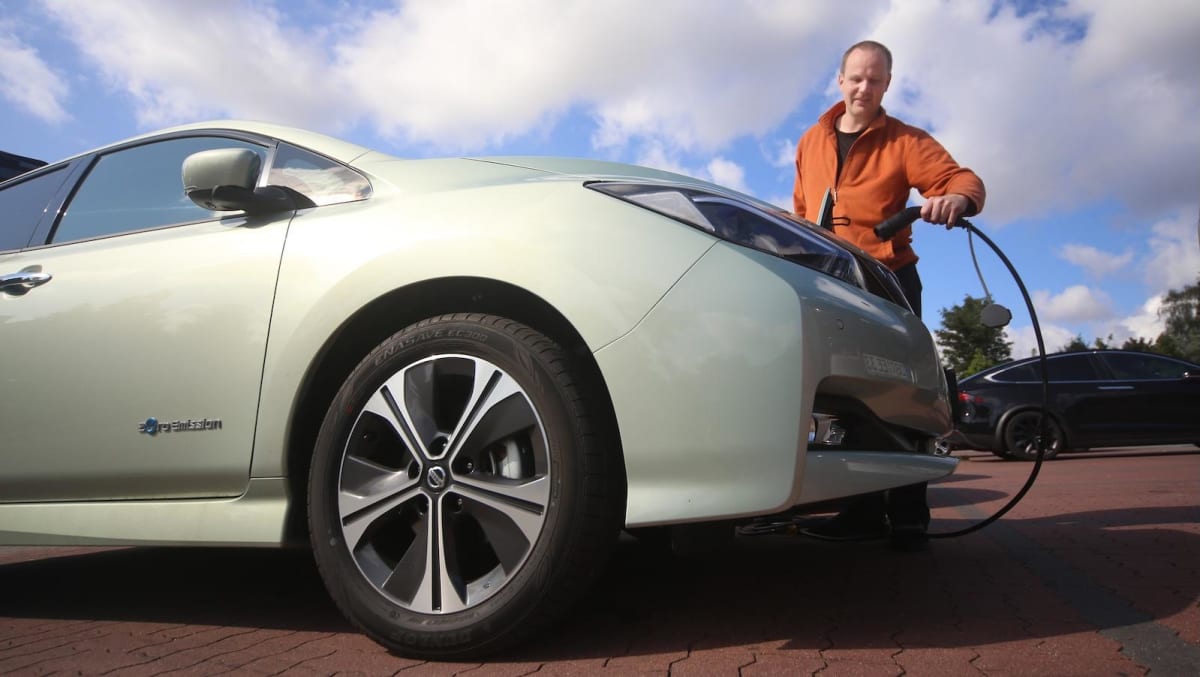
More EV models like the Nissan Leaf are coming equipped with the hardware to make this happen. As bidirectional chargers get cheaper and simpler to install over the next few years, experts expect V2G to become standard. Owners can set their preferences through apps, telling the system when they need their car fully charged for work or trips.
The Massachusetts program is one of several pilot projects across the country figuring out how to coordinate hundreds, then thousands, then eventually millions of vehicles into one massive, distributed power source that benefits everyone.
More Images


Based on reporting by Grist
This story was written by BrightWire based on verified news reports.
Spread the positivity!
Share this good news with someone who needs it